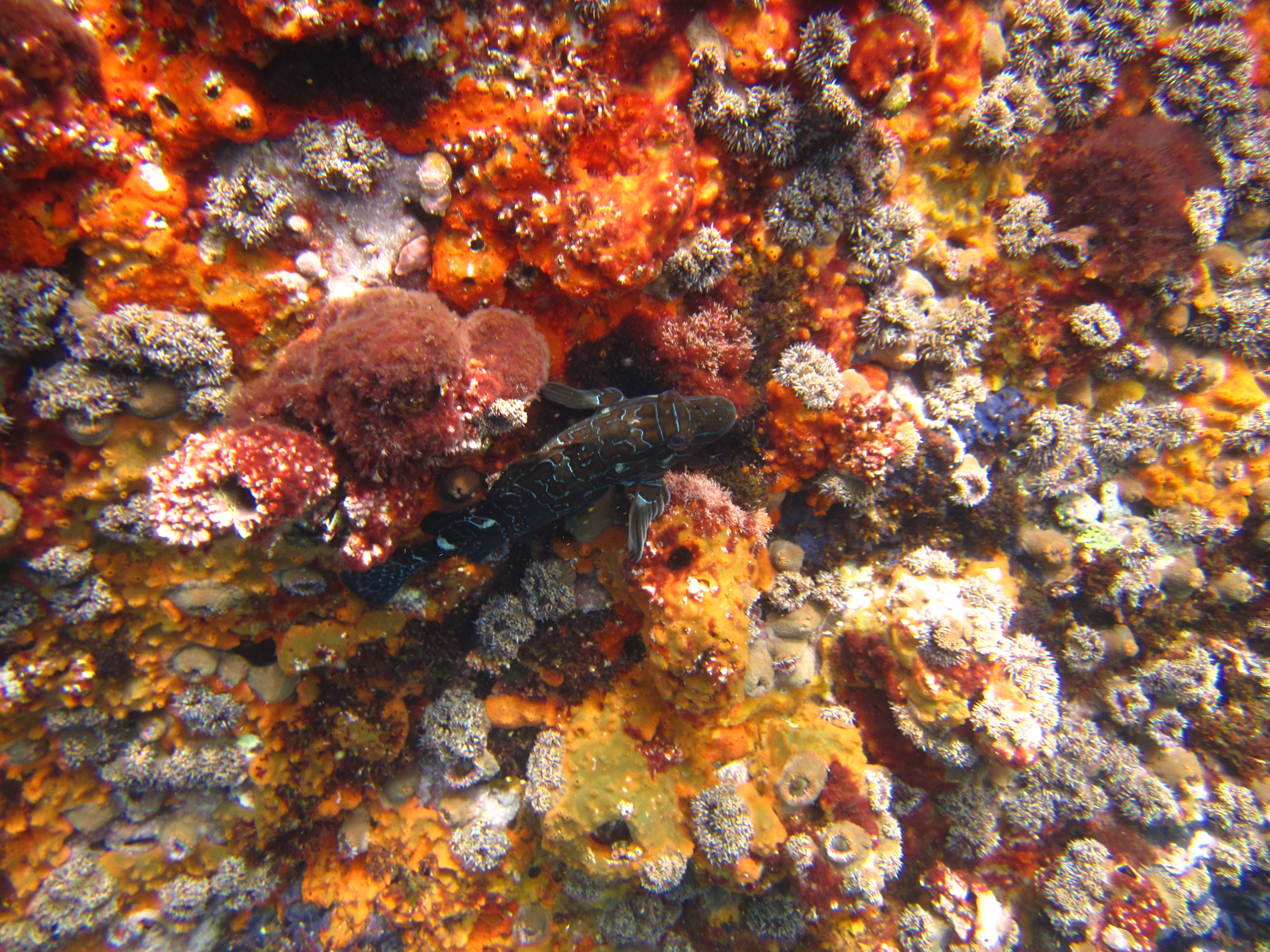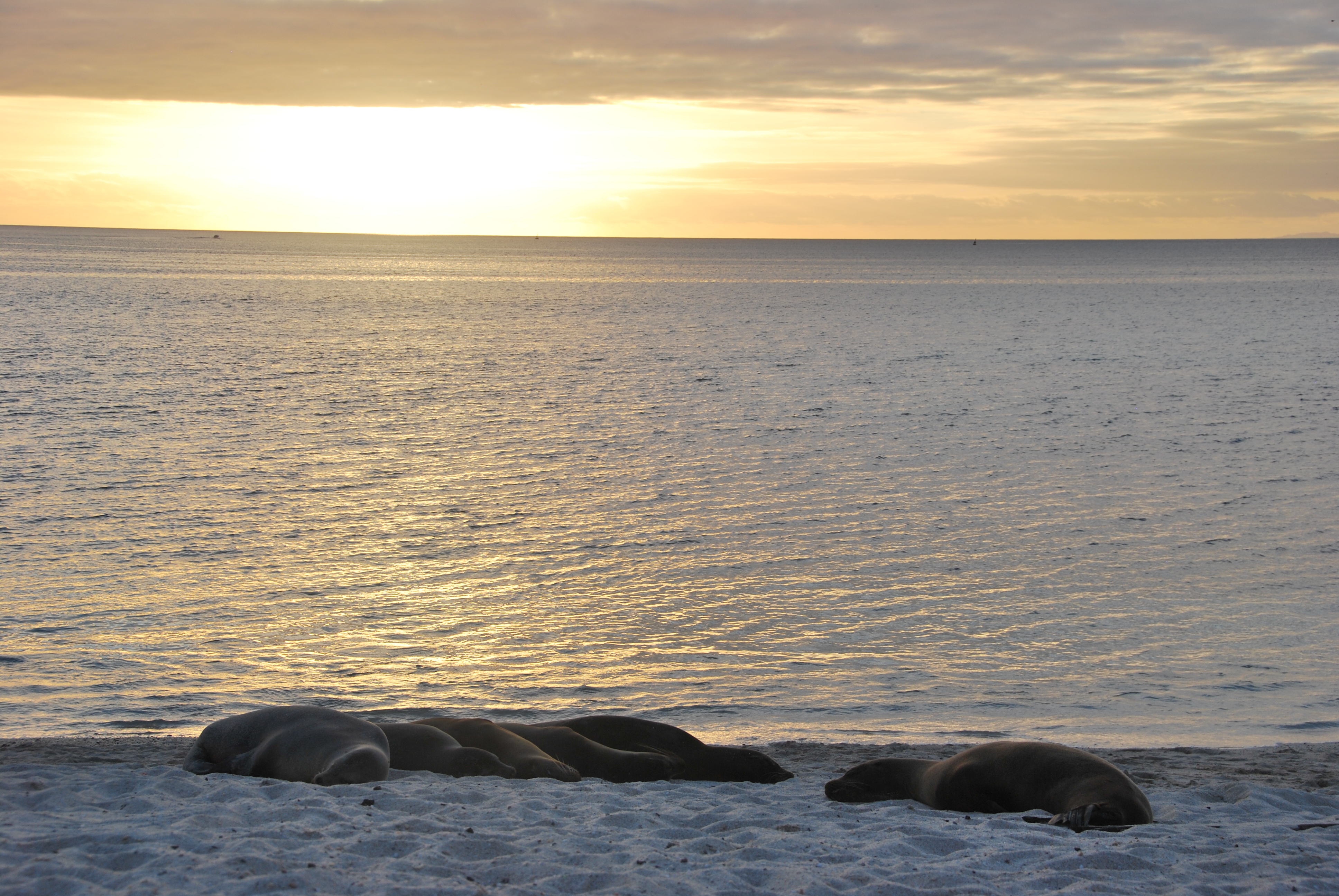
How to enjoy the Galapagos without a cruise (and without spending your life savings!)

***This post will be pretty boring to read unless you are looking for information on how to travel through the Galapagos on your own. Feel free to skip reading it or just look at the nice pictures.***

To be honest, visiting the Galapagos wasn’t really on our radar for this trip. We knew that just getting to these islands would blow our budget out of the water, and that would b before paying for a cruise.

We left it up to fate and decided to make our decision after seeing what we could find airfare-wise. If flights leaving the following week were on the cheaper side, we were in. As luck would have it, we found a round-trip flight from Quito for only $270. This was $100 cheaper than the lowest fare option listed in the Lonely Planet. We took it as a sign and booked it right away.

View of the Galaps from the plane (this was right about the time they opened the overhead bins and sprayed everything down with insecticide)

So now we were in for the Galapagos, the next question became, “Do we take a cruise or not?”

The Great Cruise Debate of 2011 went something like this:

Reasons to do a cruise:
1. You get to see a lot more areas of the Galapagos, see more wildlife, and probably learn more because there is a guide with you at all times.
2. It can be a fun experience to sleep and wake up on a boat.
3. Everything is taken care of, so you don’t need to worry about anything.
4. People claim they have less of an environmental impact. (We are not sure how well this one holds up. The boats get their supplies shipped out just like the islands do, they ditch their trash on the islands, and where exactly does the grey/black water get dumped?)

Despite the prevailing opinion (from the internet and the LP guidebook) being the best way to see this area is by a boat cruise, we found a few people who said they explored on their own and had a great time. This lead us to really consider a land-based option.

Reasons to do the Galapagos without a cruise:
(Some of these reasons we discovered during our time there.)
1. It is MUCH cheaper. We ended up spending about $100 per person per day, including airfare and park entry. Even with a “last-minute” cruise deal, you are looking at spending at least $200 per person/day and that is without tips, drinks, or airfare.
2. You don’t have to worry (as much) about being seasick.
3. You can have some personal space and see things on your own. (After the financial thing, this was probably the biggest motivation to take a pass on the cruises.) It was great to have the experience of finding wildlife on our own or sitting peacefully on the beach, instead of crowding around with 15 other people staring at the same sea lion. Occasionally we saw a few tour groups, and every time, we were grateful that we did not have to stick with the herd.
4. No schedule. A few people who have taken boat tours have said that it was a bit too structured. Breakfast at 7. Hike at 8. Sail at 10…. etc. On your own, you can schedule things however you please.
5. You don’t have to worry about your boat, crew, and other passengers not meeting your expectations. There is nothing worse than shelling out a bunch of money and feeling like you are not getting the what you paid for. We have also heard that these crews are worked pretty hard, so they might not be the most excited about answering the one-millionth question about Blue-Footed Boobies.
6. You support the local economy with your accommodations, tours, and meals. One of our guides we hired talked with us extensively about how great it was that we were exploring on our own. He told us that the boats pay their taxes, not to the Galapagos, but directly to Quito, so the locals don’t get any of the tax benefit and some of the boats are not even run or staffed by Ecuadorians. Also, being shore side gave us the opportunity to meet a bunch of really nice locals.

Needless to say, we decided to explore these islands on our own. We realized that we wouldn’t see as many places (like the outer islands) or probably as many animals, but we didn’t want to take the expensive gamble of paying for a cruise and then not enjoying it as much as we should have. Now, having returned after an AMAZING trip, we are very satisfied with our decision.

If you are considering at trip to the Galapagos on your own, here is a brief guide that will hopefully help you have as great of a time as we did.

Arriving (Flights and Ferries):
Our cheap flight meant that we were flying in and out of the island on Santa Cruz. If you can book a flight in to San Cristobal and out of Santa Cruz, that would eliminate one of the ferry rides.

Getting from the plane to Puerto Ayora took MUCH longer than anticipated. We landed at 11:45 and barely made the 2:00 ferry to San Cristobal (we were literally running). I’m not sure if this was because we were on a large LAN plane or if it was because they do such a thorough inspection of the luggage before releasing it, but it was a slow process. If time is a concern, you could take a cab ($18) to cut the drive to town down by quite a bit. Granted, this is much more expensive than the bus (less than $2 per person), but if you are concerned about time, and want to get the ferry the same day, this is a good option.

Ferries from Puerto Ayora leave from the main dock area to San Cristobal and Isabela at 2:00. Several places sell tickets ($25-$30). During our time there, some ferry rides were MUCH more unpleasant than others. Try to get a seat towards the rear (to get airflow), but still under the cover (to protect from water spray and sun). I always took a Bonine (seasickness tablet) before these trips and it seemed to help. Don’t forget to get your bags inspected and tagged before boarding!

SAN CRISTOBAL

Accommodations:
We scored an amazing apartment for our 4 night stay there. For $30/night we had an apartment complete with our own kitchen! This also helped cut down on food costs because we were able to cook our own food (yea for pasta!). We stayed at Casa Mabel run by a sweet couple who helped us book our tour of the Highlands as well. Mercedes found us at the dock and offered the apartment, but if you want to find her, walk 2 blocks straight up from the tourist dock, and she is located on the right. She only has a few apartments to rent, but if they are all booked up, I am sure she could give you an idea of where else to try.

There were also a few hostels on the island, even a few located on the main street (boardwalk). Not sure on prices/quality.
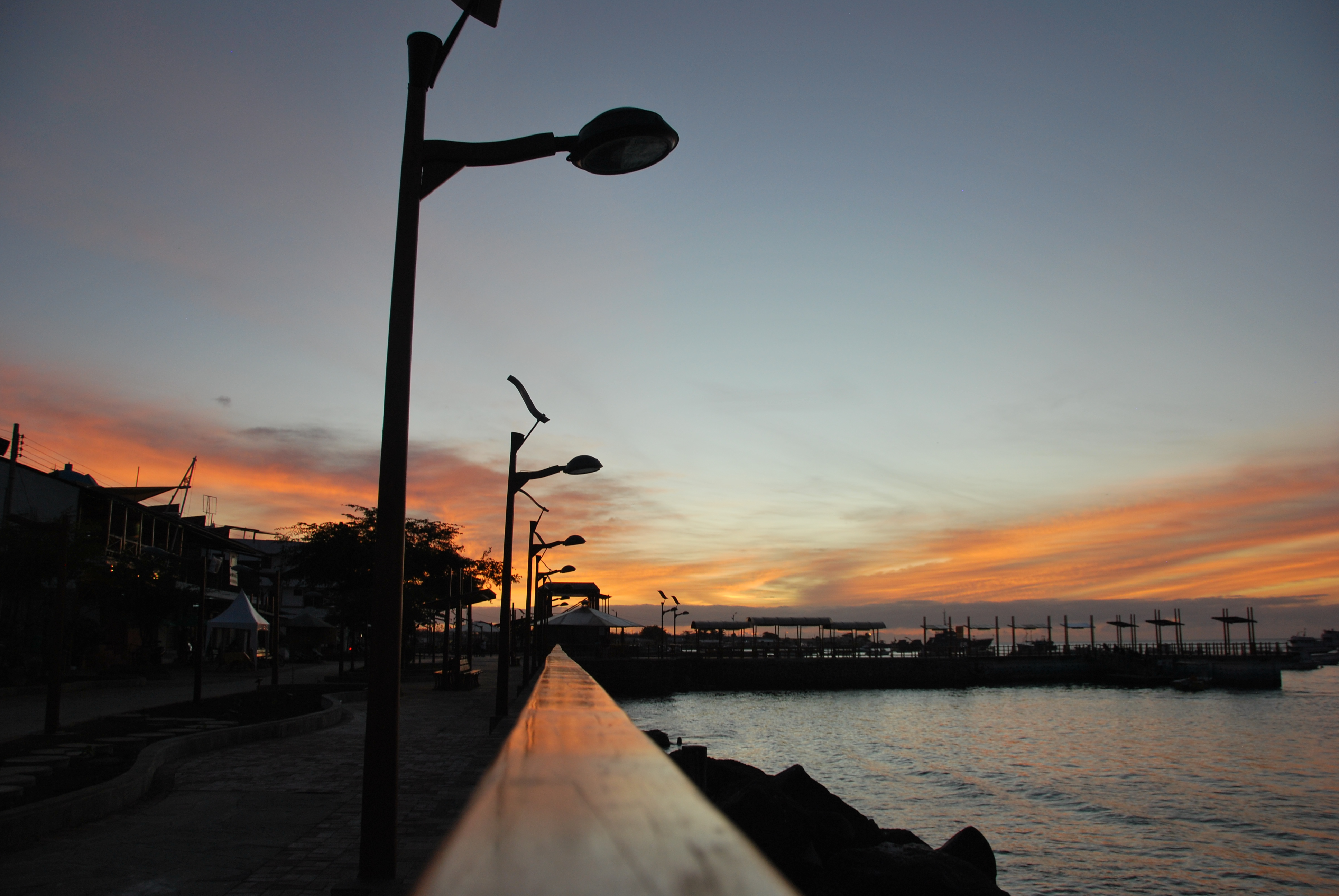
Sunset on the boardwalk in San Cristobal

What to do:
Interpretation Center: Has good information- free. A few good hikes start from here. We hiked up to the highest lookout over Las Tijeretas, and then hiked down and along the beach for a while. Lots of sea lions and marine iguanas, and we didn’t see another person there. Bring food and water. Also, the snorkeling looks like it could be good at Las Tijeretas cove (we didn’t get a chance to try it).

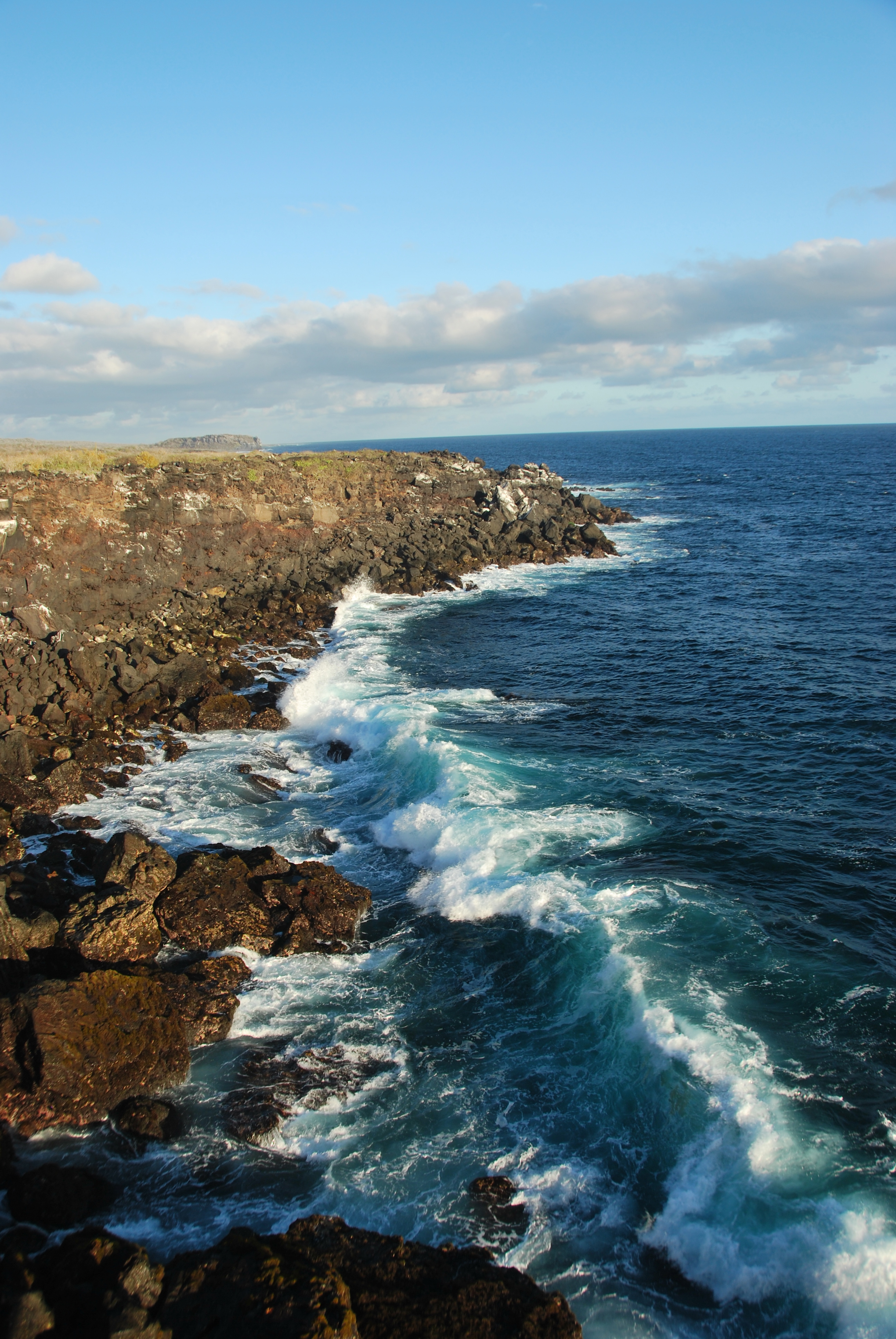
View over Tijeretas Cove- we walked down the hill and along this beach

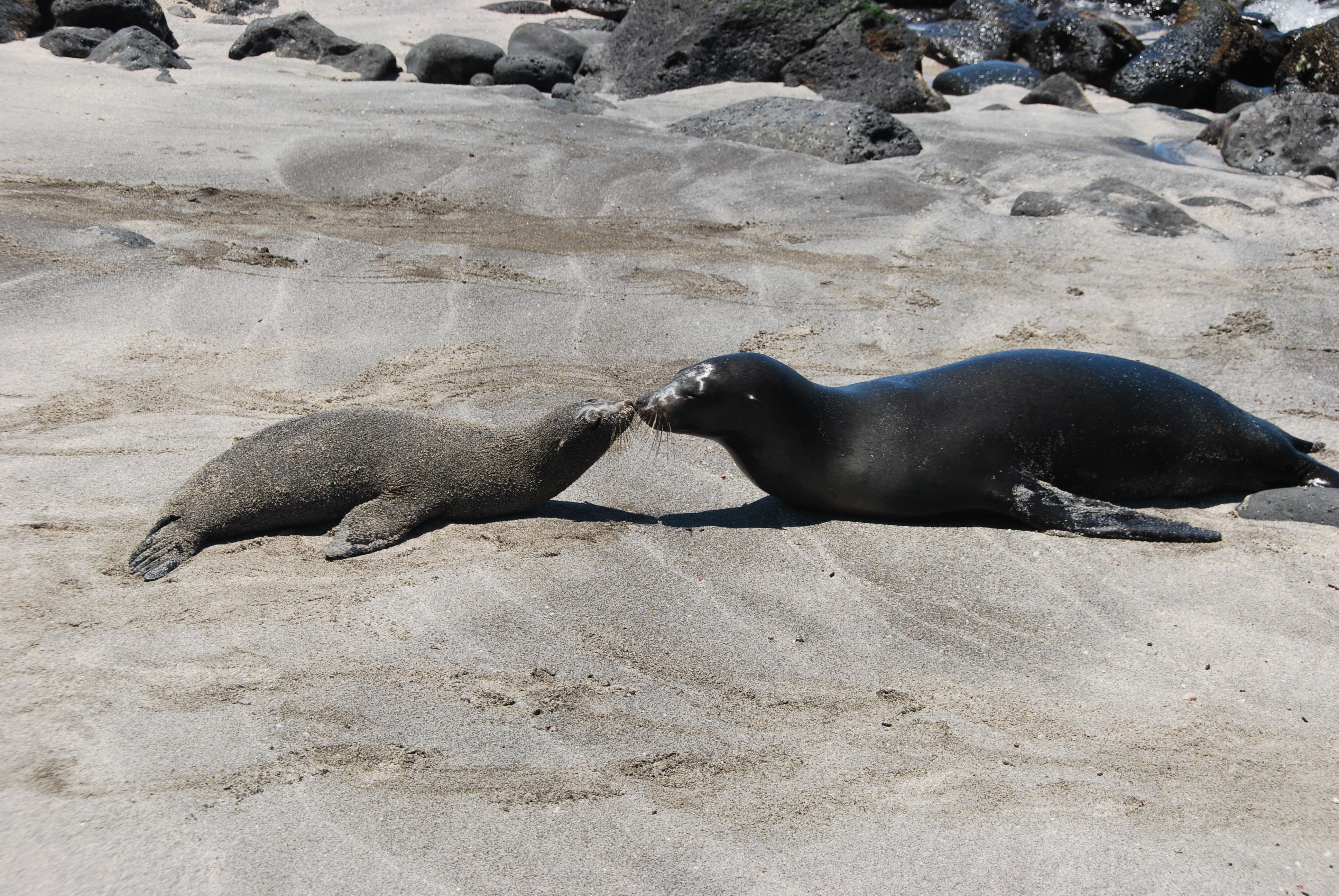
La Loberia: Taxi $2. Walking takes about 30 minutes from town to the beach (we took a cab there and walked back after sunset.) Beach with a lot of sea lions. Just a warning: sea lion beaches tended to be a bit smelly. Fun to watch sea lions play here and snorkeling is also supposed to be good here. If you are up for a short hike (15 minutes) over lava rocks, keep walking down the beach. There is a marked trail that takes you to an amazing lookout over cliffs. We say a Blue-Footed Booby here and lots of Frigate birds flying. Once again, bring water and snacks.
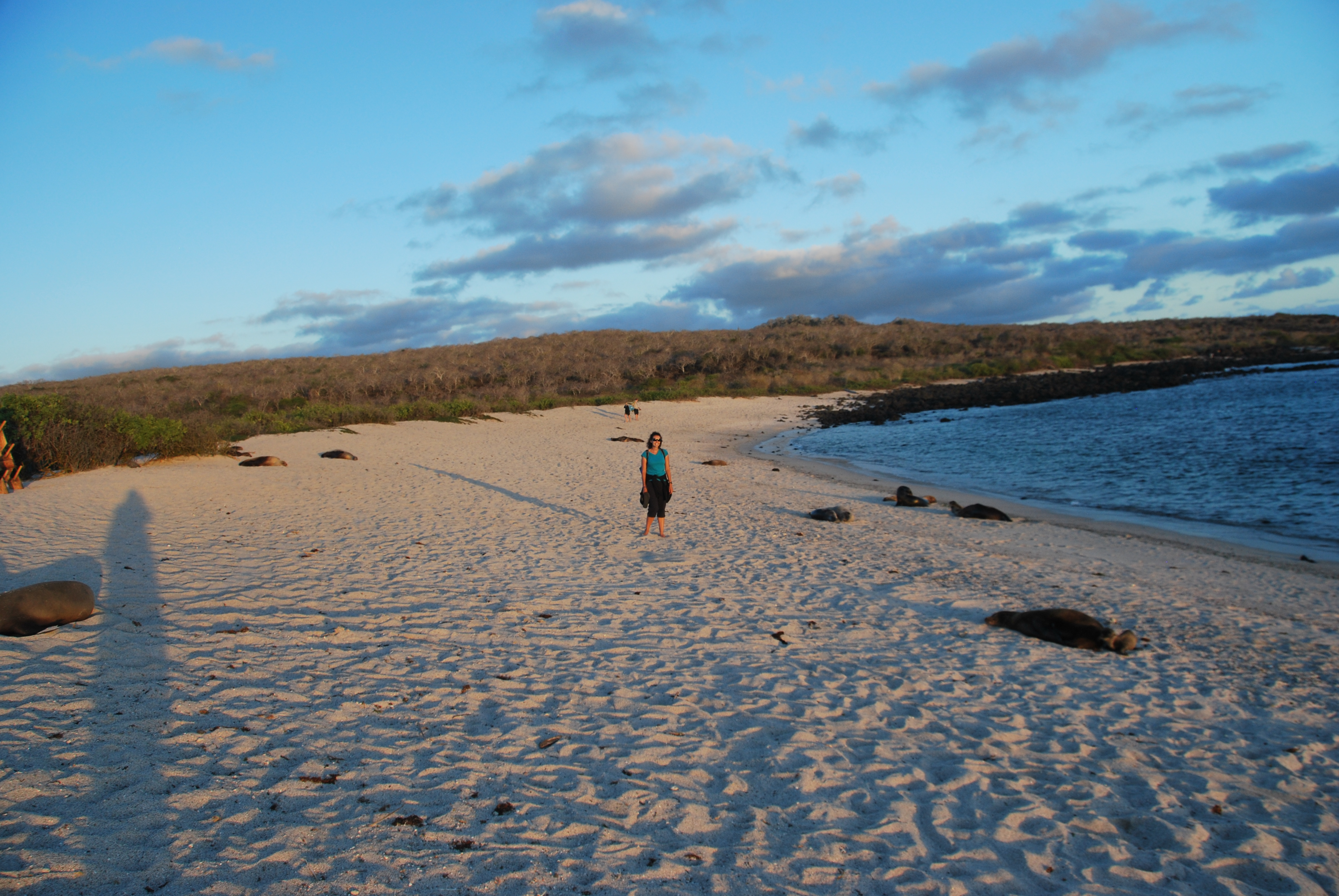
Hangin with the sea lions at La Loberia

Punta Carola Beach: beach with sea lions (notice a pattern here?). To get here, keep walking on the road past the Interpretation Center (don’t go up to the center) and a trail will take you there.

Playa Mann: The small beach in town. Sea lions. Nice to watch the sunset. Snacks and drinks are available here.

Snorkeling Trip: Great snorkeling at Kicker Rock (Leon Dormido). Lots of places sell the same snorkel trip ($50 for an all day trip including lunch). We snorkeled once at Isla Lobos (shallow and lots of sea lions) and twice at Kicker Rock (deep, beautiful, lots of turtles and a few sharks!). Don’t wait to the last minute to book this, because while we were there, it wasn’t running everyday. Not sure if that’s because it was low season, or if that’s how it always is.

View of Kicker Rock from where we had lunch

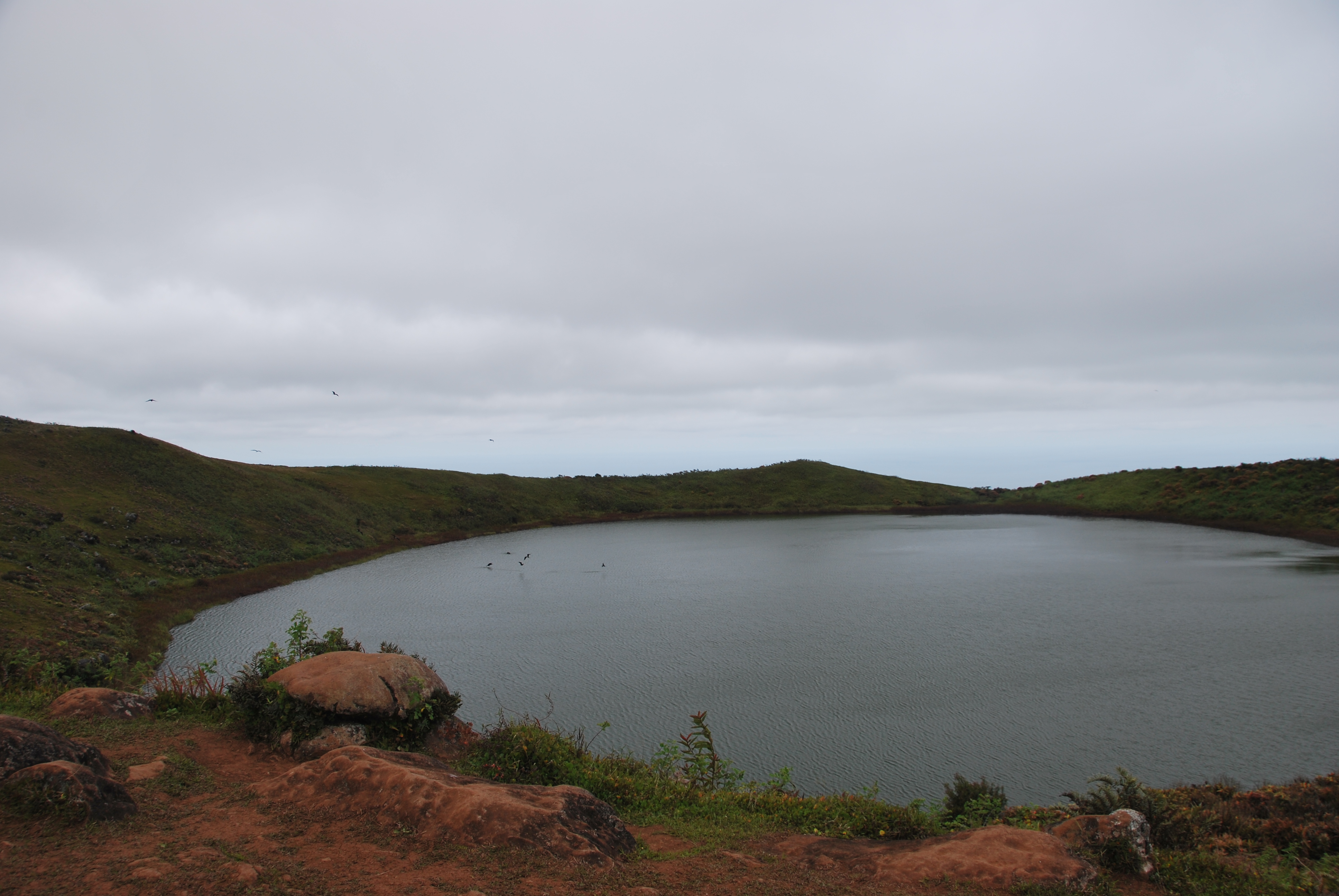
Highlands trip: We had a private guide take us to a few of the spots inland. $50 for the two of us (no lunch). We checked out El Junco Crater (filled with fresh water and birds use it to clean off their wings), the tortoise facility (great set up as you can wander through and the turtles are in a fairly natural state), and Puerto Chino Beach (beautiful beach). There are a few agencies selling different versions of these highland tours as well.

FYI:
We had the most wildlife interaction on San Cristobal. Watching the sea lions take over the town is quite the sight.

Although we didn’t try it out, it may be worth renting snorkeling equipment and trying it out a few beaches within walking distance to town. (If you like to snorkel and have previous experience.)

ISABELLA

Accommodations:
There are quite a few small hostels in town, especially a block or so back from the beach, and you could wander around and check them out before deciding on one. The town is about a 15-20 minute walk from the dock where you get dropped off by the ferry.

We stayed at two places during our time on Isabella… Caleta Iguana had a great location (right on the beach) but it was pricey and there was a rat issue (thinking about rats in your room does not lead to a great night of sleep). We changed to the Volcano Hotel (across the street) and stayed in 2 different rooms. Definitely go for the rooms on the 2nd floor.

What to do:
The Beach: Isabella’s beach is gorgeous! Sunsets are amazing. It is great for long strolls, relaxing in the sun, and even surfing. It also is not overrun by seal lions, so it doesn’t have sealy smell.

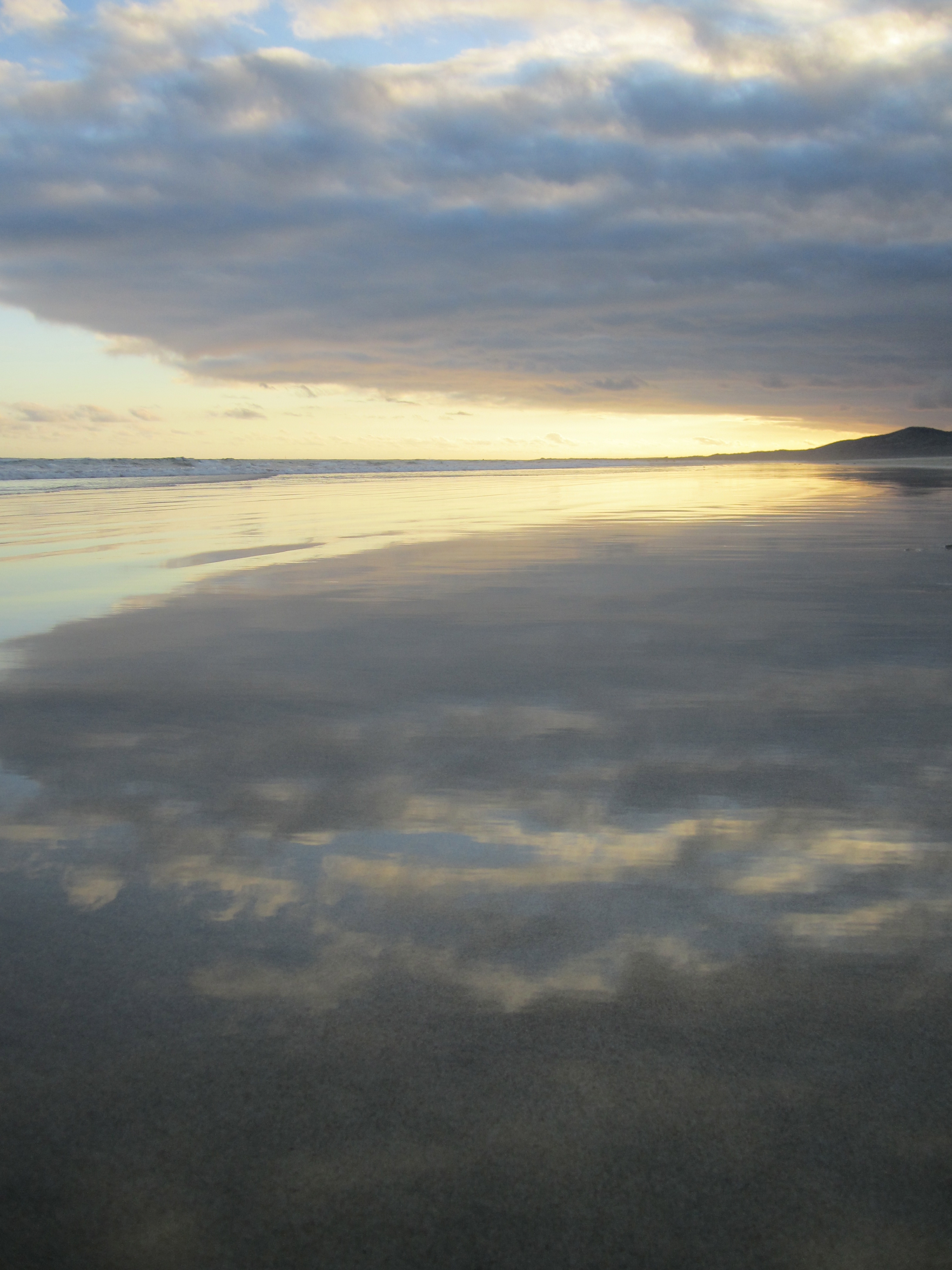
The beach is amazing for sunsets

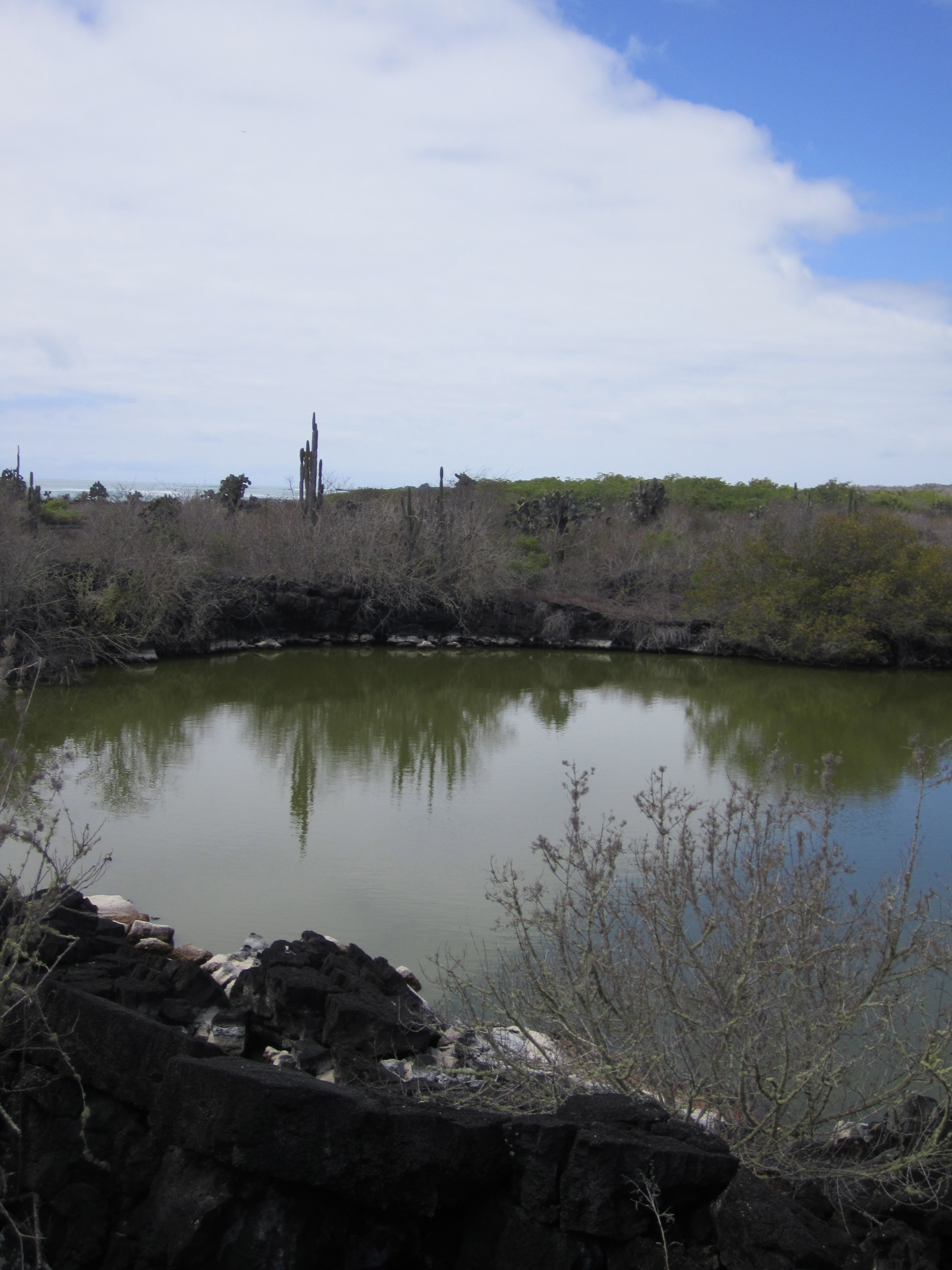
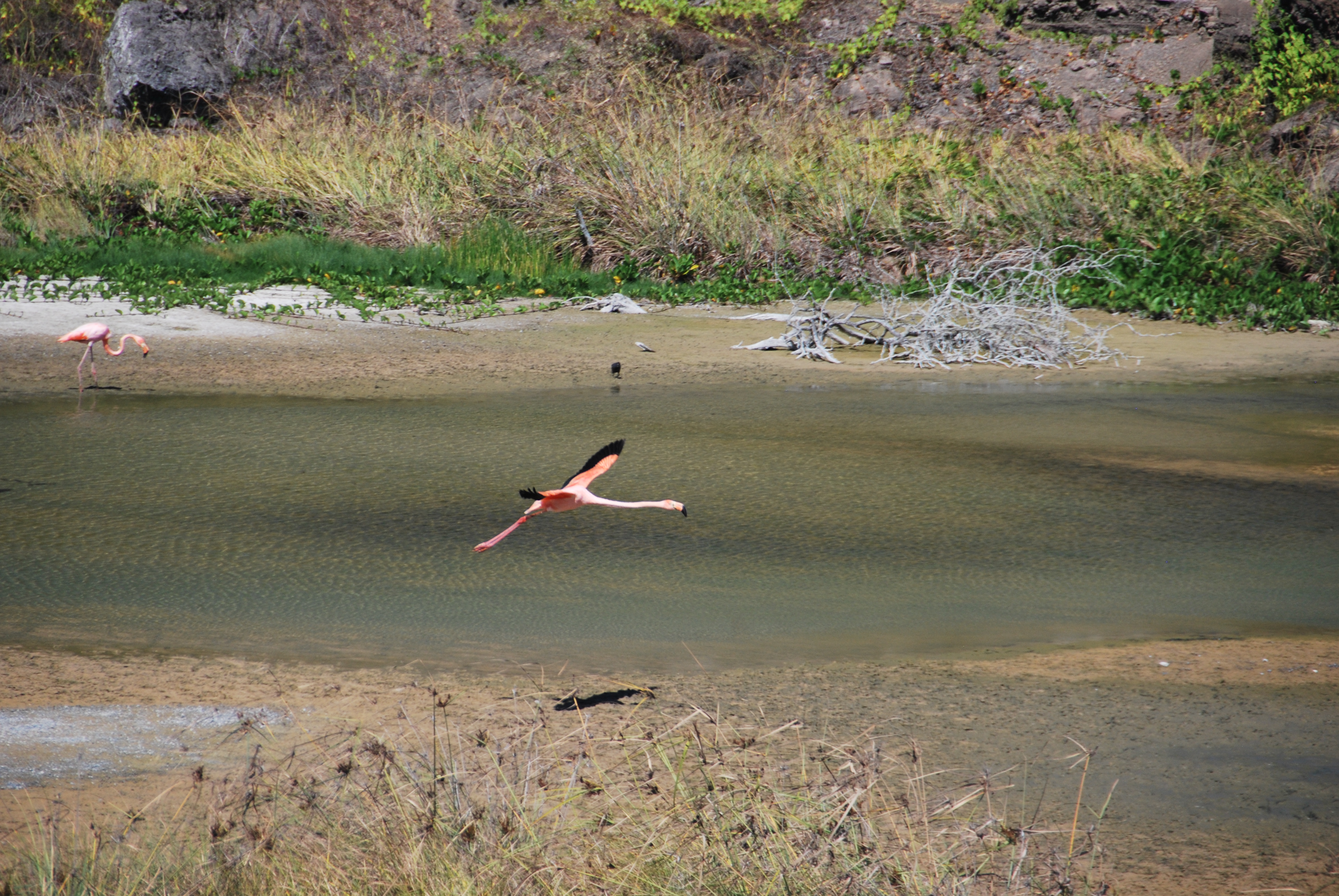
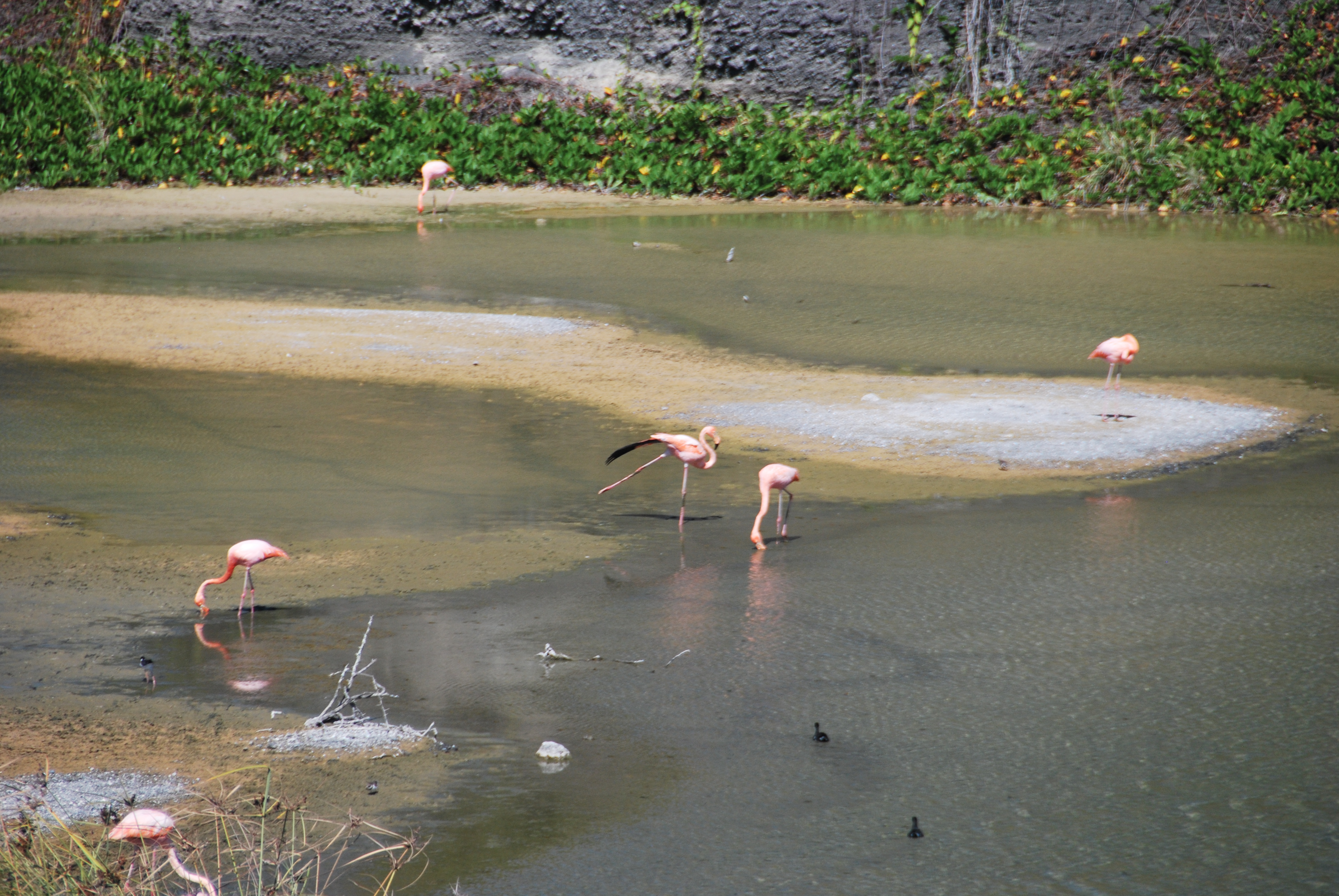
Rent a bike: We rented bikes ($10 for a half day) and rode around to a few sites. Head out West on the road that runs parallel to the beach- all the sights are clearly marked by signs. There are ponds, beaches, a lava tube, and a mangrove forest. We also rode to the Tortoise Breeding Center- it was nice to walk around, but the tortoises are in pens and you can’t walk through them (like you can in San Cristobal). We rode all the way to the “Wall of Tears” (a wall built by prisoners as a punishment) and there is also a great looking “Mirador” but it was under repair when we went by. We never saw any flamingos in the ponds by the beach, but if you ride inland on the road past the Tortoise Breeding Center, there is some sort of a rock quarry that we saw a dozen flamingos at. Bring water!!

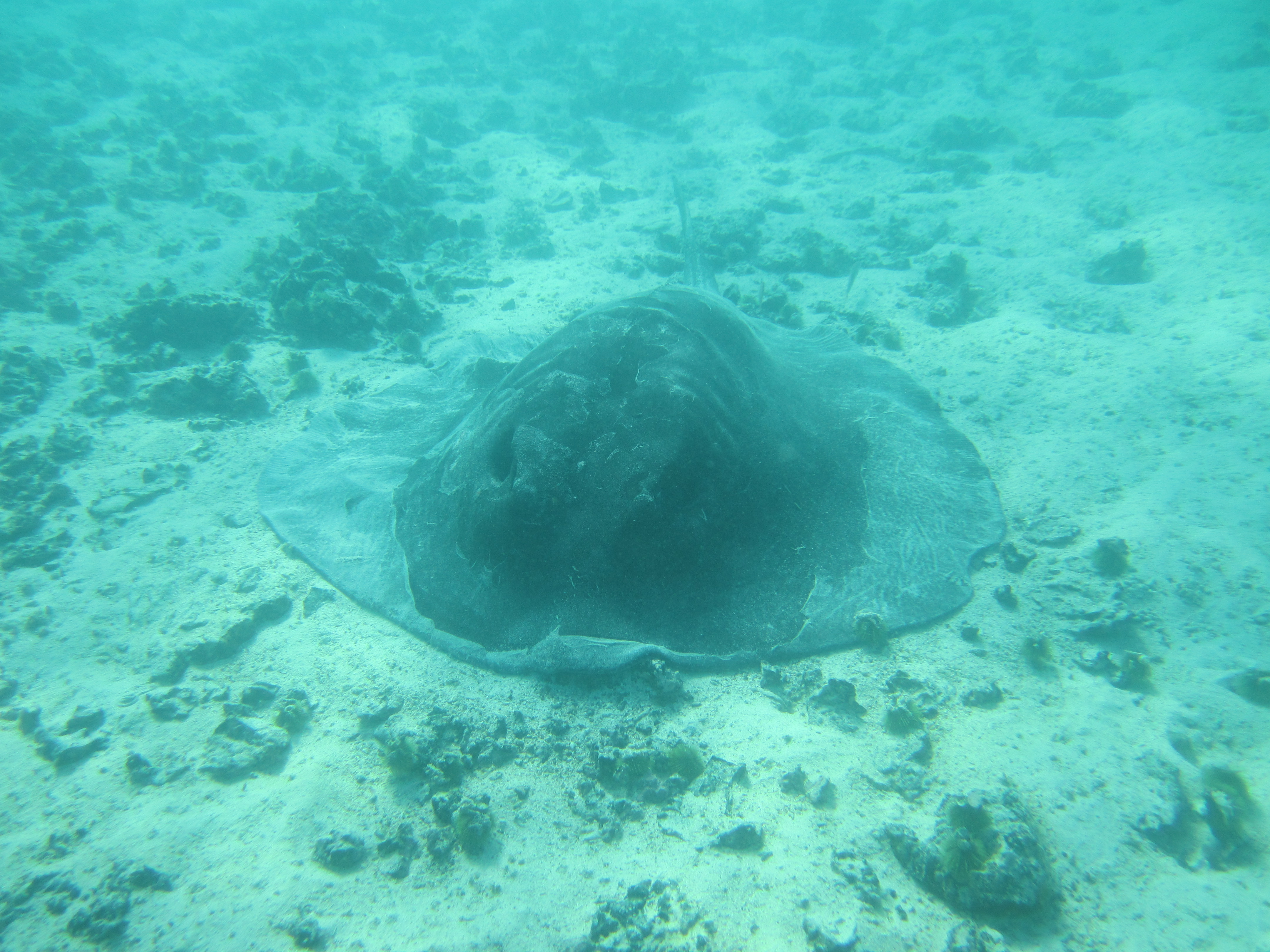
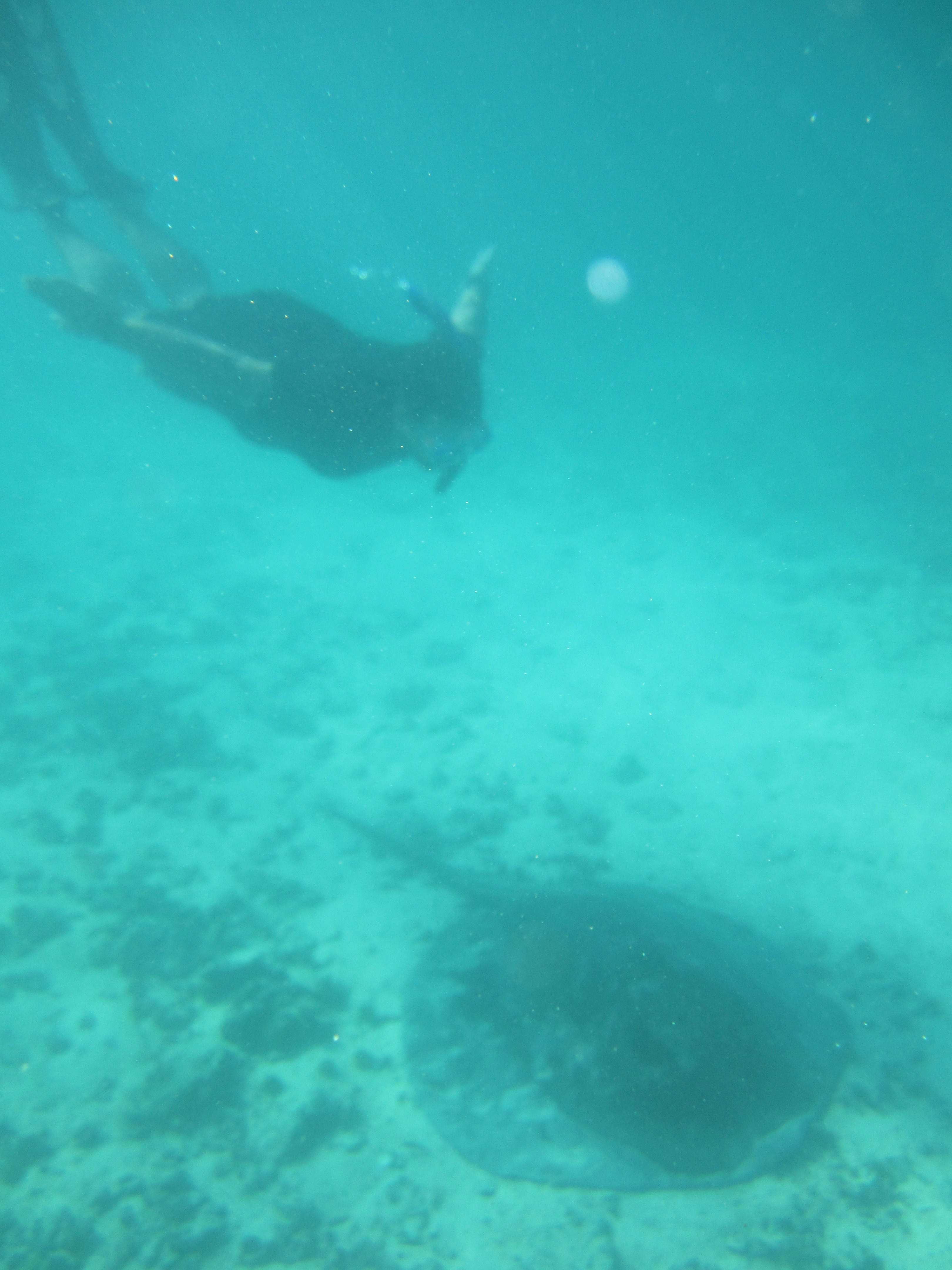
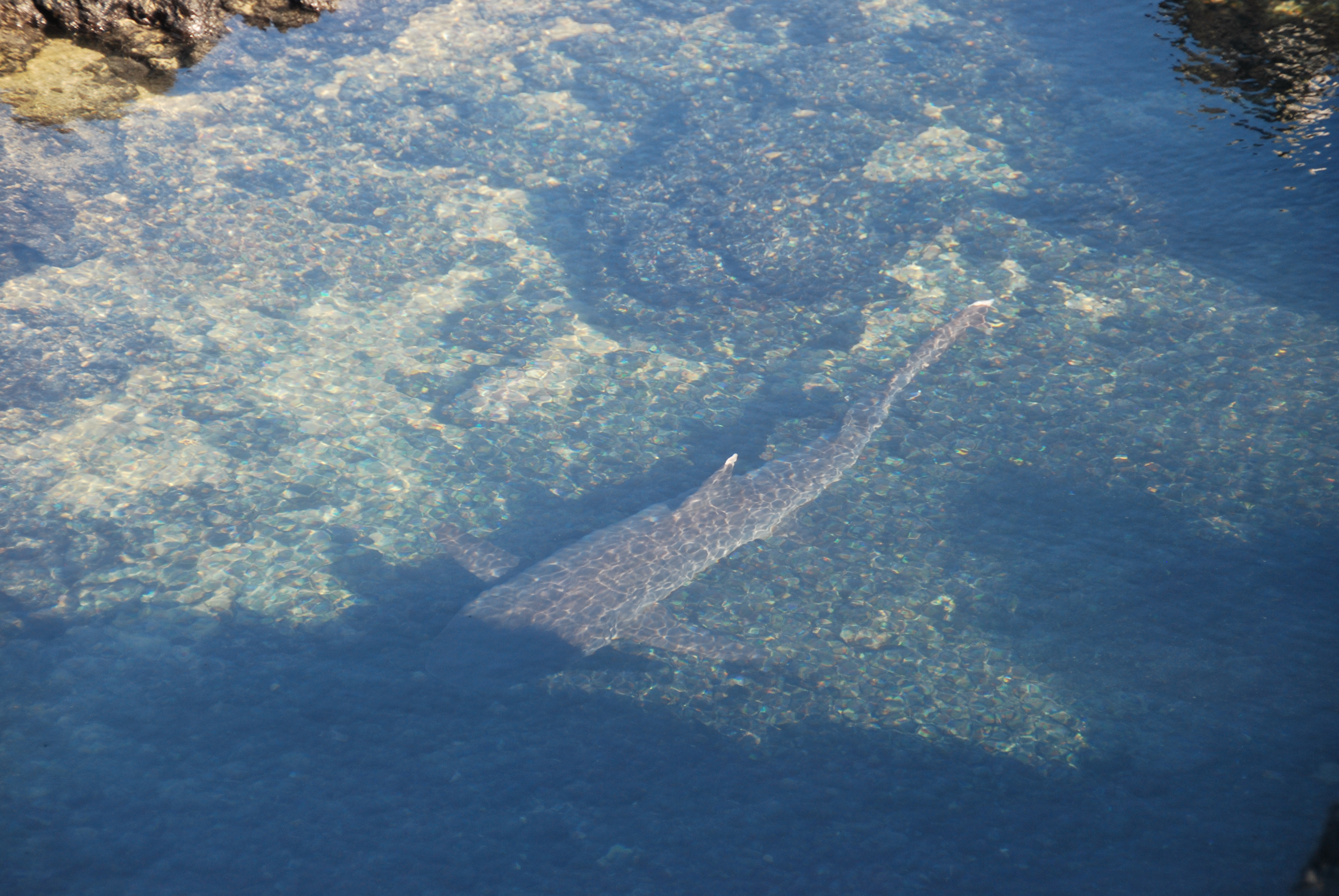
Snorkeling at Concha y Perla: This snorkeling area is right next to the dock. There is a place next to the dock to rent equipment and it is just a few minutes walk down a nice path to Conch y Perla. We first swam around in the first pool you enter, and we weren’t impressed with the snorkeling. Then we saw people walking over the lava rocks (not easy to do while wearing flippers) and we followed. The snorkeling here was awesome! We saw a ton of fish, turtles, and a huge sting ray! Highly recommend!

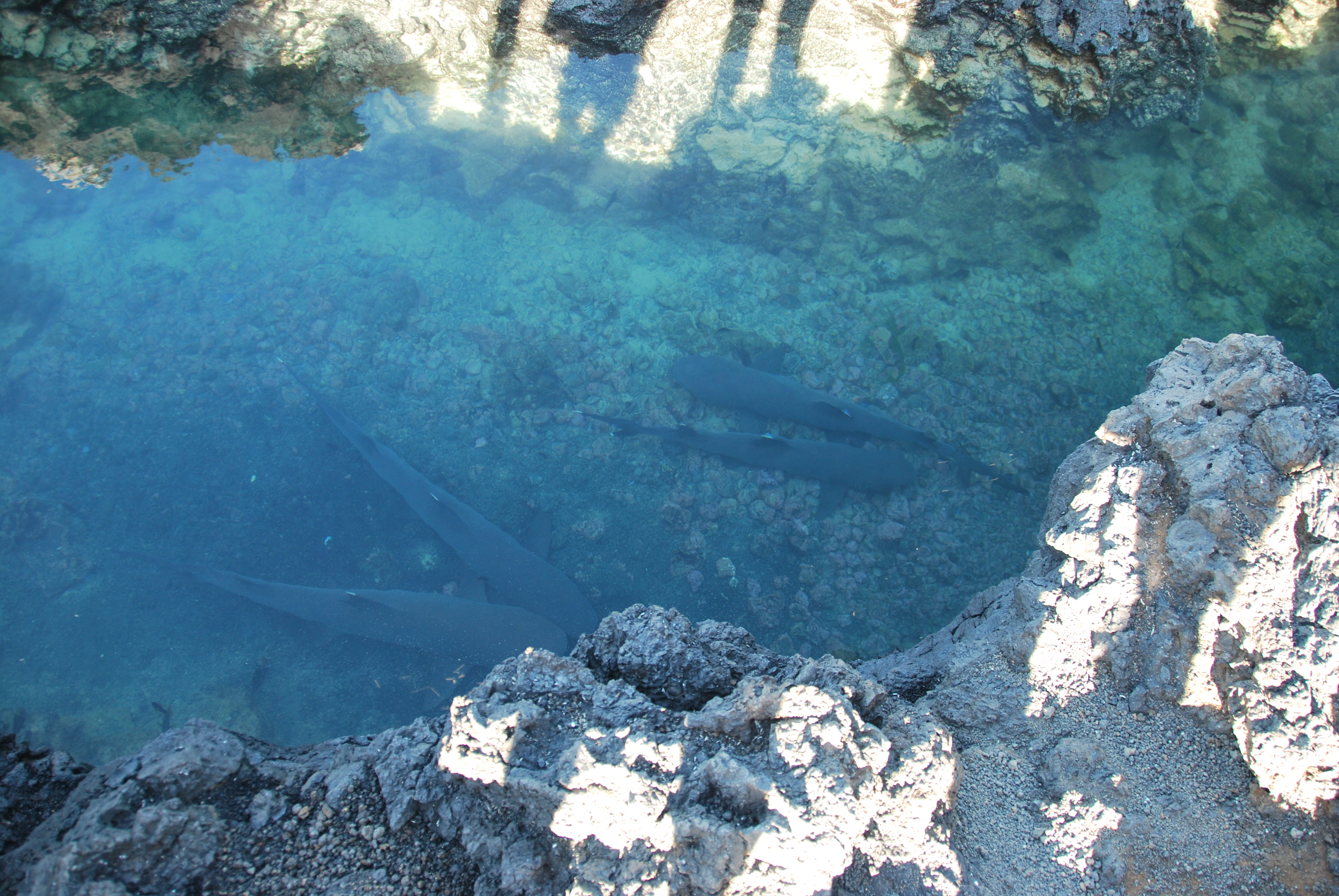
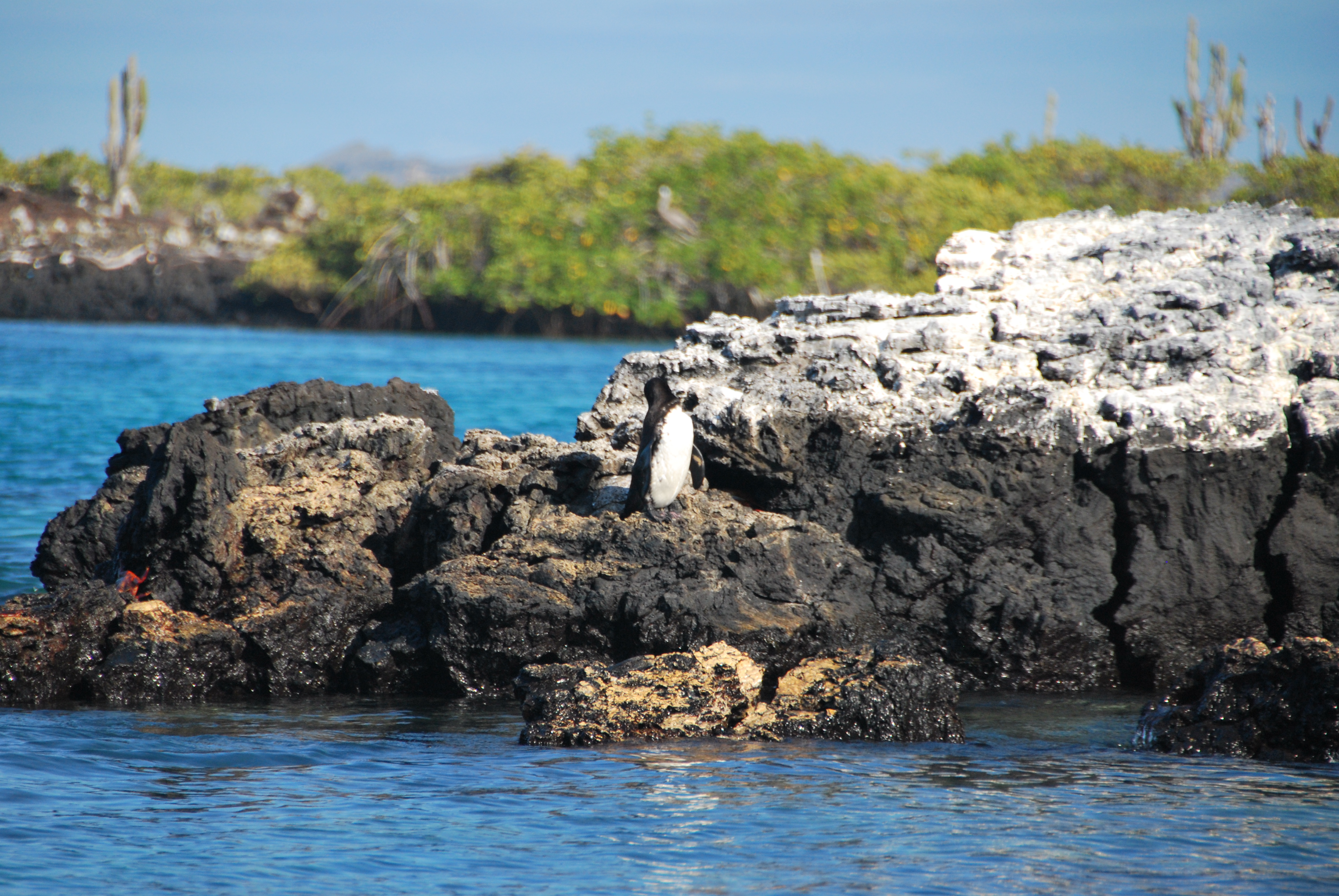
Trip to Tintoreras: This trip can be booked at a few different travel agencies in town. You go by boat to the islands right outside the port. We saw penguins, marine iguanas (a lot- it is the nursery for the young ones), sea lions, and the best part- sleeping sharks. The snorkeling part was OK, but we thought that Conch y Perla was far superior.
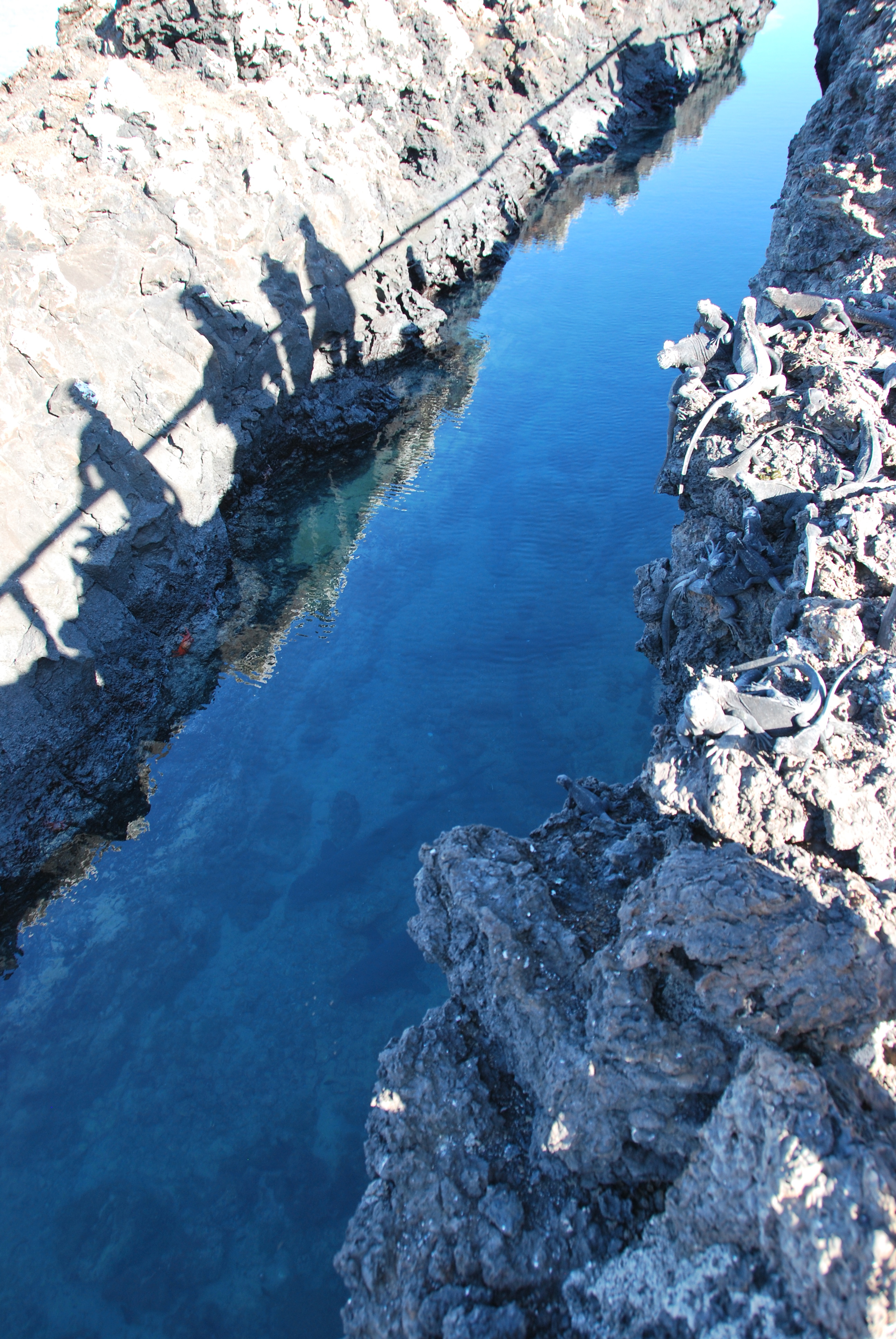
Shark Alley

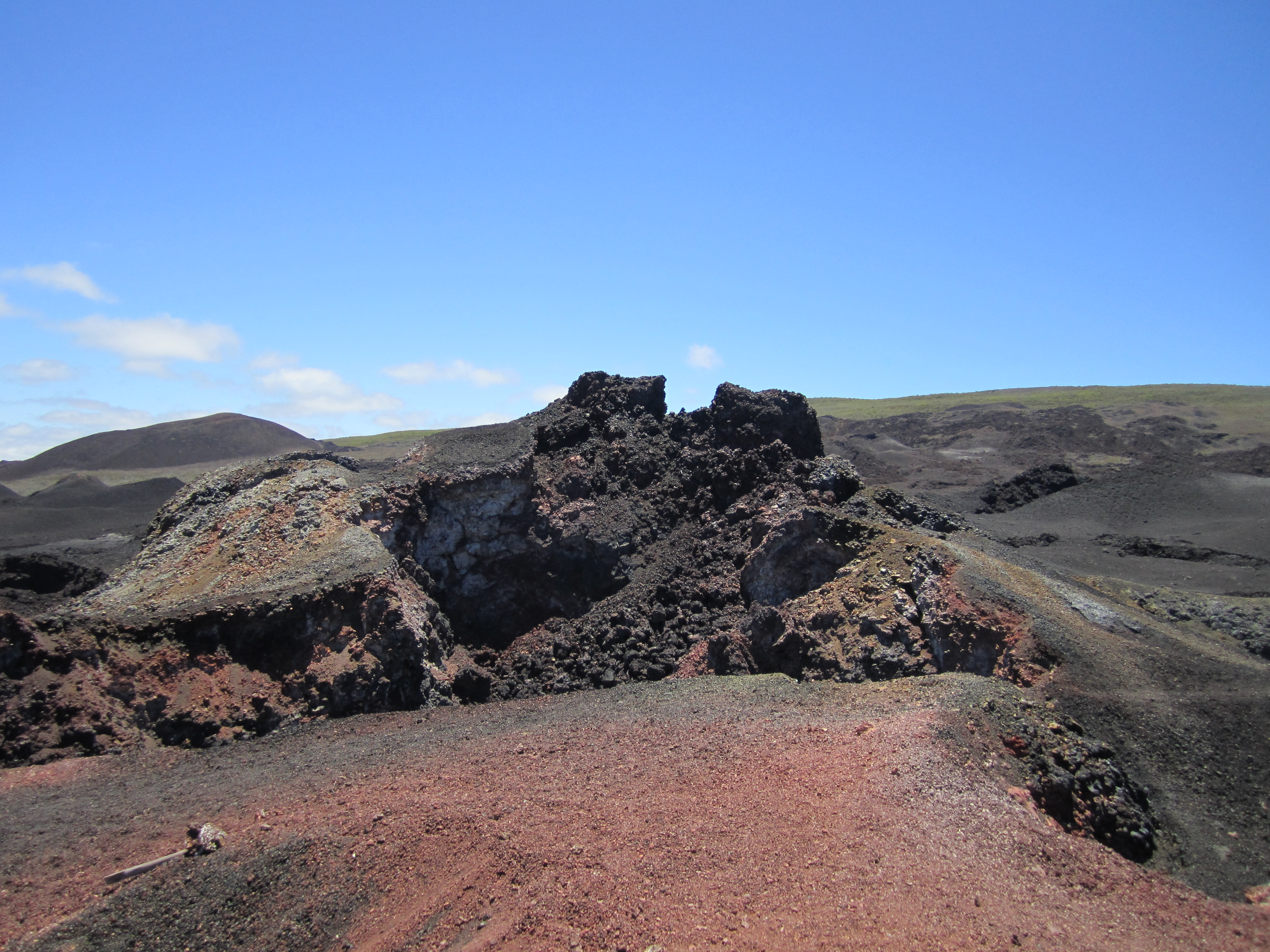
Trip to Sierra Negra and Chico Volcanoes: Another trip to book with an agency and it takes most of the day (includes lunch). You drive up to the highlands and hike along the rim of the Sierra Negra crater. This is HUGE. Then you hike over a lunar-like landscape to amazing views from Volcan Chico. Bring a lot of water (they recommend 2 liters per person) and sunscreen/hats as there is very little shade. Plan to do about 4.5 hours of walking (but it’s not too steep). There is also some sort of a horse option, but I am not sure of the specifics.

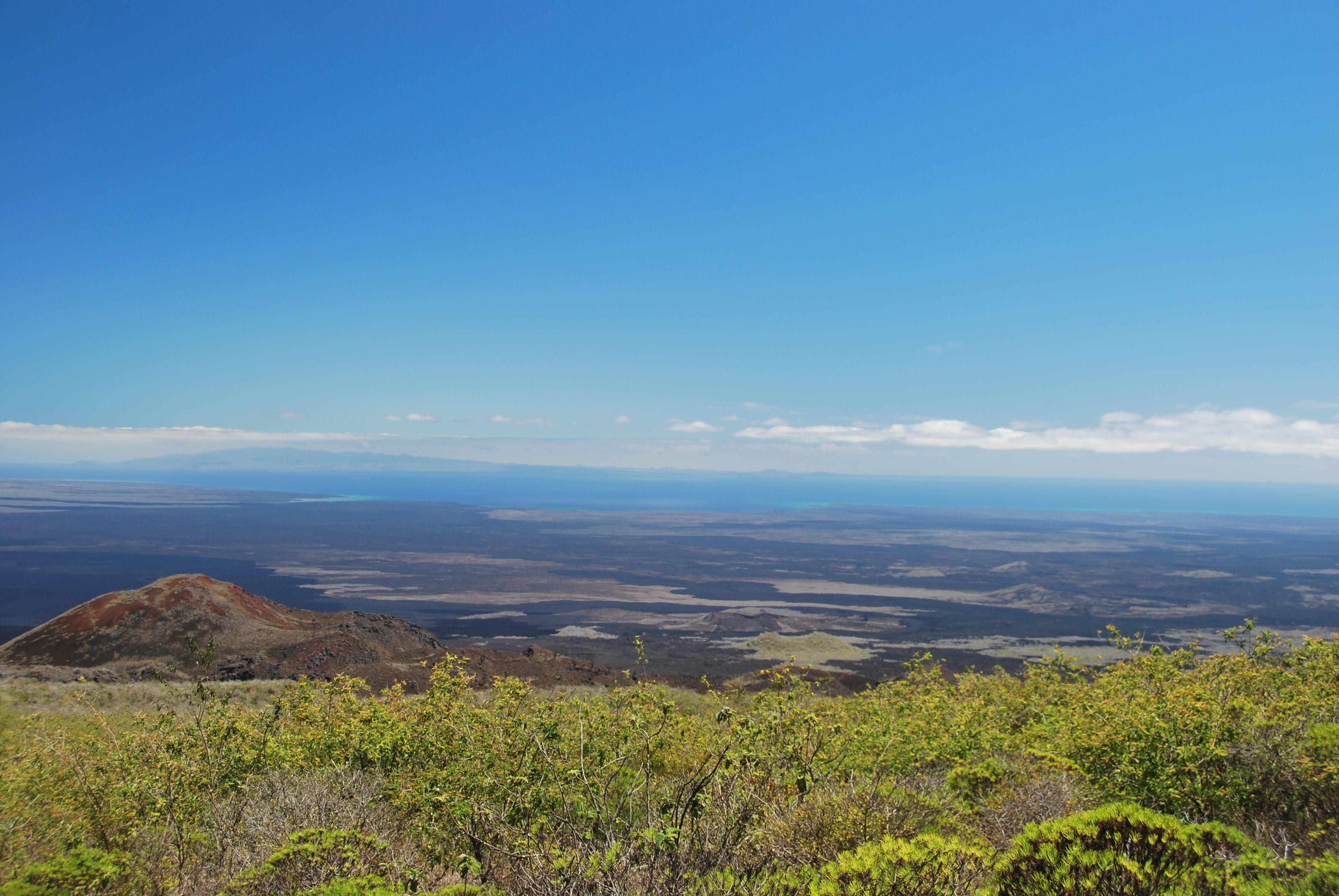
View from hike

There is also another snorkeling/boat trip to Tunnels (that we didn’t do), but it was quite a bit pricier.

FYI:
There is a $5 arrival tax per person when you arrive on Isabela.
Isabela has a much more laid back and beachy atmosphere.

SANTA CRUZ

Accommodations:
We only stayed 2 nights in Puerto Ayora, and we stayed a the very basic Hotel Salinas. It was fine, but the personnel wasn’t too friendly. It served its purpose. There are quite a few hotels within walking distance from the pier.

What to do:
Las Grietas: take a water taxi to the other side of the harbor and follow the signs (10 minute walk) to these cliffs and clear water. It is fun to swim and jump off the cliffs. Not too much to see snorkeling wise, but the water is really clear! There is also a chill bar located along the path to Las Grietas.
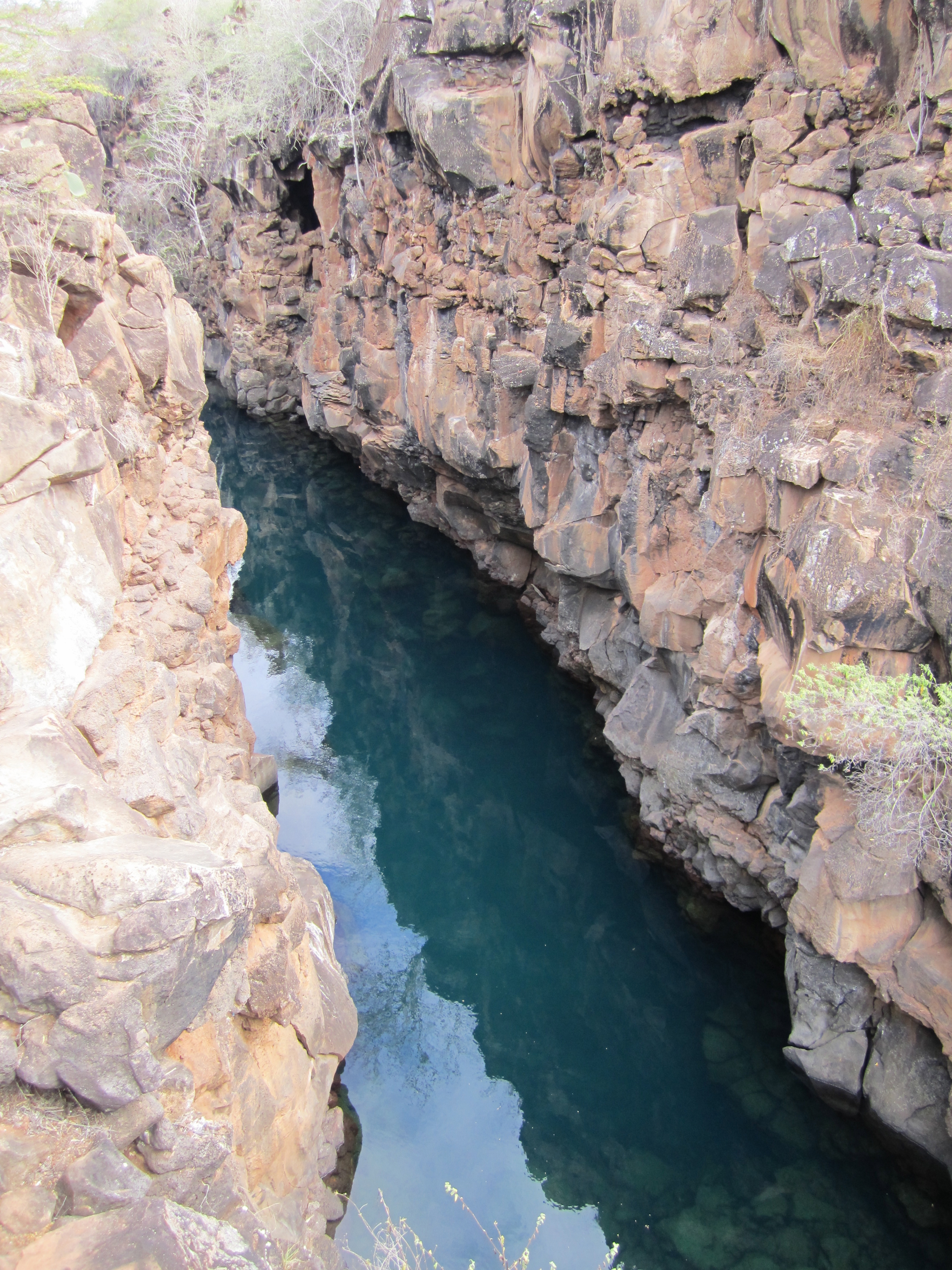
Las Grietas... care to jump?

Charles Darwin Center: This was our least favorite of the tortoise breeding centers. Since people were busted riding on the giant tortoises, they have closed the pens and you can only the tortoises from afar. There are some beautifully colored land iguanas and “Lonesome George” (the last tortoise of his species) is there. There is also a little beach off of the path. The information center here wasn’t as good as the one in San Cristobal either. Taxi to here from the port costs $1.

Tortuga Bay: This beach is HUGE and beautiful. It’s about a 10 minute walk from town to the check-in office. Then it is a 30 minute walk to the beach on a nice path through a cactus tree forest. The beach you arrive at has pretty strong currents/waves, so be careful swimming. For more calm action, turn right and walk down the beach for about 15 minutes. There is a protected bay here. We tried snorkeling in the bay, but the visibility and wildlife wasn’t too impressive, but we did see two fairly decent sized sharks. You can also rent kayaks here to try to spot wildlife from above the water ($10 per hour)- we saw a few rays. This part of the beach would be great for relaxing the day away because there were quite a few trees to provide comfortable shade to sit under. Bring water/snacks and beach closes at 6pm.
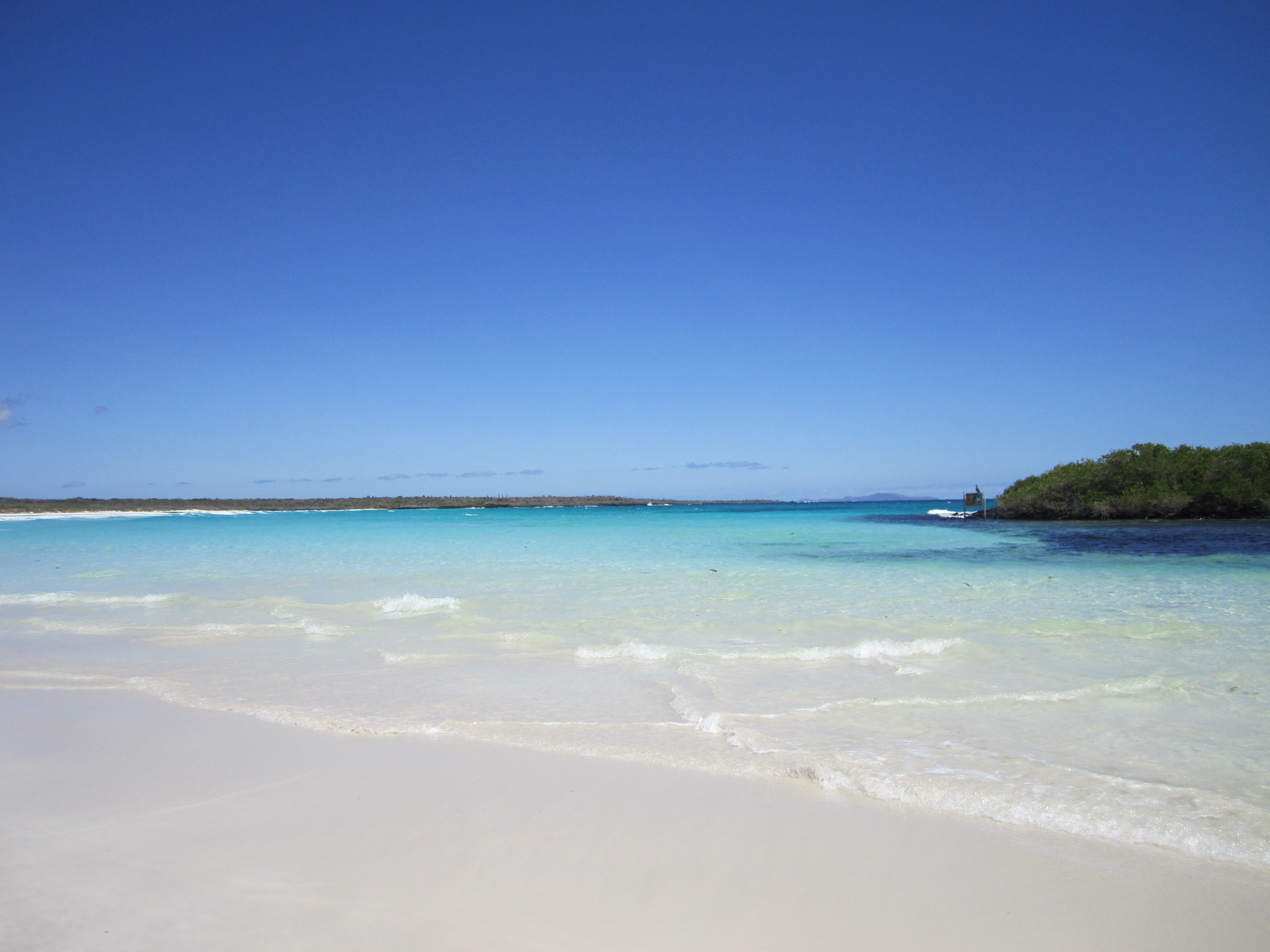
Tortuga Bay

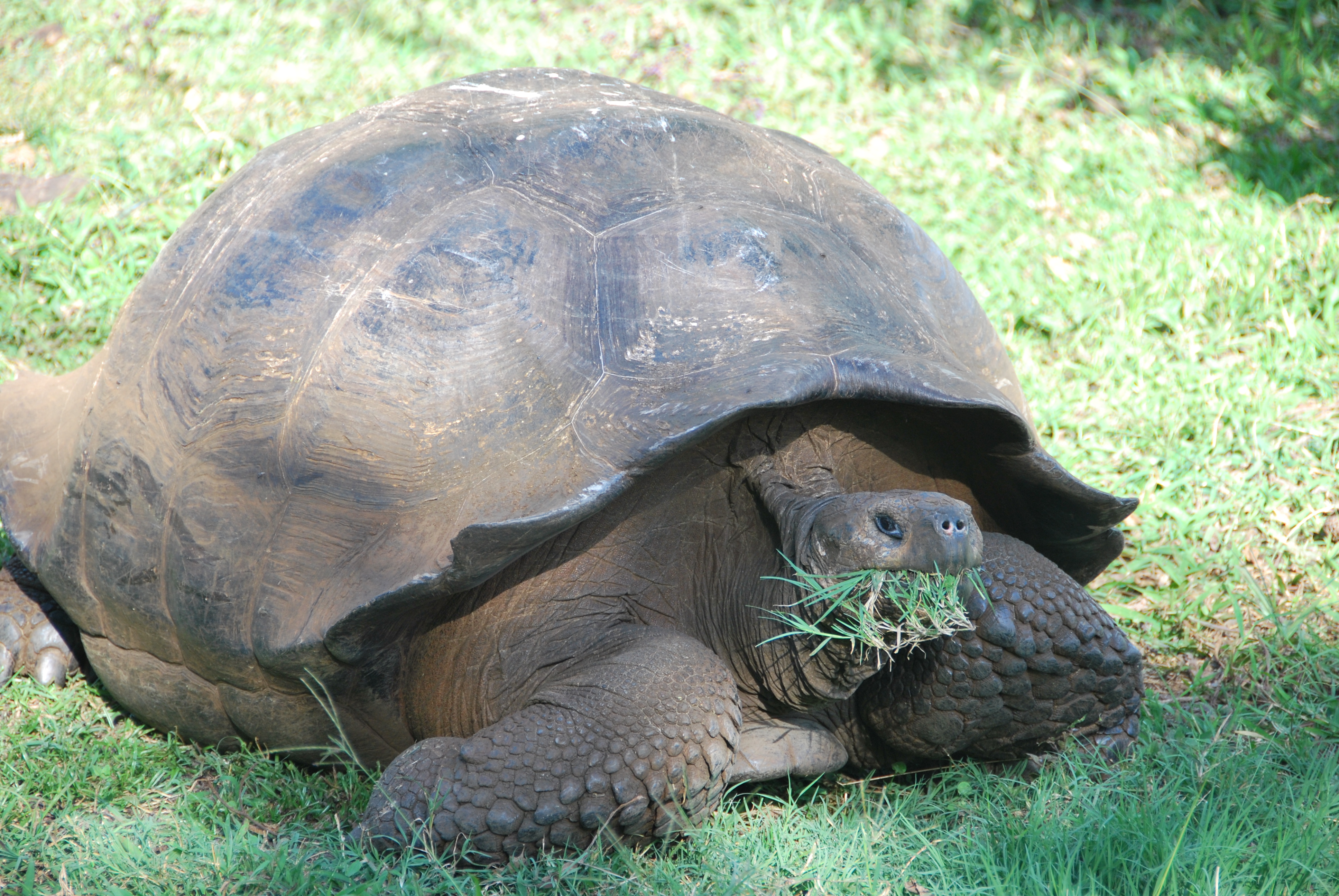
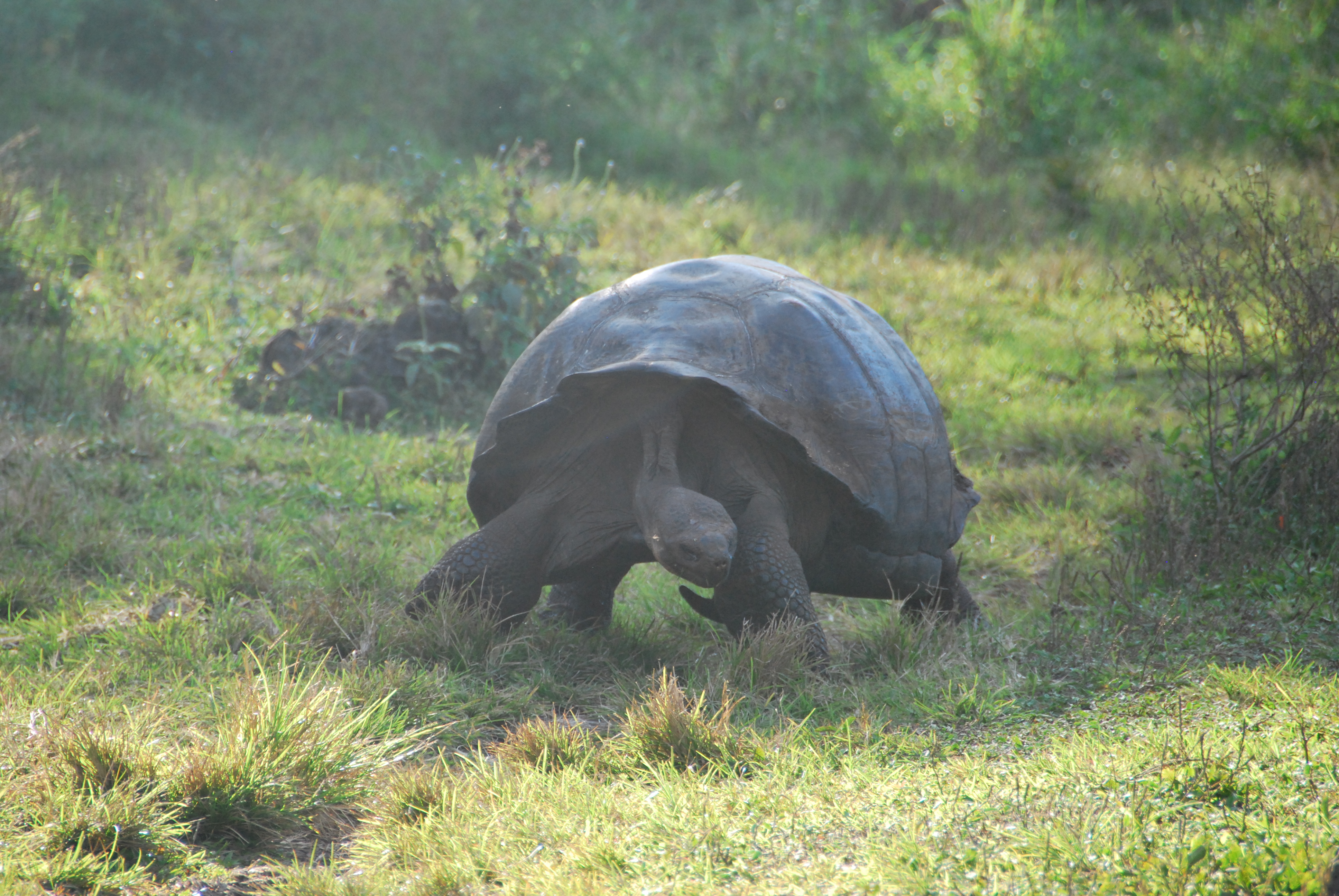
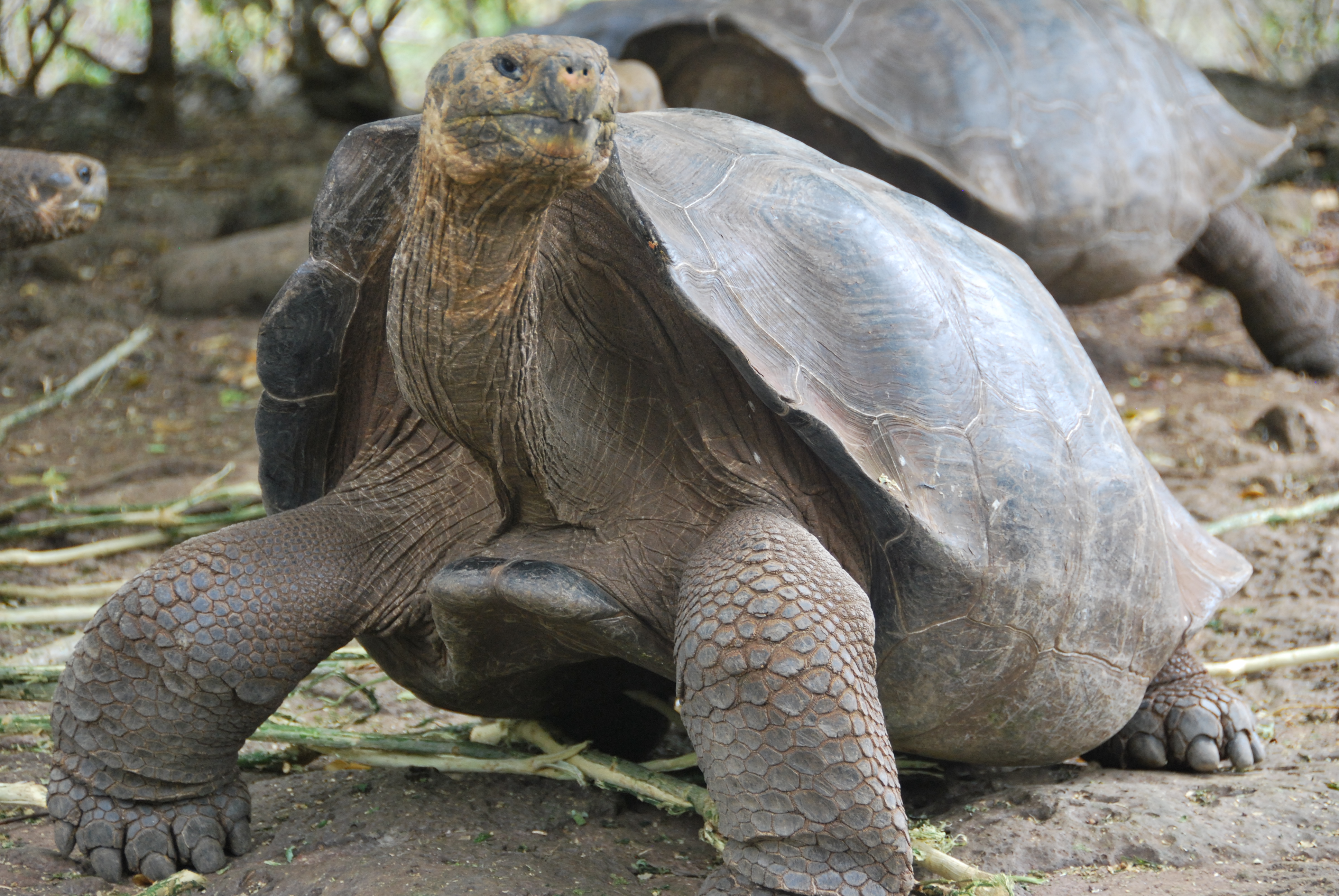
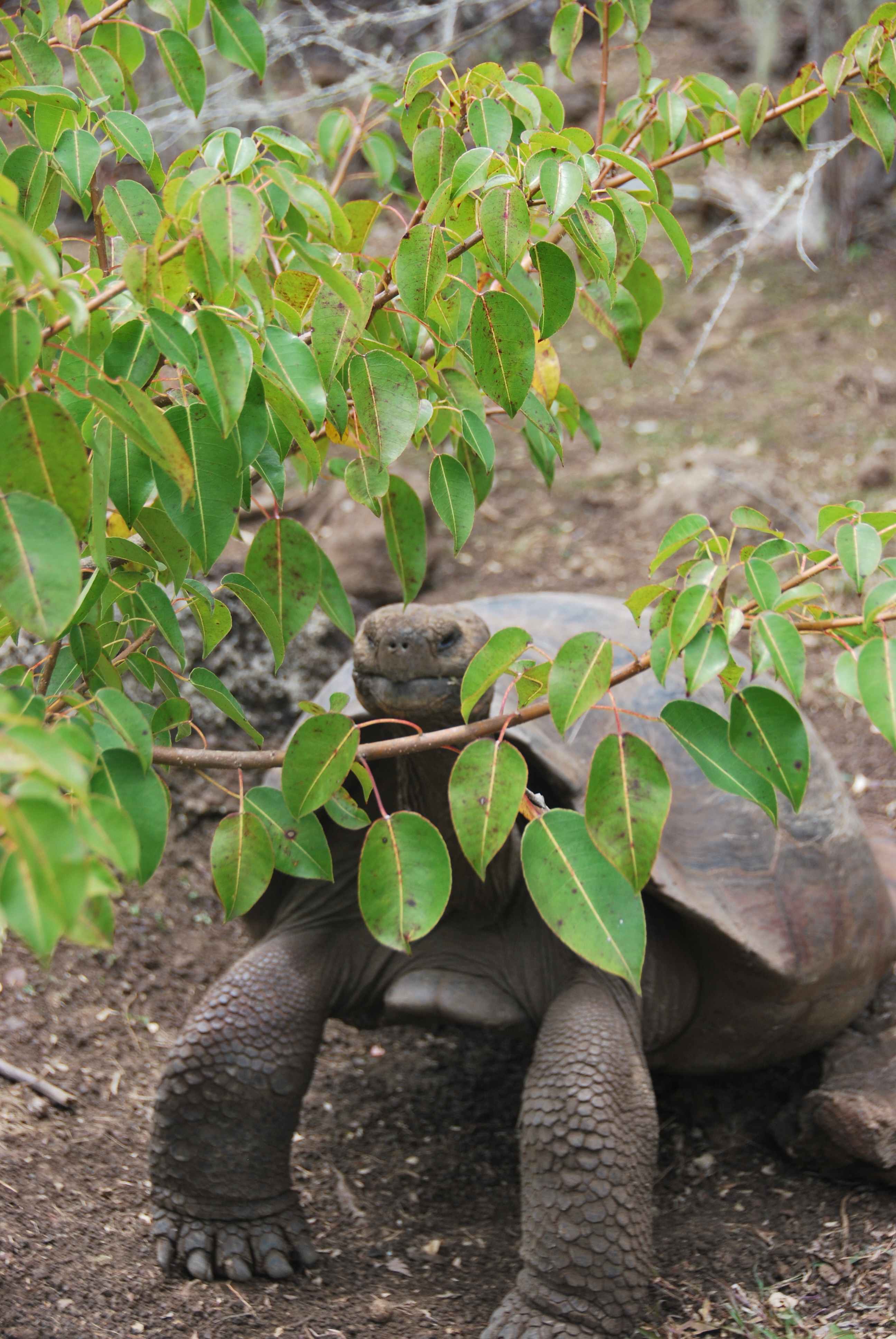
Highlands Tour: We did a highlands tour on Santa Cruz as well. We walked through a large lava tube. We were also taken to family farm adjacent to the national park (Rancho Primicias ) where giant tortoises roam free. There were so many HUGE tortoises and it was great to see them “in the wild” and walk among them. Overall, we felt this tour was a bit pricey for what it actually was, and the tortoise farm was by far the best part. If all you’re interested in is the tortoises, and you have time before your return flight, I think you could just pay the cab a little extra (it is $18 per cab for just the 45 minute ride to the airport) and they can stop here at the tortoise farm for you. Of all our tortoise viewing experiences, this one was our favorite.

One of the many giant tortoises

FYI:
There are buses that go to the airport (much cheaper than cabs) but confirm the times the day before. The times listed in Lonely Planet were incorrect (surprise!).

There is a street of restaurants (I think it was Charles Binford) in Puerto Ayora that takes over the street at night. Reasonably priced food and a fun place to watch futbol games!


Random tidbits of advice:
The supermarket in Puerto Ayora is by far the best market on the islands (both for price and selection).

We visited during the low season, so prices may be a bit higher depending on the timing of your visit.

We got a fairly handy and free spiral bound guidebook at the tourist information center.

We tried to book a day trip to Bartolome (an island that is highly recommended by everyone), but it was all booked up. In hindsight, we should have booked it further in advance. If we would have been really smart, we would have used the time we had in Puerto Ayora (we had about 5 hours between ferries) to walk around and secure the day trip for when we would return.

Ferries from San Cristobal and Isabela to Santa Cruz leave very early in the morning (7 am and 6 am respectively).


We hope this quick little guide helps if you are planning to visit the Galapagos on your own. Feel free to comment if you have any other questions that we can help you out with. Most importantly, go and enjoy the Galapagos!
Posted in Ecuador | Tagged , , , , | 21 Comments

Santa Cruz – Galapagos

Arriving in Puerto Ayora, on the main island of Santa Cruz, was a bit of a shock to our system.  We had just left the sleepy island of Isabela and its sandy streets, and now we were surrounded by the hustle and bussle of the “big” city.  Puerto Ayora is by far the most populated city on the islands (10,000 people), and it is the starting point for most Galapagos cruises.  The population of this town probably doubles with all the tourists in big floppy hats who seemed to be everywhere!  We only had two shorts days to explore this island, so we slipped on our flip-flops and hit it.

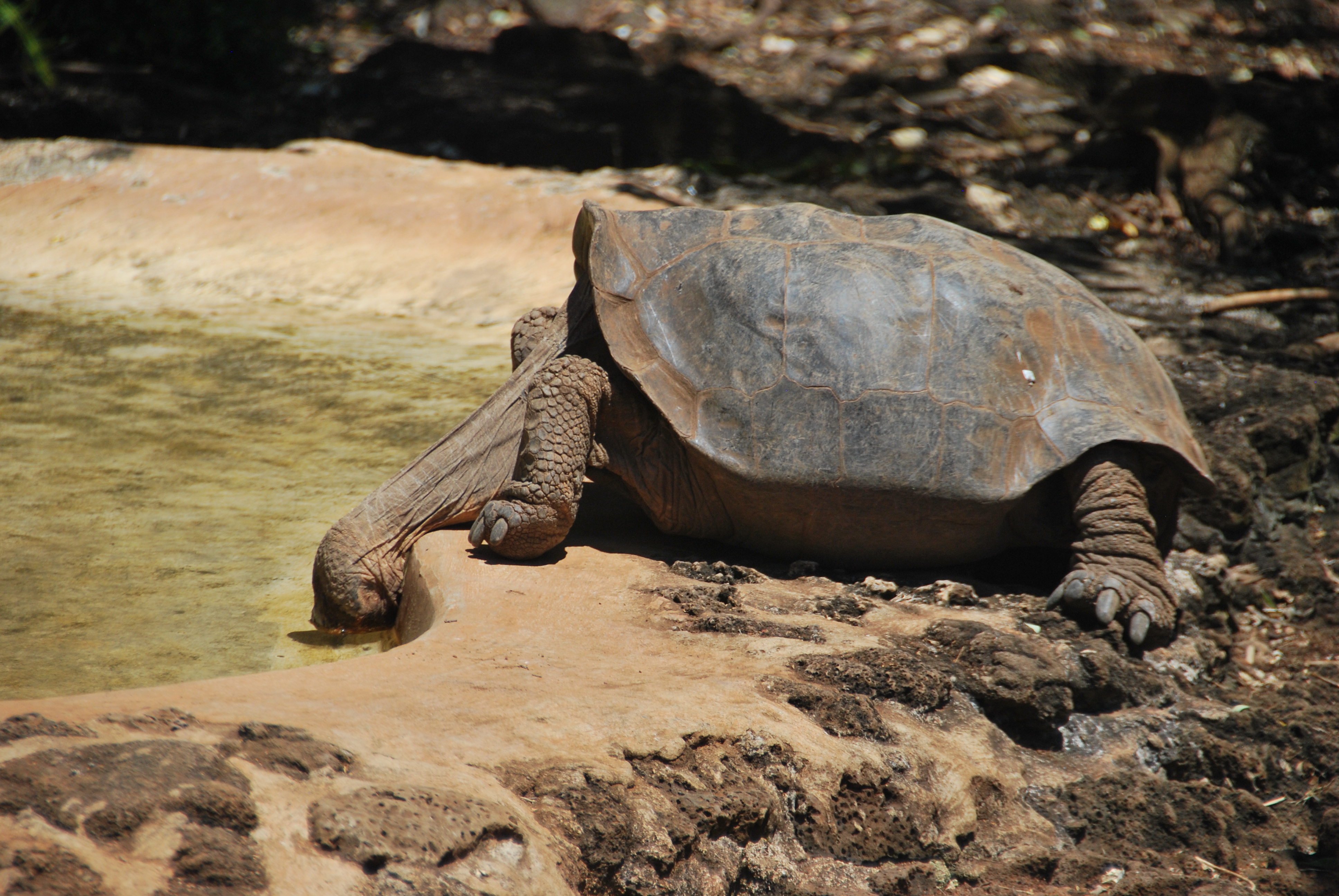
We first checked out the Charles Darwin Research Station, but we were somewhat disappointed with what we found. We couldn’t get as close to the tortoises as we would have liked. It turns out that you used to be able to walk among them, but after several people were caught riding them, a blatant violation of the 2 meter rule, they closed all the pens. You were able to check them out from afar, but it didn’t nearly have the same impact as being up close like we were in San Cristobal.

Getting a drink... that neck is useful!

We did get to see the famous “Lonesome George,” the last tortoise of his species. They are currently trying to breed him with others so his species won’t totally die out, but so far, they haven’t been successful. I guess he’s just a picky guy.

Lonesome George hiding out

We took at water taxi and walked about 10 minutes to get to Las Grietas, two lava fissures that have formed a canyon.  The canyon is filled with clear, deep water, and the cliffs made it the ideal place for jumping. Once again we realized the benefit of traveling minus a tour group… we had the place to ourselves!

Las Grietas

We heard that some loco locals would jump from the top, but we were only brave enough to climb up about 10 feet up before jumping. The clear, warm water made it the perfect place to hang out and swim, and if we would have had more time on the island we could have easily made a day of it.

Joe doing a little snorkeling

Next on the agenda was a trip to Tortuga Bay. We wanted to rest our toes in the soft sand, watch the surfers, gaze at the wildlife, and take in a sunset.  The 30 minute walk to the bay took us through a strange cactus forest.  These cacti are endemic (only found here) to the islands and they look very tree-like once fully grown.  We had never seen anything quite like it. The insides of these “cactus trees” look very similar to a sponge, which must make it easy for them to hold a lot of water.

Cactus tree

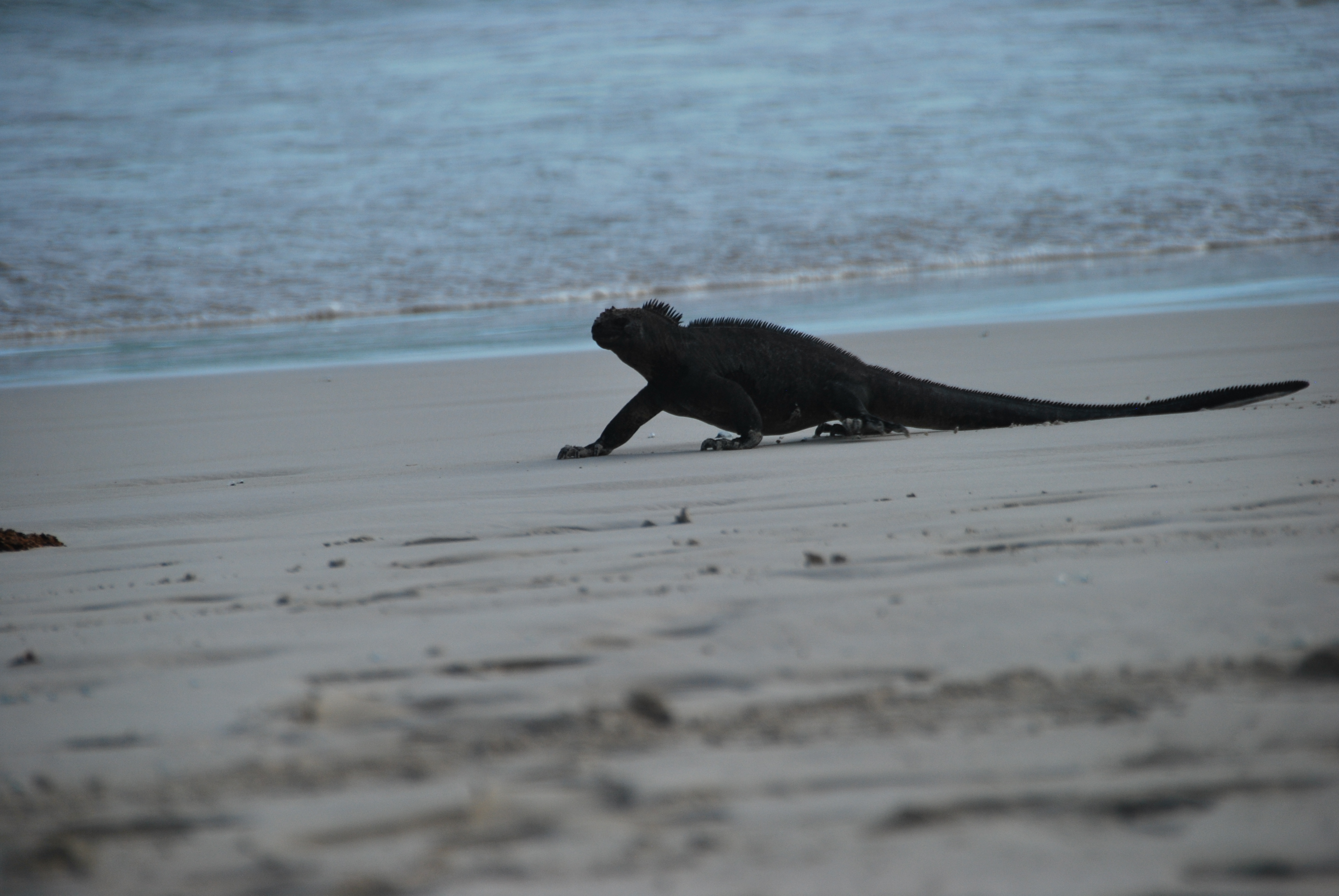
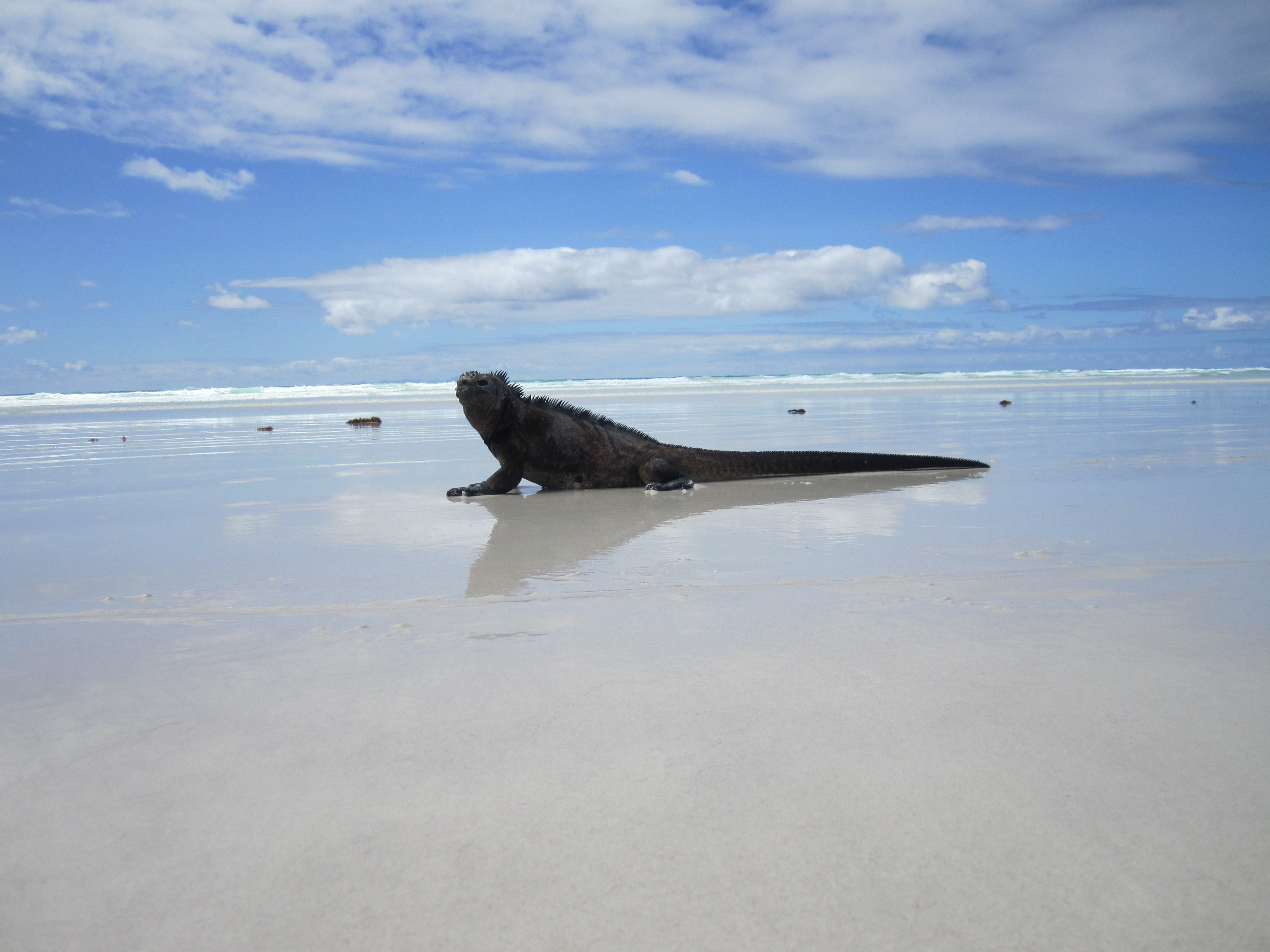
Upon reaching the beach we had just enough time to watch a few marine iguanas wander up the shore before we had to head back to town.  The sand, water, and scenery were so inviting we decided we had to come back the next day.

Marine Iguana strollin home

The next day, after almost being convinced to take a last-minute 4 day cruise (too expensive), we decided instead to rent some gear and try out snorkeling in Tortuga Bay.

We arrived at the beach just as the marine iguanas were heading out for a swim.  Even with all the iguanas we had seen on the other islands, this was the first island where we actually saw them swimming. Quite a sight!

Getting ready for a swim

They like to swim in the morning to eat and then spend the rest of the day sunning to warm back up.  Doesn’t sound like too bad of a life to us.

Nice iguana stroke

We meandered down the beach to a protected cove for some snorkeling.  Unfortunately the swell seemed to be churning up the sand in the bay, making the visibility only around five feet.  This did not deter us adventurous travelers from getting in and taking a look, after all, we did pay for the gear.

We swam hand in hand, not only because we are madly in love, but also because we didn’t want to lose each other, and it was a little scary not being able to see too well. Despite our hand-holding and amazing snorkeling abilities, it didn’t seem like there was much to see in this bay.

At one point the visibility got pretty bad and we could barely see our hands in front of our faces.  This made us hold on a little tighter to each other, kick a little faster, and strain our eyes to see what was ahead of us.

The second the water cleared, we saw two fins and two tails of TWO white tip reef sharks, not more than six feet away.  Joe heard the most colorful words come out of Kristen’s snorkel that cannot be repeated in this blog.  They swam away pretty quickly and we missed the photo-op of this brief encounter. After that, we also swam pretty quickly to the shore, not because we were scared, but simply because we were “cold.”

We rented a kayak to see if we could spot one of these sharks from a safer vantage point. We didn’t see anymore sharks on our paddle, but the views were great.

Tortuga Bay from the kayak

After our beach time we made a quick trip into the highlands to visit a lava tube and view some giant tortoises in the wild.

The lava tube was fun to walk through, and it was so large, that it could have easily been confused as a tunnel for cars.

Lava tube

This particular one ran for about a quarter of a mile. As we walked through it, we imagined the insane amount of lava that must have passed through this tube at one point.

After exiting the tunnel, we journeyed to a farm which has become a fun playground for the wild tortoises.  It is conveniently located next to the national park and the tortoises are free to come and go as they please.

We took far too many pictures of these guys, but had a great time watching them.

Hungry fella

Couple of big guys out and about

This farm had the biggest tortoises we had seen during our entire time in the Galapagos, and they were wild too.

Cute little guy

Kristen and her new friend

Tortoises taking a dip

Joe bet Kristen he could make it across the pond without getting wet (Mario Brothers style), but Kristen didn’t want to take that bet.  She’s such a rule follower!

This guy is at full speed, must be a nice patch of grass ahead

This was probably the biggest guy we saw.

I might look a little surprised as the Volkswagen Bug behind me just moved.

The farm had a few shells with you could “try on” to see what the tortoises go through each day carrying that heavy shell around. Let’s just say it was not easy to get this off the ground.

The tortoises make it look much easier

The next day we boarded a flight and headed back to Quito. It was a little sad to leave such a unique and wonderful place, but we hope to return one day.  Despite not taking a cruise, we were very impressed with all that we were able to see and do, especially for such a (relatively) small amount of money.

A special shout out goes to all the wildlife we encountered while in the Galapagos. Thanks for showing up, posing for all the pictures, not biting us, and not pooping on us. You made our trip extra special.

Posted in Ecuador | 5 Comments

Isabela – Galapagos

Sunset on our first evening in Isabela

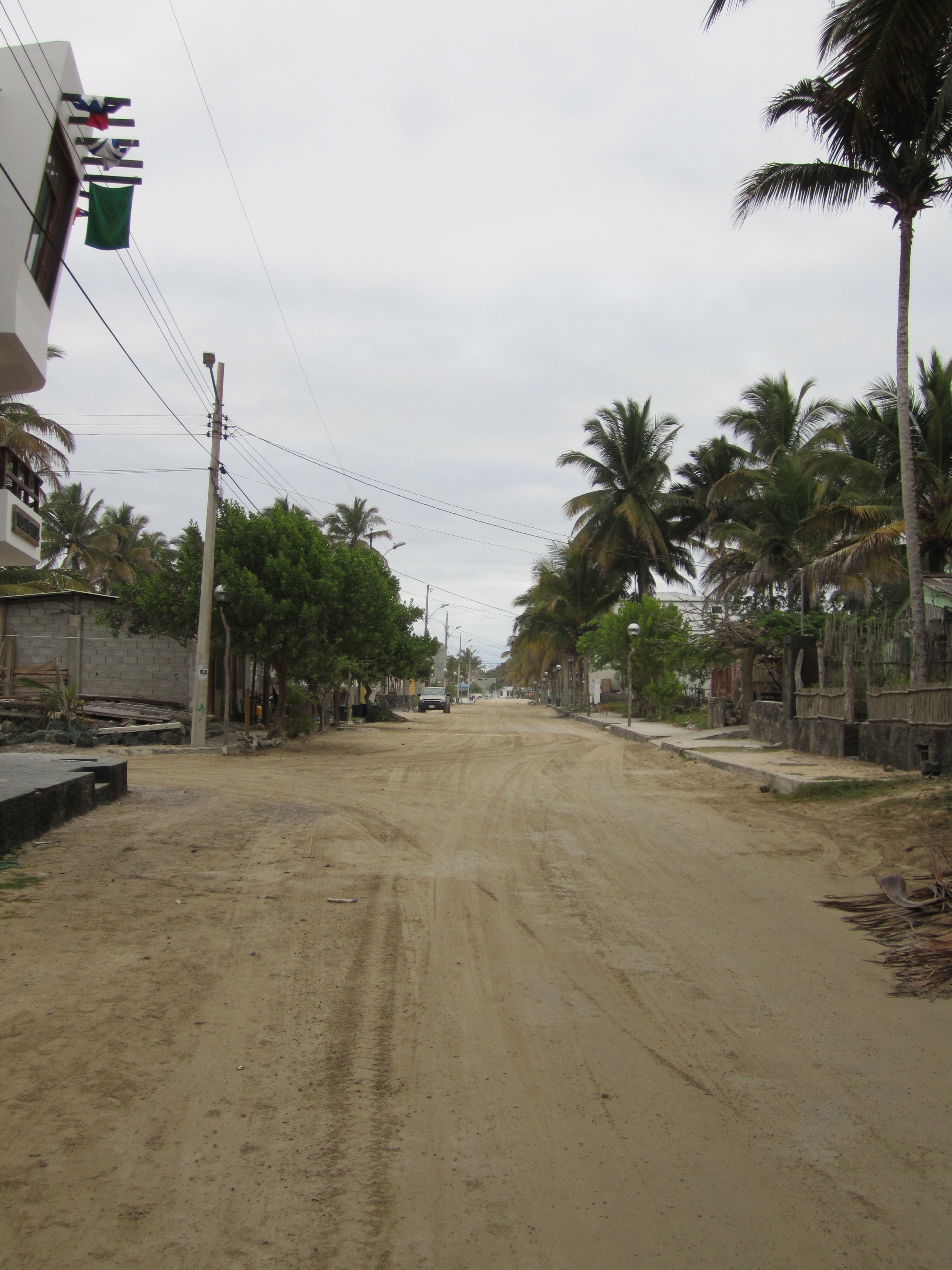
We arrived on the sand filled streets of Puerto Villamil, on Isabela island,  after two ferry rides and a quick stop on the island of Santa Cruz.  This island had a total different vibe and look than the other islands. It had much more of a laid back beach/surfer vibe, especially when compared to the relatively “busy” city in San Cristobal.

I don't think we've ever been anywhere that had sand for streets before!

Even with its relaxed vibe, the island still had many adventures to offer.  On our first day, we rented bikes and rode up the coast in the quest of finding flamingos and a few other special animals.

Our first stop was at a tortoise breeding center, similar to the one on San Cristobal.

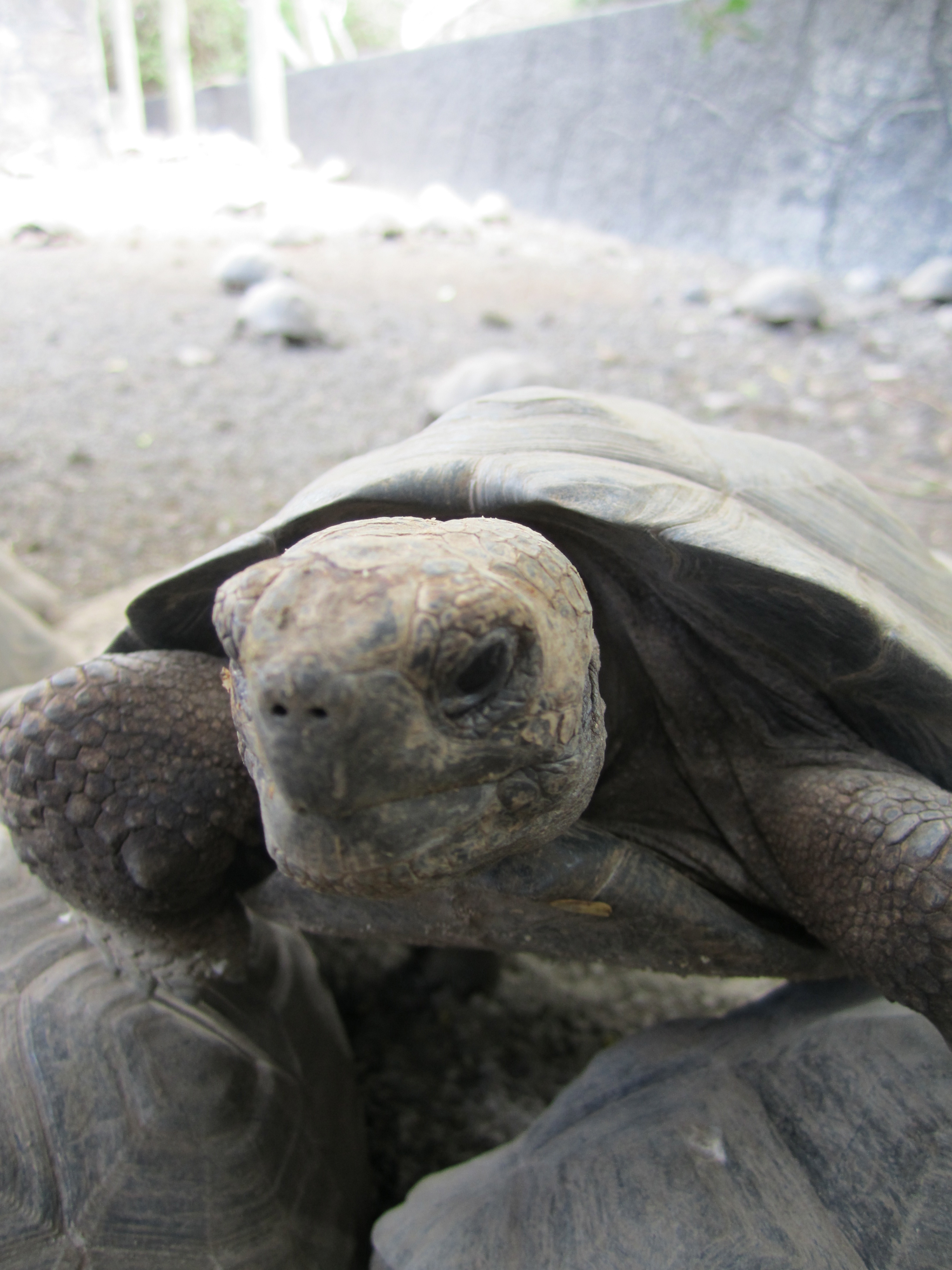
Young Giant Tortoise (super close up) - about 3 years old.

These breeding centers are very important for the survival of the Galapagos Tortoise, as the invasive species on the islands make it all but impossible to sustain their population naturally.  They are hoping to one day restore the tortoise populations to what they once were.

All the "kids" out in the play ground

This breeding center has had great success and is currently releasing approximately 100 tortoises in to the wild each year.

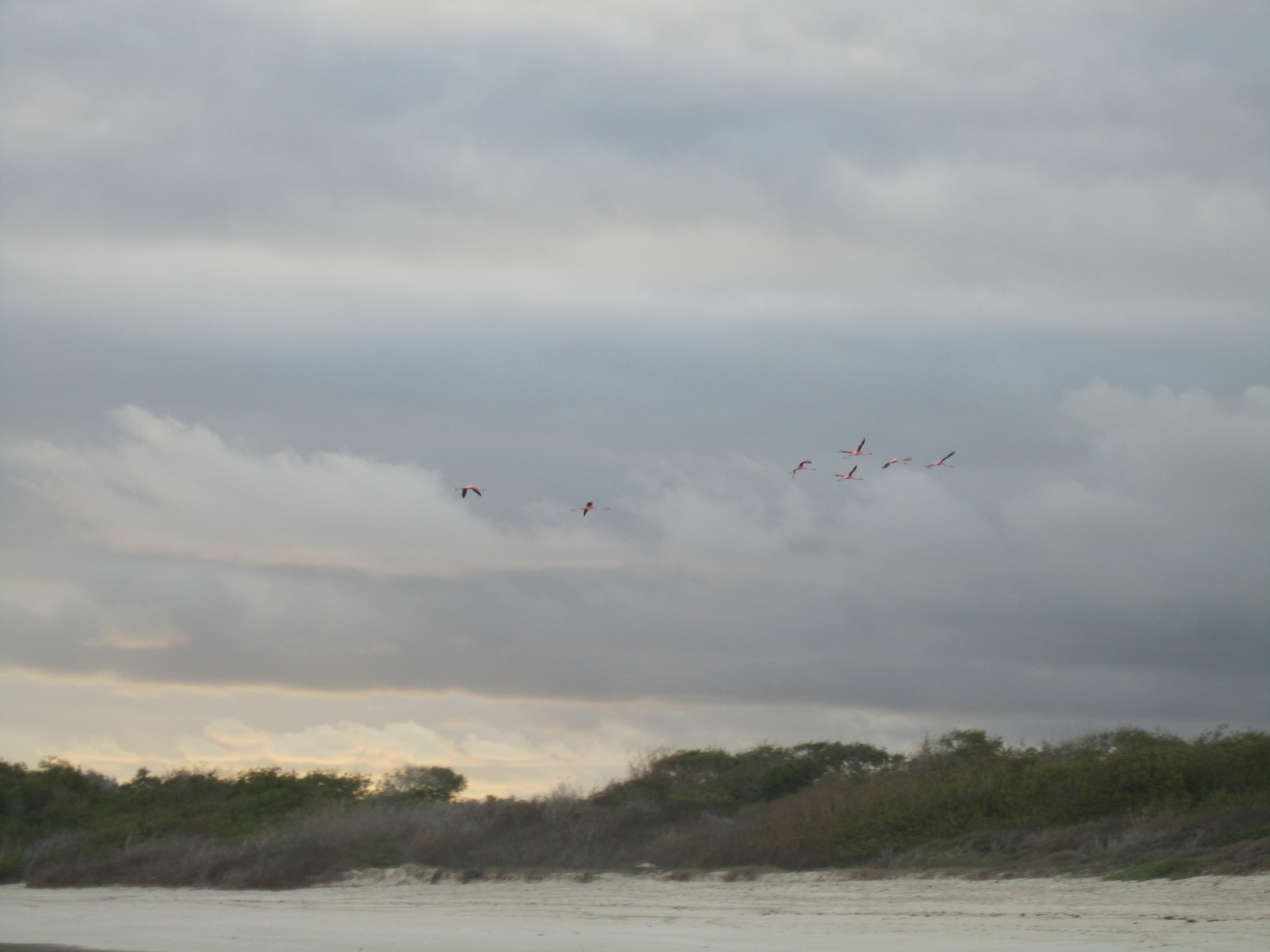
We remounted our bikes and continued on our quest to find the elusive flamingo.  We had seen a flock flying the evening before, so we knew they had to be around somewhere.

A flock of flamingos! Not the most graceful in flight.

We passed several ponds which were said to be breeding and feeding areas for these strange birds, but apparently they didn’t get the message.

Pond minus flamingos...

In place of these pink birds, we found a few more marine iguanas to watch. These were some of the biggest ones we’ve seen! They looked like little dinosaurs.

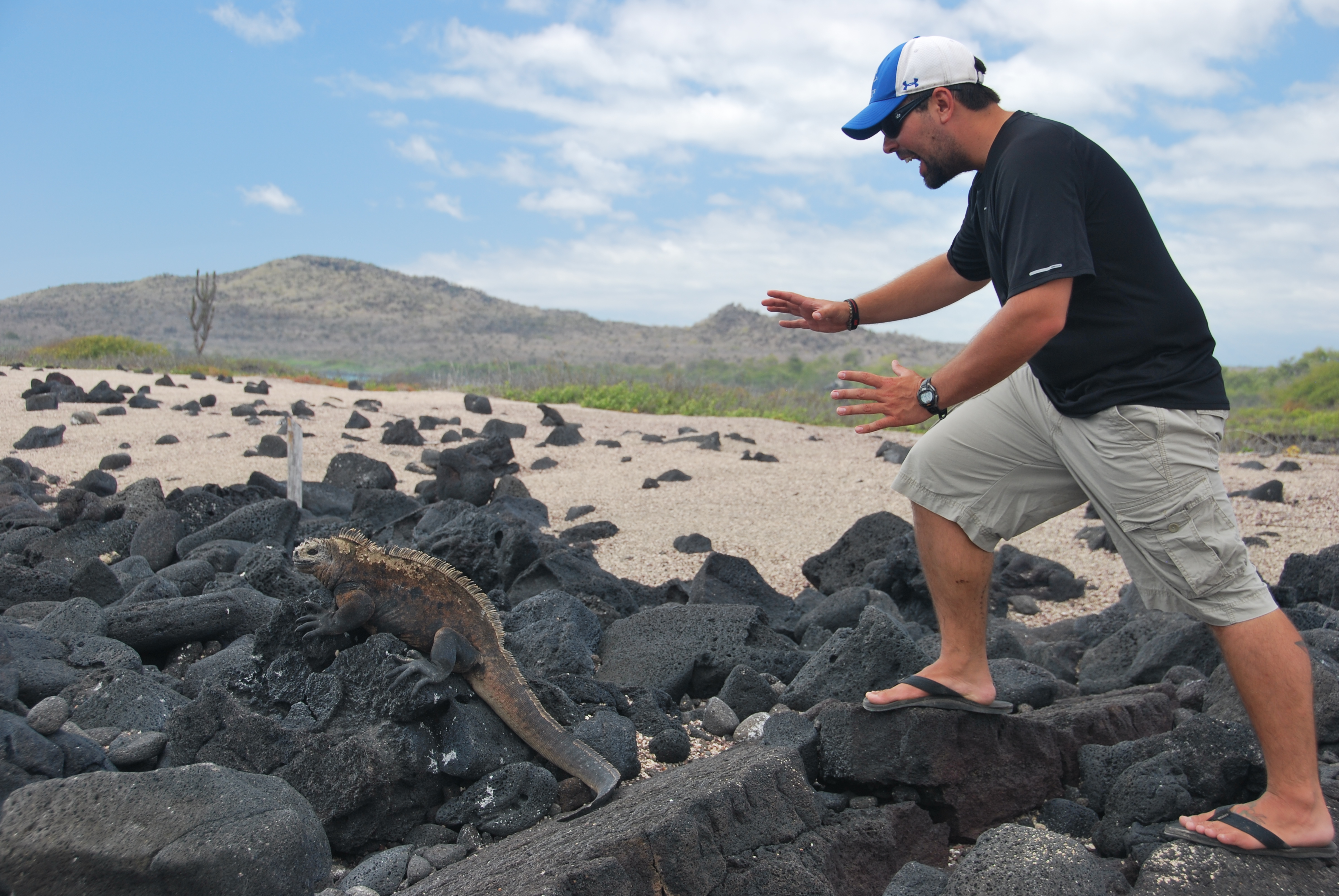
Get that Iguana - By the way, I am 2 meters away as required by Galapagos' rules

If you can’t tell this guy was so terrified of me, he probably moved about two inches. Most of the animals here don’t really seem to care about the people around them.

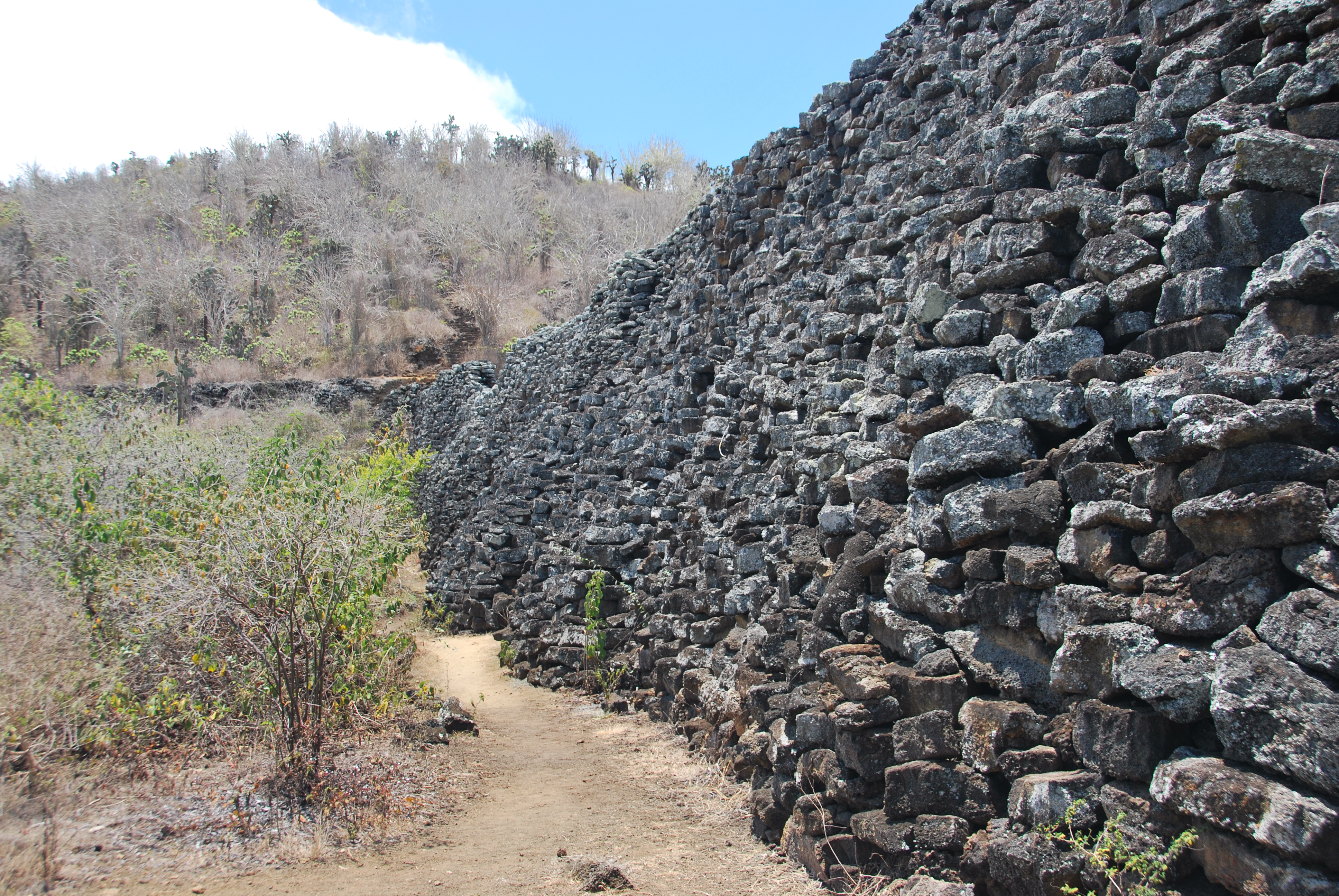
We rode a little farther down the road to were an old penal colony was once located.  Not really too much to see here except for “The Wall of Tears” that the prisoners had to build as their punishment. Judging by the wall size, it looks like a lot of “punishment” was doled out.

Wall of Tears

It turns out that the wall has now become a giant wasp nest, so we didn’t stay too long… just long enough for Kristen to get stung.

The great flamingo hunt of 2011 was a bust, but we enjoyed our bike ride anyway. It was good for us to get some “off-road” bicycle practice for any fun rides that we might do when Teresa comes to visit.

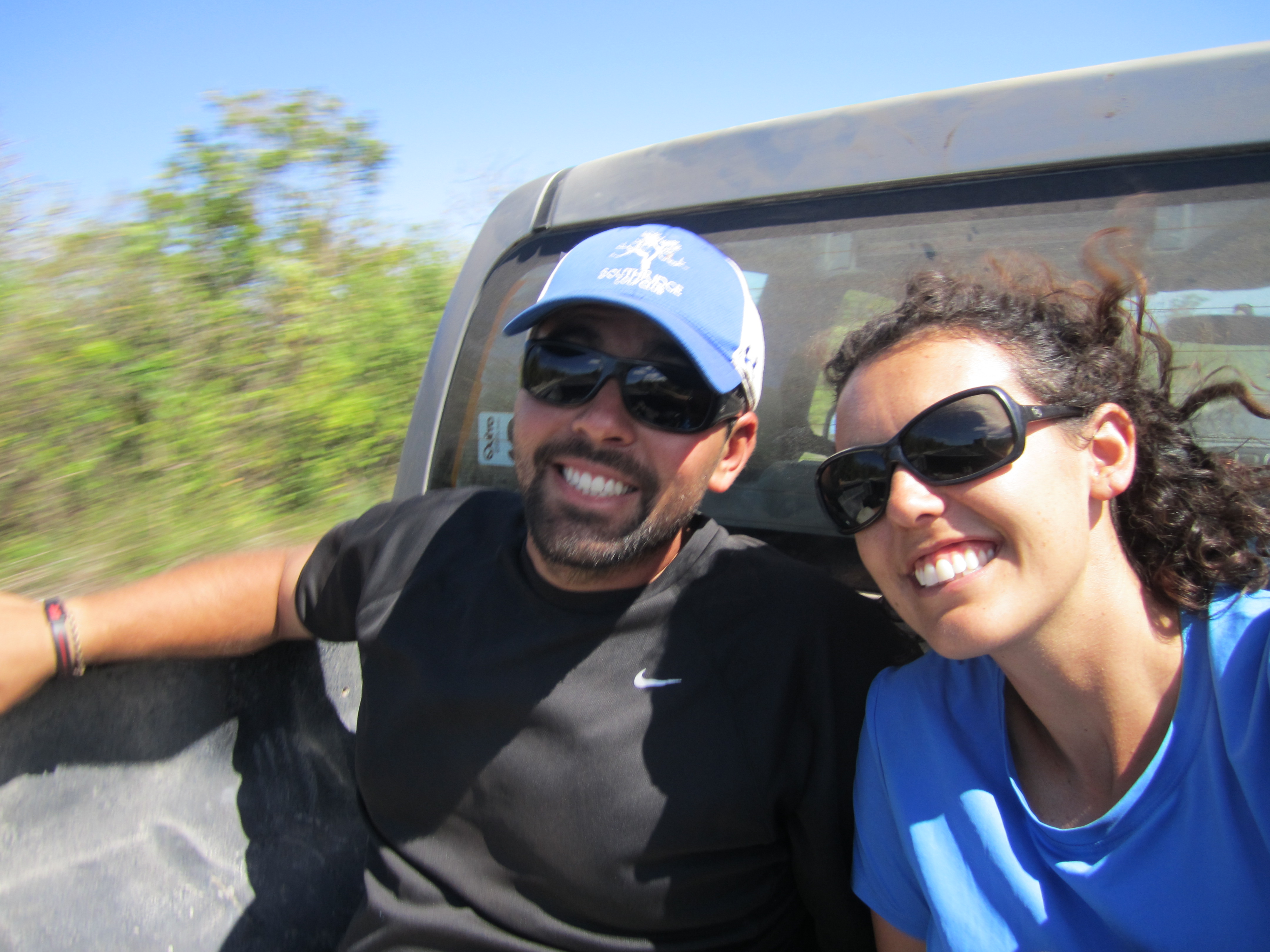
The next day, we decided to check out one of the volcanoes on the island. We climbed aboard a truck and whizzed out of the town at death-defying speeds.  Guess Darwin forgot to put up speed limit signs, or maybe this is how evolution works?

We thought this might be our last picture

It turns out the Galapagos have more to offer than just interesting animals, as the geology here is quite amazing because these islands are relatively young.

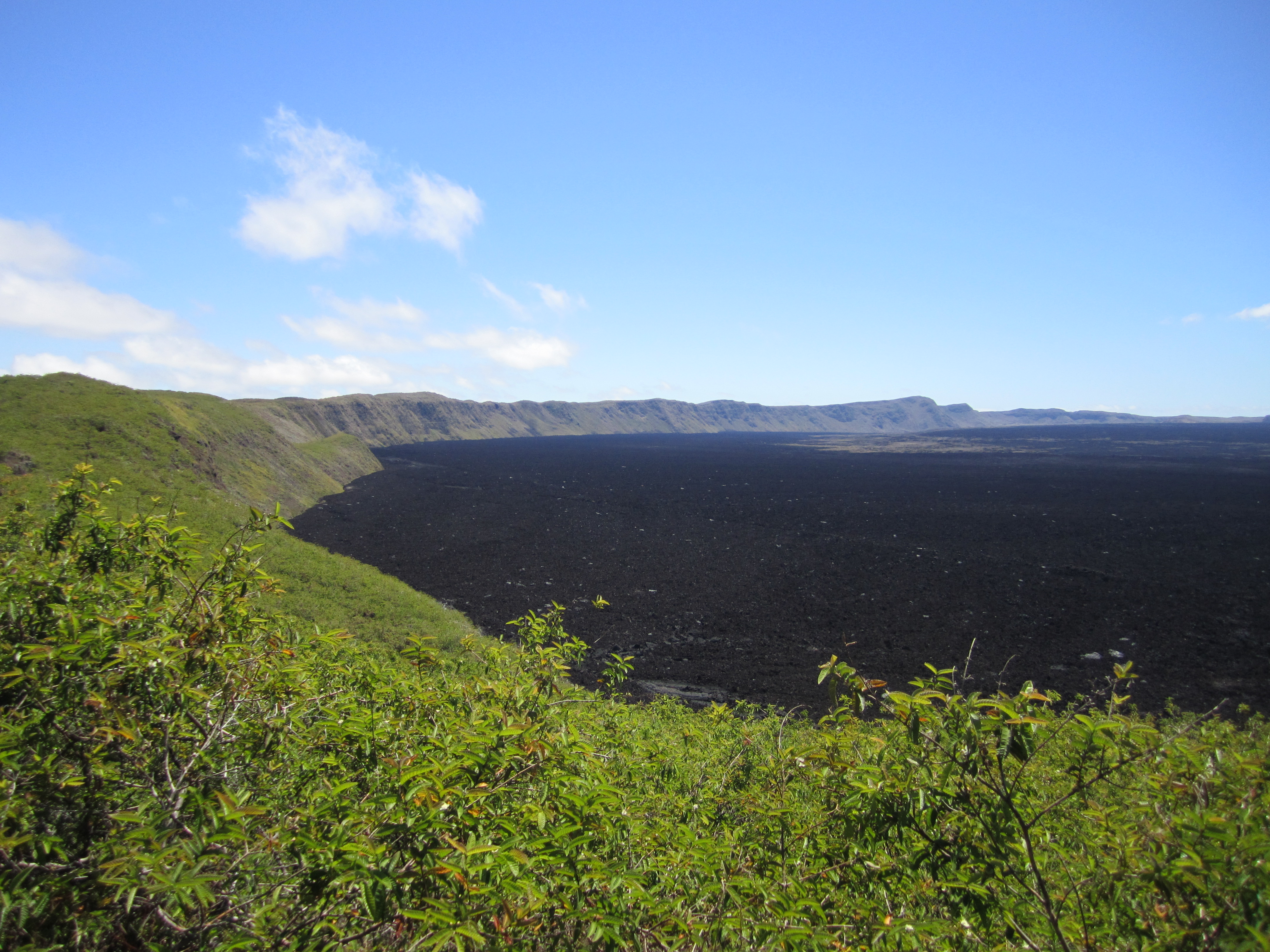
Sierra Negra is a fairly active volcano that last erupted in 2005, when its crater was filled with up to 10 meters of molten lava.

Just a part of the Sierra Negra crater (This thing was so huge, it was impossible to fit the whole thing in one shot)

They say this is the second largest active crater in the world (supposedly after Yellowstone), but we have not fact checked that one yet.

We lucked out and the weather was great during our hike. The views in all directions were killer and we could see many of the other Galapagos islands on the climb.

View from the top

Being gluttons for punishment, we continued hiking over an area reminiscent of the moon to Volcano Chico.  This area of the island is very arid (aka: no shade), but luckily there was a decent enough breeze to cool us down.

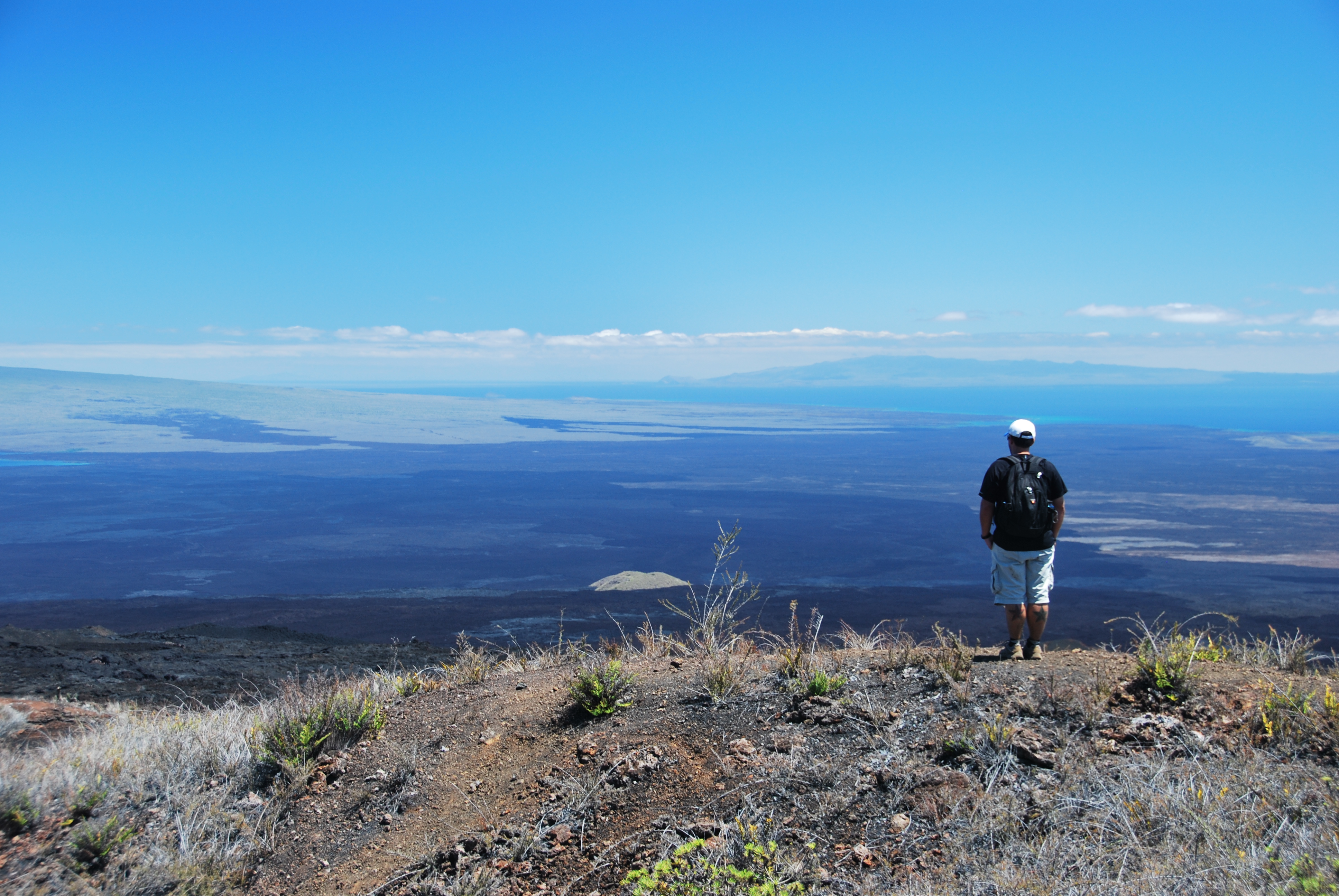
Joe looking out - Lava once flowed all the way to the ocean

The landscape is barren but strangely beautiful.  This part was last active around 1979, so I guess you can say we are almost as old as dirt, well in this area at least.

Moon walking.

Lava tube slides are much faster with lava

Finished with our geological tour, we hopped back into the trucks and headed down towards the coast.

Just when we least expected it, we made our greatest discovery… flamingos.  We have been on the constant lookout for these pink birds after that first amazing fly by.  Who knew they would prefer the local rock quarry to the ponds that are provided for their protection?  Luckily our guides did, and they made sure to give us a peek at this colony of flamingos.

Flamingo in flight

Classic pose... How boring.

Pink colony and some ballet

We pretty much could have ended our trip at this point and flown home happy, but we wanted to go snorkeling again.  Just next to the town harbor, there is a great place to snorkel and see a lot of wildlife called Concha y Perla.

At first we weren’t too impressed with the snorkeling that everyone had RAVED about. Then we realized that we were really supposed to go to the outer pond to snorkel. How do you get to the outer pond, you ask? Oh, simply by walking over a bunch of lava rocks… in flippers. We really should have gotten pictures of this “2 Stooges” routine.

Once across, and with just a smidge of our dignity intact, the snorkeling turned out to be just as amazing as everyone said.

Giant sting ray

Joe swam over him just to gauge the size.

Joe fly by - This guy is huge

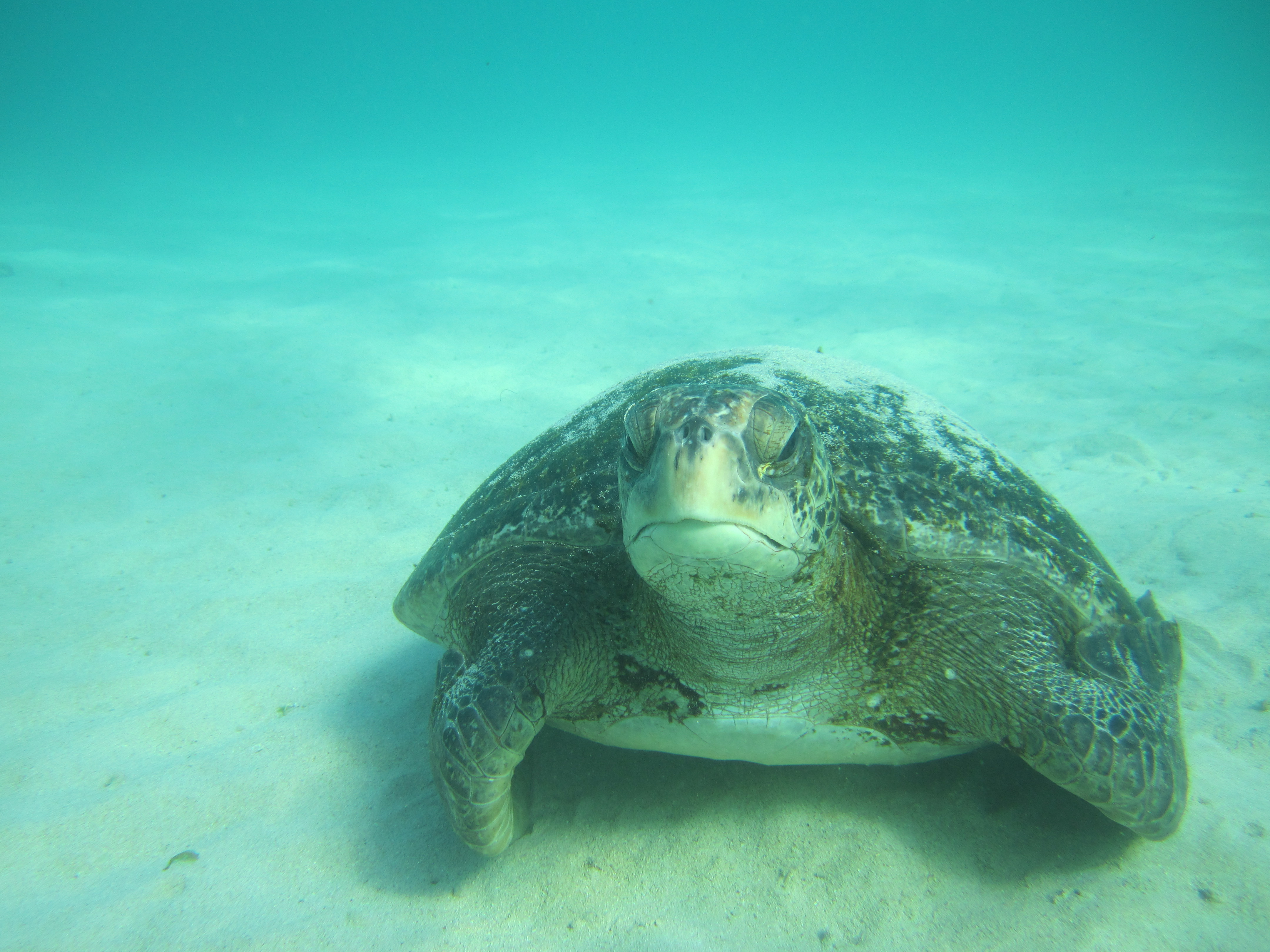
Again we found some sea turtles.  For some reason, instead of swimming around, they liked this area to sit on the sand and just relax.

This guy seemed to have a little attitude

The wildlife was nice, and this time we didn’t see any sharks, so we swam a little easier.

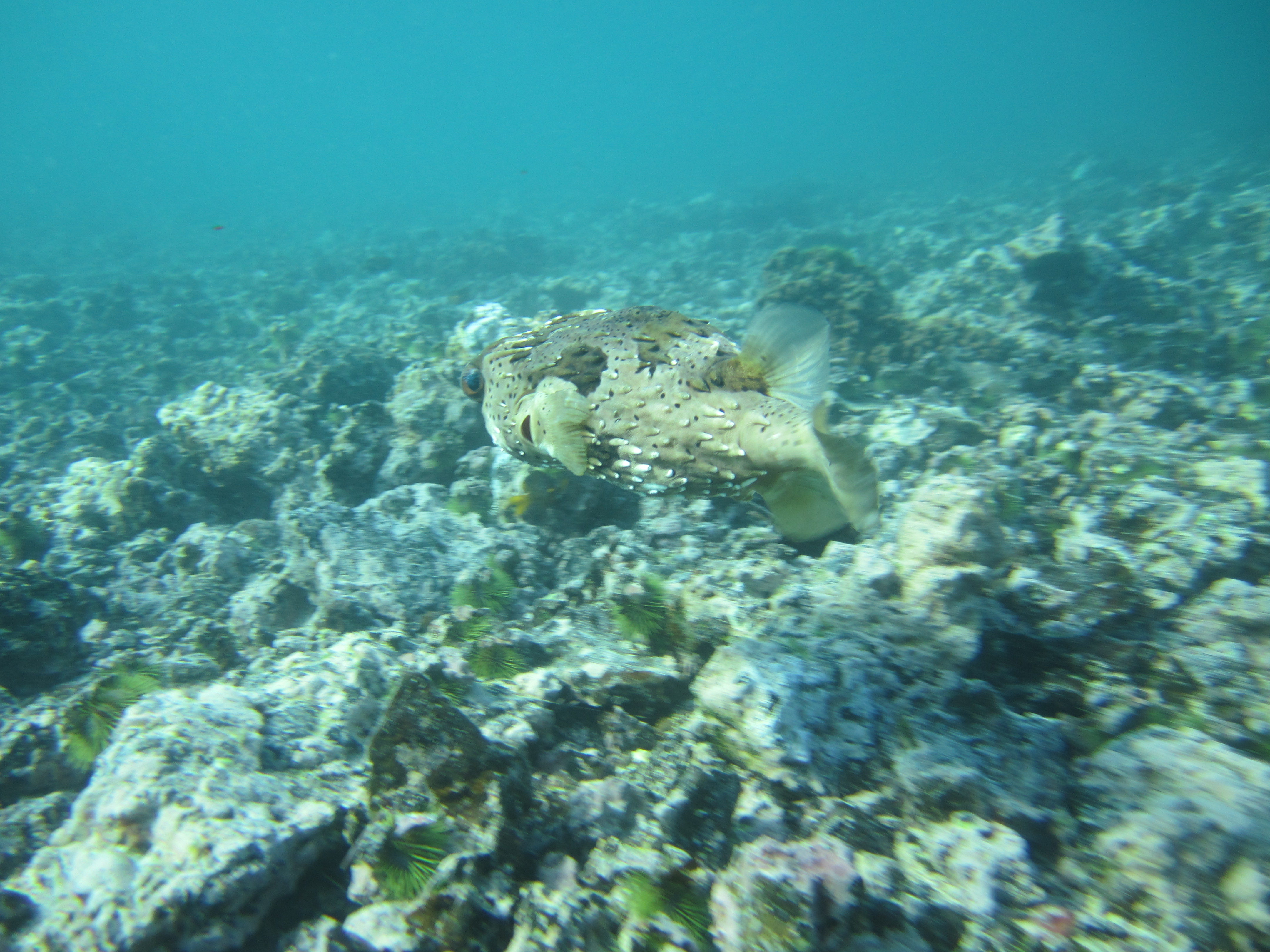
Puffer fish - he didn't like us for some reason

The final day on Isabela we took a short boat ride to Las Tintoreras, which is named after the white tip reef shark that likes to rest there.  In addition to the sharks, the island is also a great place for marine iguanas, sea lions, and penguins.

Sleeping sharks

Nap time over

We only saw two penguins, and it was from a distance, but they were so cute that we wanted to bring one home with us. Luckily for the penguin, we don’t have room in our bags.

Penguin

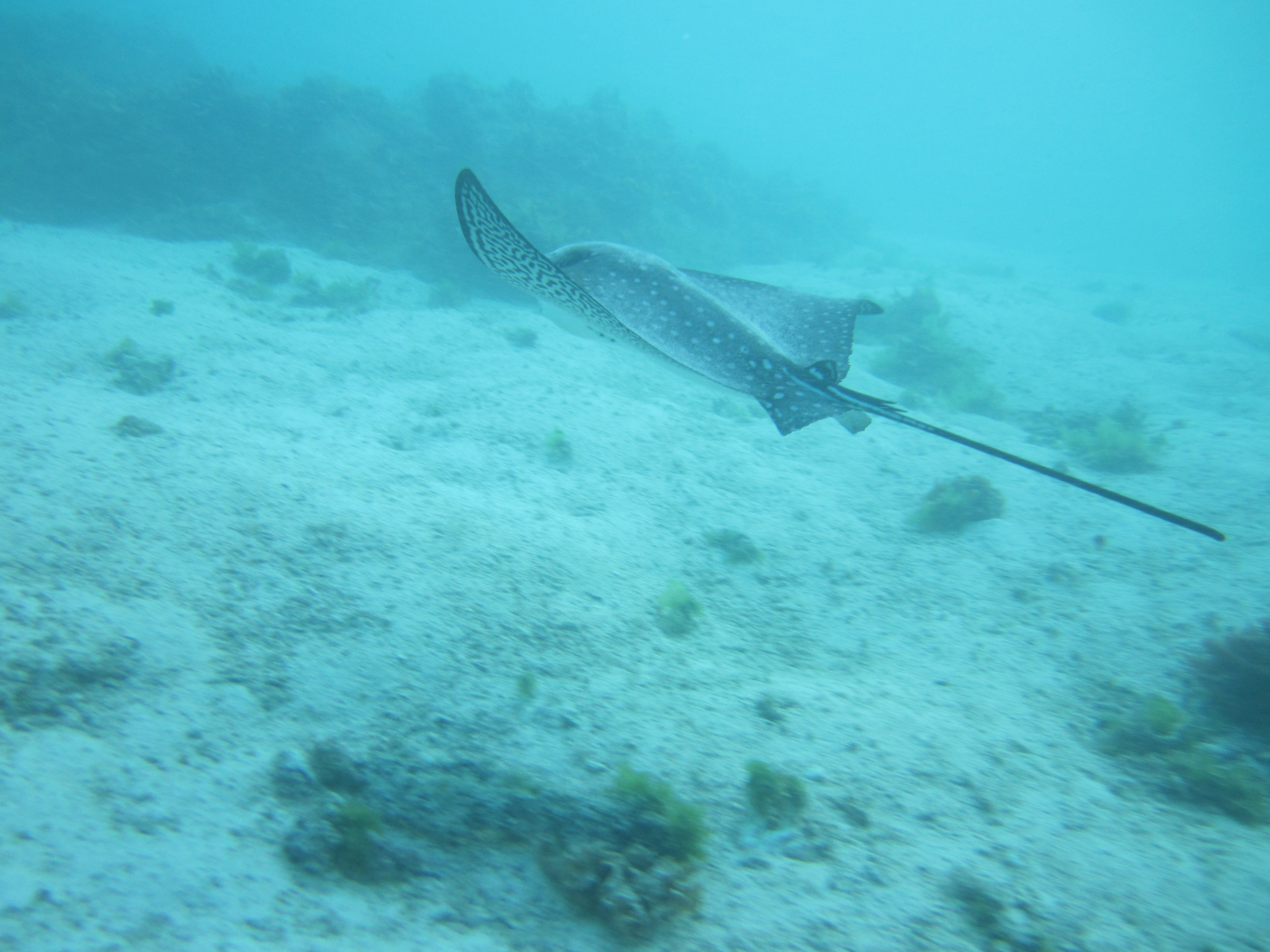
The trip to Tintoreras was finalized by a quick snorkel before sunset.  Wait, isn’t that when the guide said the sharks wake up to feed?!?  Well, no sharks were encountered, but we did see a few more turtles, eagle rays, sea lions, and a few other fish.

Eagle ray out for a flight

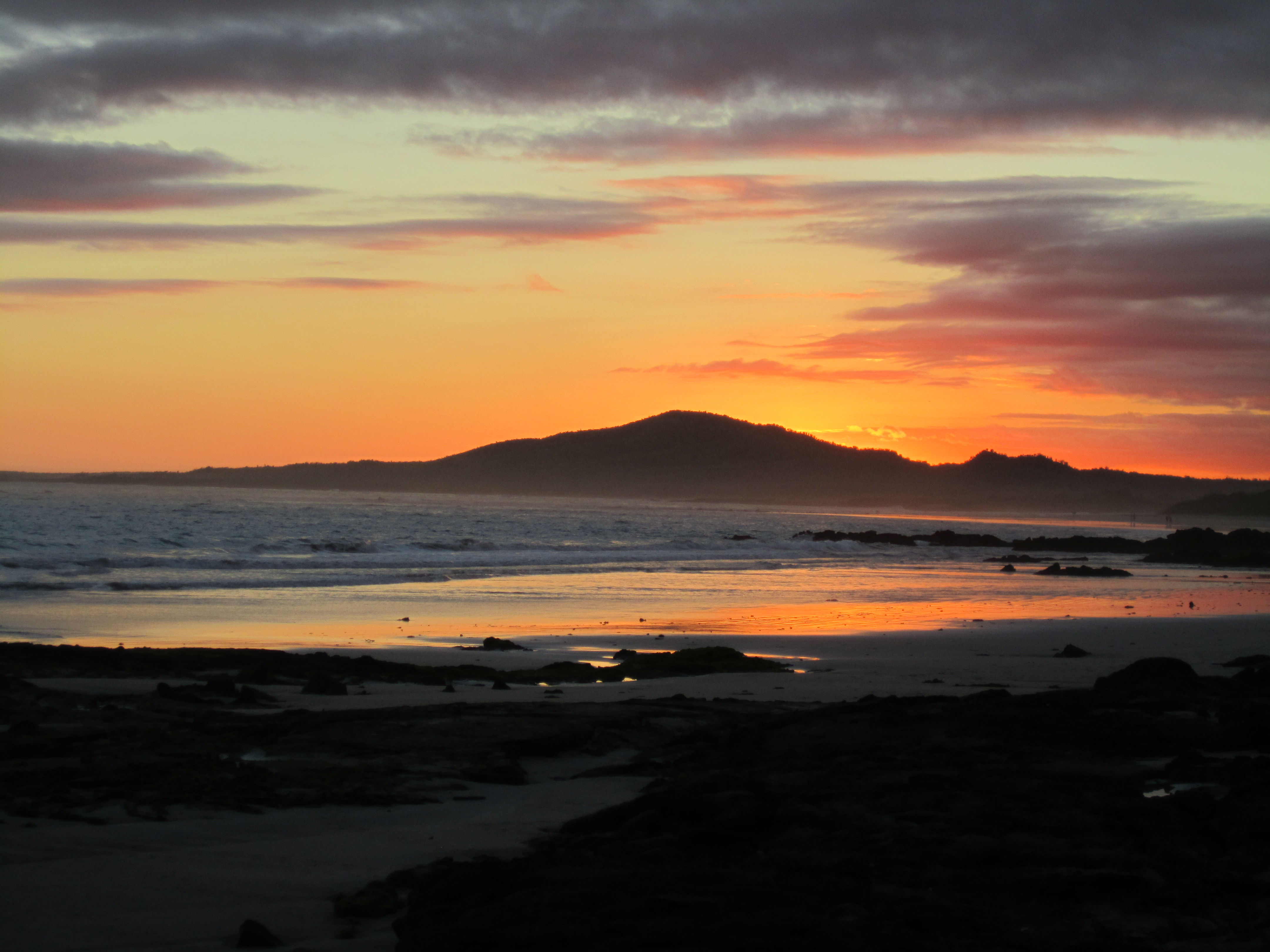
We finished our time on this island with an amazing sunset on our favorite beach. Isabela definitely did not lack in amazing sunsets.

Great sunset

Two islands down, only one more to explore!

Posted in Ecuador | 5 Comments

San Cristobal – Galapagos

If pictures are really worth a thousand words, this is going to be one of the longest posts ever.  Just a warning.

Here's looking at you, kid.

It was no easy feat to get to the island of San Cristobal in the Galapagos.  First, we took a cab from our hostel to the airport in Quito, then we flew for 3 hours to the island of Santa Cruz. From there, we took a bus, then a ferry, and another bus to the main port town. Once we got off the bus, we ran to the dock and just barely made the last ferry to San Cristobal.

After two hours of bumping through rough seas, we were grateful to be on dry land again, and we were even more excited when we found an amazing apartment to rent for only $30 per night.

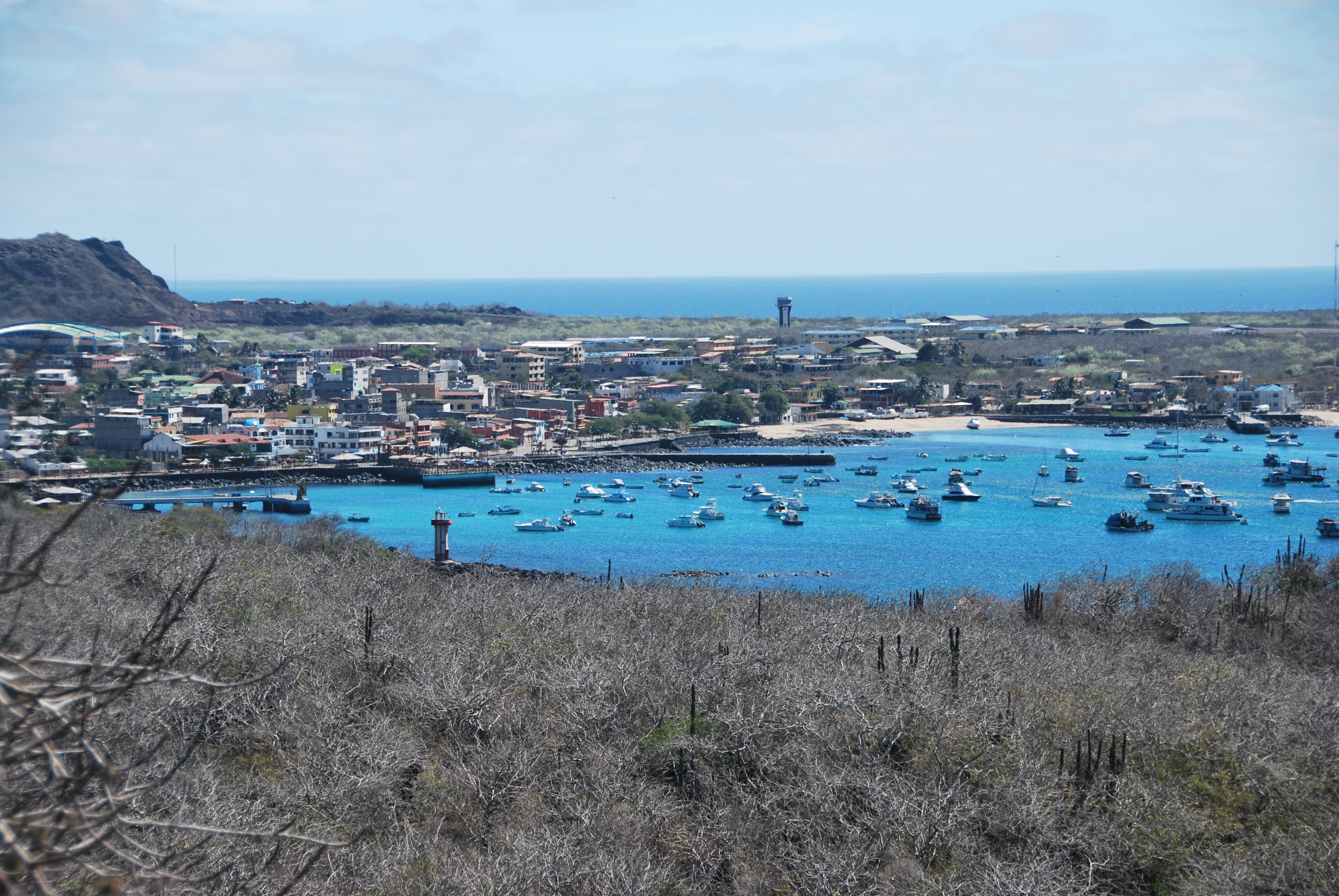
Puerto Baquerizo Moreno, San Cristobal

Just walking down the boardwalk on that first afternoon, the wildlife was everywhere. Sea lions reign supreme in this town. You literally have to go out of your way to avoid them. We played the tourist part well, and we both had the cameras at the ready to try to capture the magic of this place.

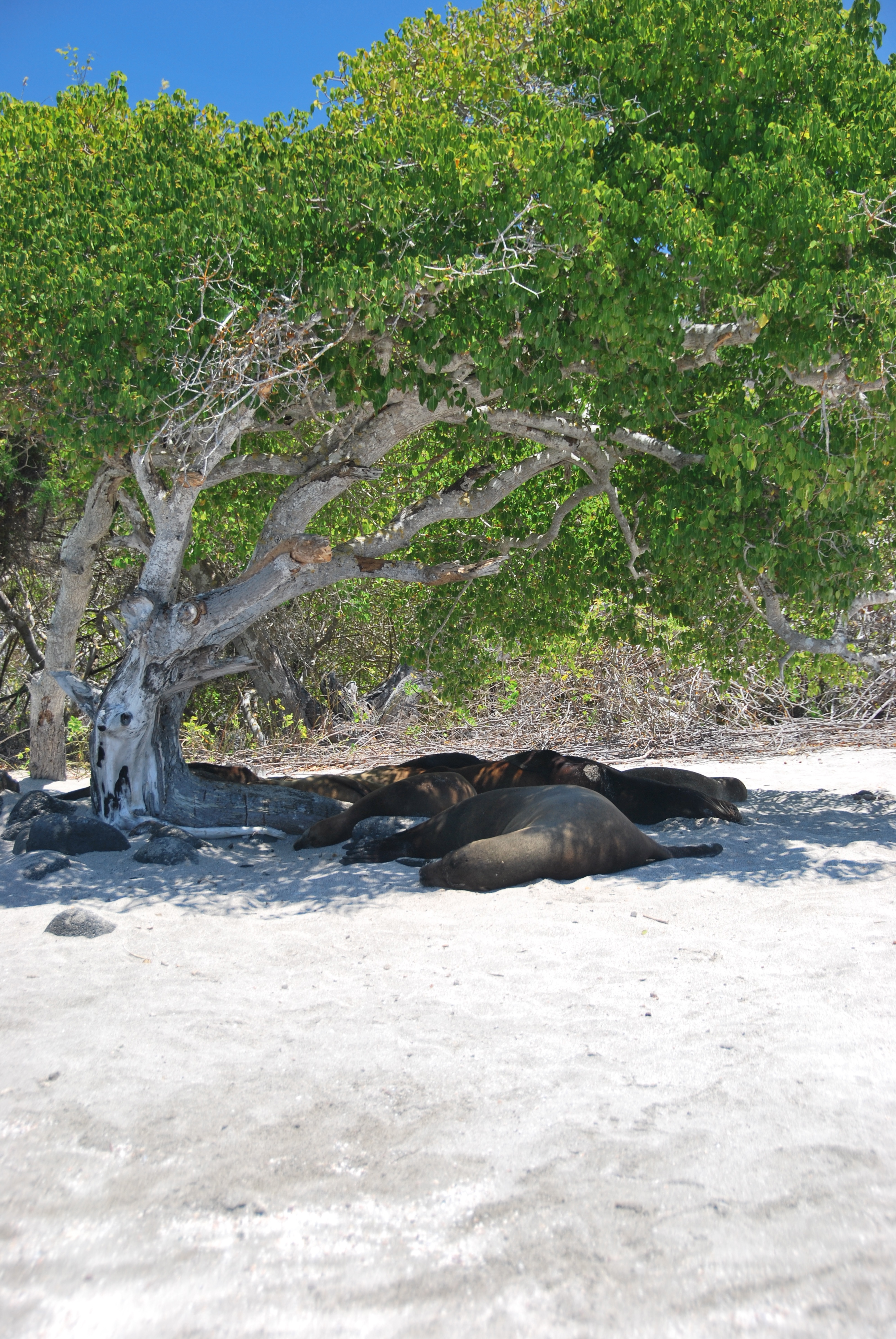
Sea lions hanging out in the shade

On our first full day on the island, we decided to take in some of the free sites.  We started at the Interpretation Center (which gave us some nice history and information about the islands), and then we did a nice hike along the coast. It seemed like everywhere we turned, there was something more amazing to see.

Lookout - Who knew the water would be so blue?

Continuing further down the path over volcanic rocks, our experience turned very Darwin, very quickly.

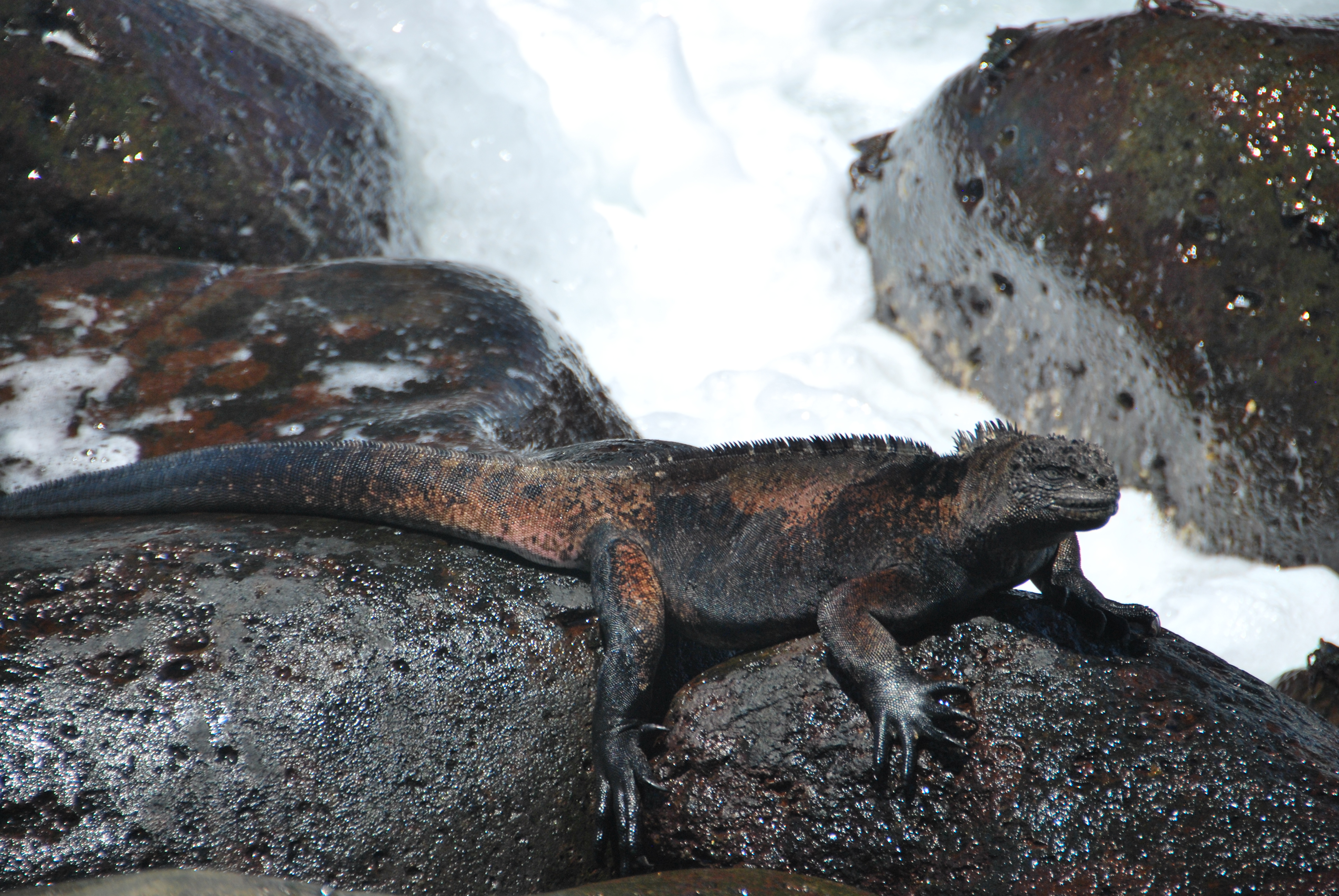
Marine Iguanas found only in the Galapagos

We stumbled upon these marine iguanas sunning themselves after their daily swim in the ocean.  They were very docile and didn’t seem to care much about our presence, just like most animals on these islands.

Fresh out of the water

We were amazed at our find, and we felt like true explorers because we found them on our own. We could enjoy watching them without being surrounded by a tour group all jostling for pictures. Little did we know that we would see a lot more of these guys over the next few days.

Further down the path we reached a nice little beach with shady trees.  We rejoiced at the idea of cooling down in the shade. It looks like we were not the only ones with this idea.

Sea lions relaxing in the shade

We did manage to find a nice little bit of shade (seal lion-free), and we were able to enjoy the water and watch the sea lions play. We also took A LOT of pictures. At one point, Joe had to pry the camera out of Kristen’s hands.

Out for a walk

Getting a kiss

Nice little back scratch

Fun fact: the Galapagos Sea Lions are related to the ones found in California. Supposedly, California sea lions made it down here in an ocean current a long time ago.

That afternoon, we took a cab to “La Loberia,” a nice beach which was great for viewing sea lions and watching the sunset. We had been sitting on the beach for a little bit, just enjoying the scene, when one of the sea lions started making a lot of noise. At first we thought nothing of it, but as it continued for some time, we soon realized that a new sea lion was being born! It was an amazing (and slightly scarring) thing to witness.

Brand new baby sea lion- take that Carpinteria Seal Sanctuary!

After watching the sea lions and their babies for a while, we scrambled through some lava fields to find an unexpected lookout.

Great view-point

This was a nice rocky cliff where sea birds lived, and we spent a long time watching them gracefully glide over the water and along the cliff.

Bird catching the wind

On our way back, we stumbled upon something we both wanted to see… a blue-footed booby! It was just a few feet away!

Blue-footed booby enjoying the view

That evening, as we reflected on the day’s happenings, we couldn’t believe all we had seen in our short time in the Galapagos.

The next day, we joined a local guide for a tour of the highlands of the island. First, we hiked up to El Junco crater. This crater is filled with fresh water and has turned into a giant bird bath for Frigate birds.  These poor sea birds have no ability to get rid of salt water on their own, so they must find fresh water to bathe in.

Crater bird bath

It was interesting to watch these guys dive in the water, flutter around and then take off again. They would then find a good thermal and do a little shimmy to get their feathers nice and dry.

Frigate birds getting a bath

Continuing on our tour, we went to a breeding center for giant Galapagos Tortoises. They considered this place to be semi-wild because they give the tortoises many acres to wander around in and do what they do.

The breeding center steps in after the eggs have been laid.  At that point, they are collected and put in an incubator until they are hatched. Once out and about, they monitor the tortoises’ growth for the first part of their lives.  After they are no longer vulnerable to invasive species, such as rats, they are released into the wild, where they are free to slowly tour around the island.

Fun facts: Galapagos Tortoises can live to be 170 years old, and don’t reach maturity until they are 25! There are different species of these tortoises found on each island. On Isabela Island, there is a different species on each of its five volcanoes!

Lunch time

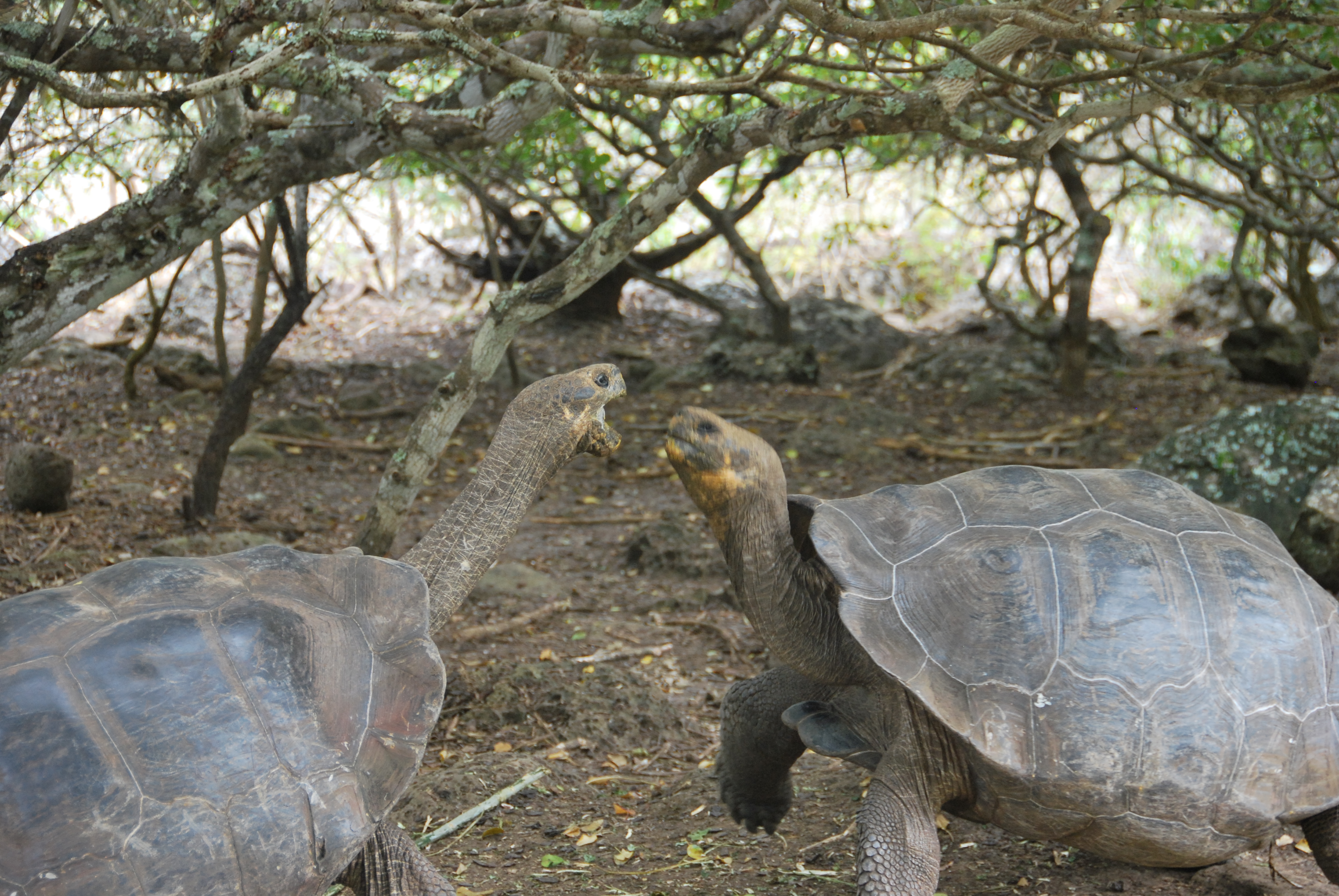
Tortoise fight!!! This doesn't last for too long... it's hard to hold up those shells!

With the land tour complete, we signed up for our next adventure for the following day, snorkeling at Lobos Island and Kicker Rock.  With the hope of seeing sea lions, fish, turtles, and sharks, we were almost too excited to sleep.  Or it might have been the thought of SHARKS that kept us up all night.

The next morning, we boarded a slightly rickety boat with seven other Jacques Cousteau wannabes, and we headed out towards Lobos Island.  At first, we weren’t too impressed with the snorkeling, but soon the sea lions came out to play and they dazzled us with their swimming abilities.

Sea lion flying by

The sea lions would play “chicken” with you as they would swim right up to your mask before quickly darting out of the way. It was all fun and dandy, but when the bull sea lion went by, it much more frightening. He was big.

Bull sea lion

Lobos Island was just the warm up for the next big snorkel at Kicker Rock.  This island juts straight out of the sea, and people say it looks like a sleeping lion. One amazing feature of this rock is a split down one side that creates a channel to swim through.  Turns out, this is also where the sharks hang out.

Kicker Rock - Channel is the dark spot to the right

We jumped into the cold water and headed to the channel for the big show.

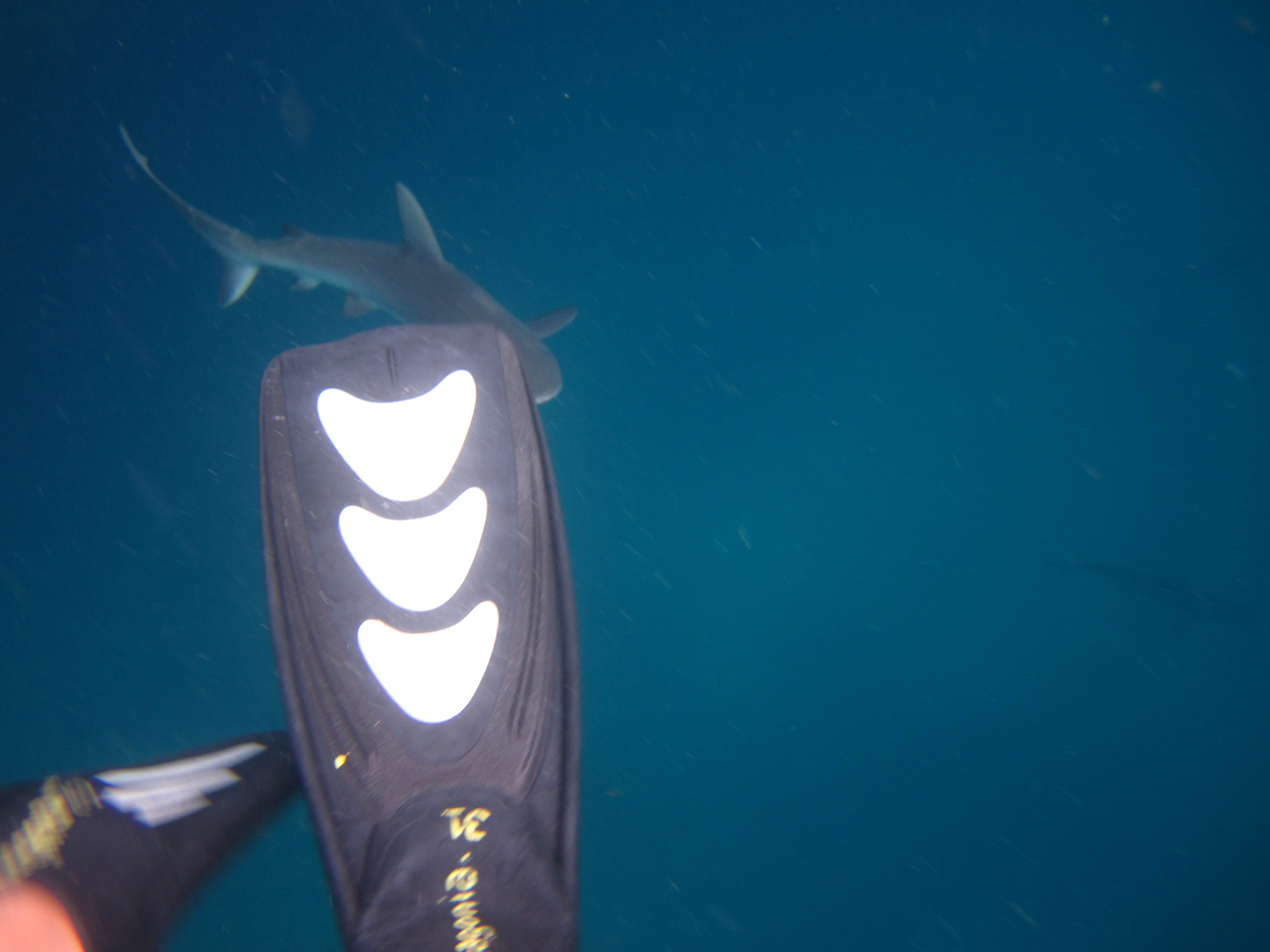
Galapagos shark in the deep! At one point there were at least 8!

A smaller shark came to inspect us as were swimming by.  Joe, being the excellent snorkeler that he is, smartly positioned his flipper between the shark and us to “protect” Kristen.  What shark in their right might would try to bite through a flipper? Right?

Back off Buddy... Notice his friend down below.

The whole time was not spent in fear because there were plenty of other smaller fish and turtles to watch swim as well.

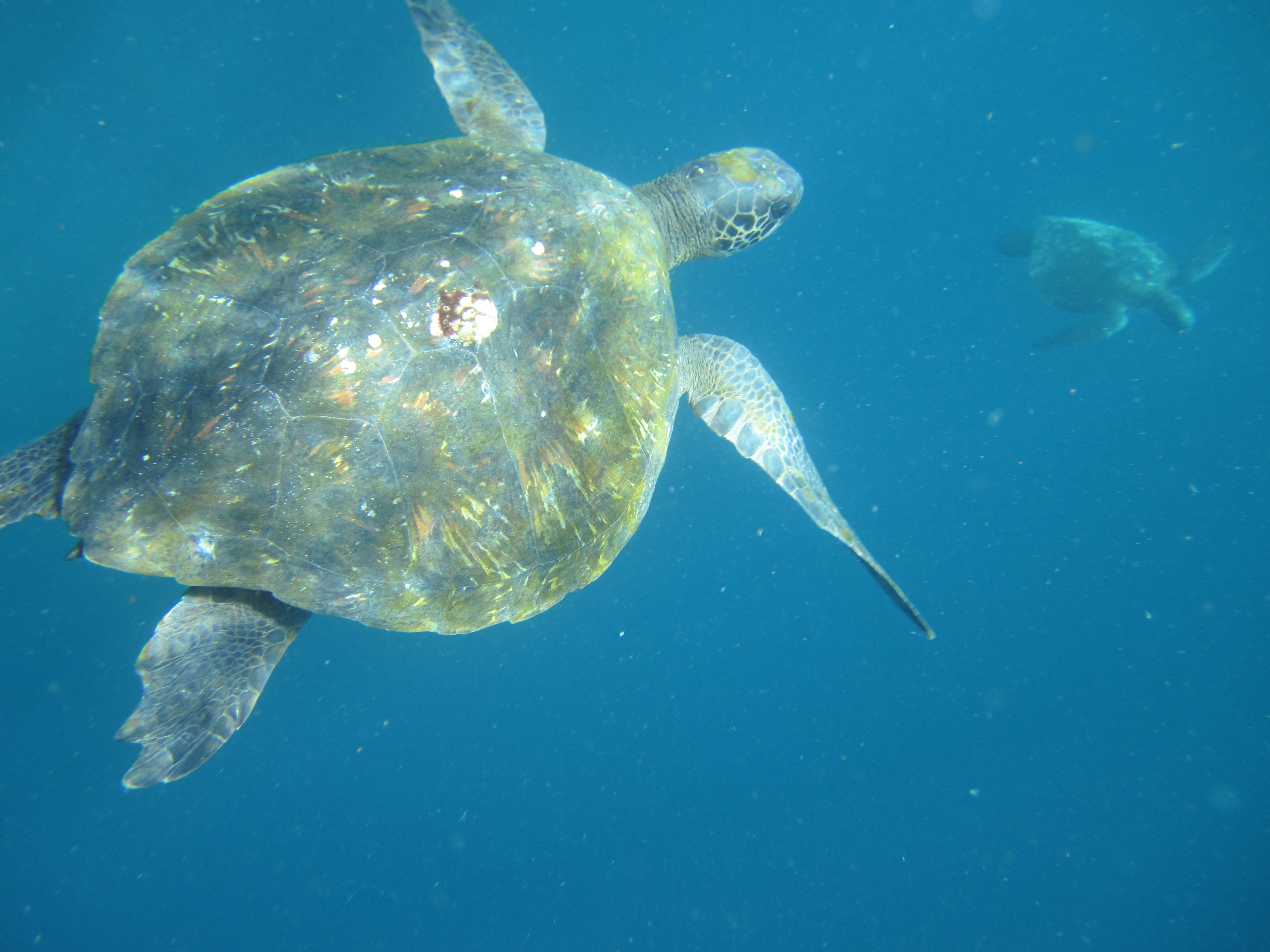
Turtle in the blue

Much more fun to swim with than sharks!

At one point while swimming around the rock, we seemed to have joined a turtle herd. We could have easily counted 15 at one time. It was awesome!

Friendly, toothless buddy

Also the coral growing from the rock was very colorful.

Kicker Rock coral

Beautiful colors

Safely back onboard, we headed to town where we caught a beautiful sunset and enjoyed the remainder of our time on the island.

Sunset and sea lions... a perfect end to San Cristobal

San Cristobal is truly an amazing island and we were lucky to get this opportunity to visit. After only four days in the Galapagos, we were amazed at how much we were able to see and do on our own.

Off to Isla Isabela and its sandy streets!

Posted in Ecuador | 12 Comments

Quito: Is it malaria?

While visiting the second highest capital city in the world, we quickly figured out why everyone was walking around a little slower than usual.  In Quito, it was easy to feel out of shape any time you had to walk uphill or climb a set of stairs, and we did a lot of both during our short time here. Quito was just a quick stop for us, as this was our jumping point for the Galapagos, but we still managed to have some fun.

Unfortunately, our first day in Quito was spent primarily in our room at Revolution Hostel. Why? Well, if you google malaria, you can quickly learn all of the disease’s symptoms, and Kristen had most of them. She didn’t sleep well the night before because she was constantly boiling hot or freezing cold (sweats and chills- check). Her back and neck were sore (muscle pains-check), her head was throbbing (headache- another check), and her stomach felt uneasy (nausea- and the final check). Oh dear.

She slept on an off throughout the day, and Joe was very attentive. We had quite a few discussions that day about whether or not it was really malaria or just an unfortunate combination of symptoms. All these symptoms suddenly appeared the day after our long hike in the freezing cold rain. We figured that it could be malaria OR she could have a flu/cold from being out in the weather, her back and neck might have been sore from caring her purse awkwardly under her raincoat, and her stomach could be upset from something she ate.  The one thing that prevented us from rushing to the hospital was that the symptoms were supposed to cycle on and off every few hours, and Kristen felt continually lousy.

After the day of debate, we finally made a decision- if the symptoms cycled on and off, or if she felt significantly worse, we would head straight to the doctor (and we were conveniently located around the corner from several clinics and a hospital). Luckily, after she took a Nyquil and slept through the night, she felt significantly better the next day. We continued to monitor the symptoms, and since they never reoccurred, she either beat malaria in a day (wow, Nyquil works wonders), or she just had a quick flu. We’re betting it was the latter.

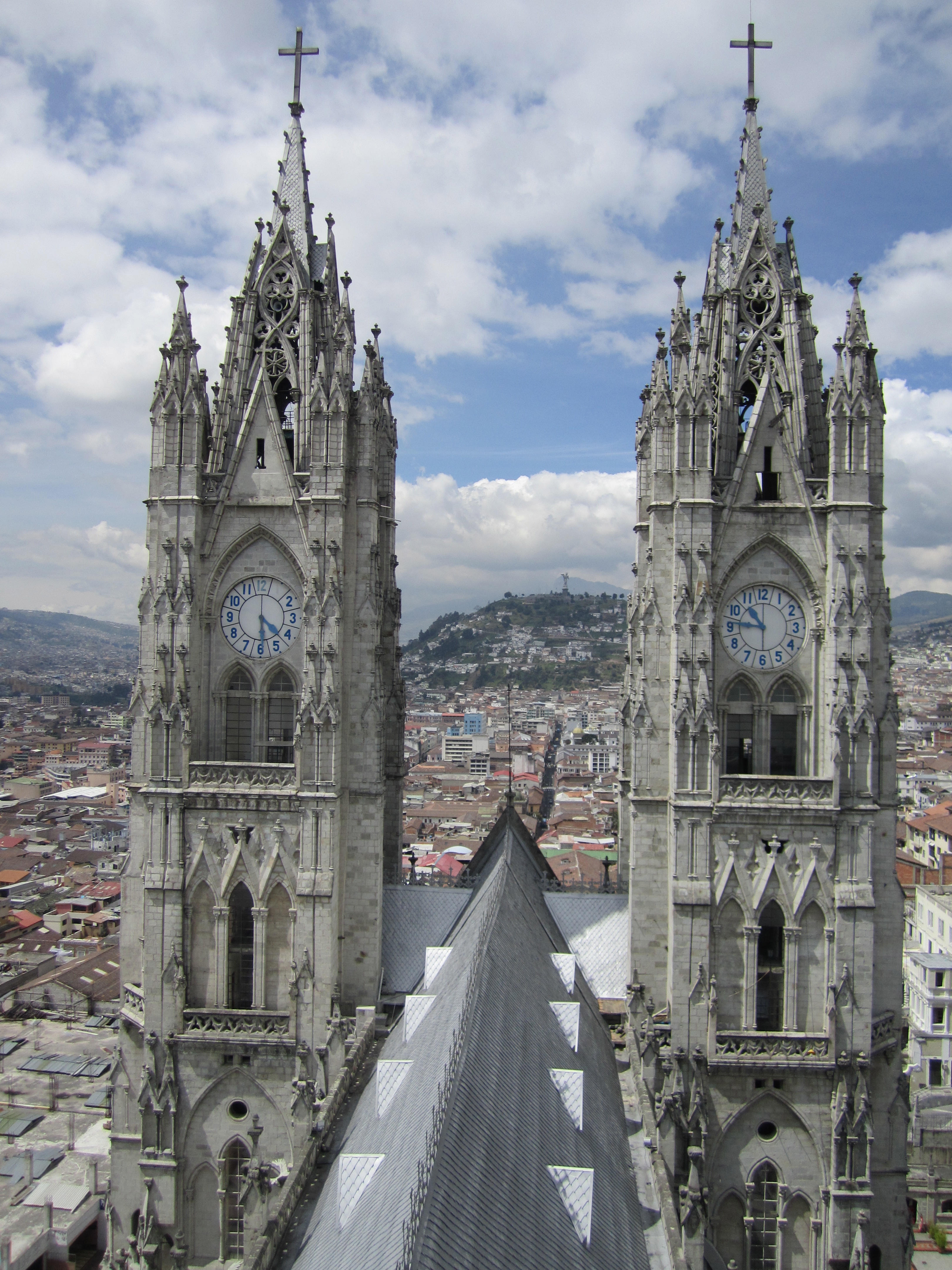
That next day, with Kristen feeling better, we hit the city to see what we could find. Our first stop was the Basilica del Voto Nacional, where we climbed the clock tower and spire. You know us, when there is an opportunity to climb something, we are in.

View from the top of a spire

To reach the spire, where the above picture was taken from, we had to first climb a bunch of stairs, and take a rickety wooden walk way over the top of the church ceiling and under the main roof.  Then we had to climb a bunch of near vertical ladders. It was quite an adventure, especially for Kristen who still wasn’t fully recovered from the previous day’s “malaria.”

Walking the plank above the church ceiling

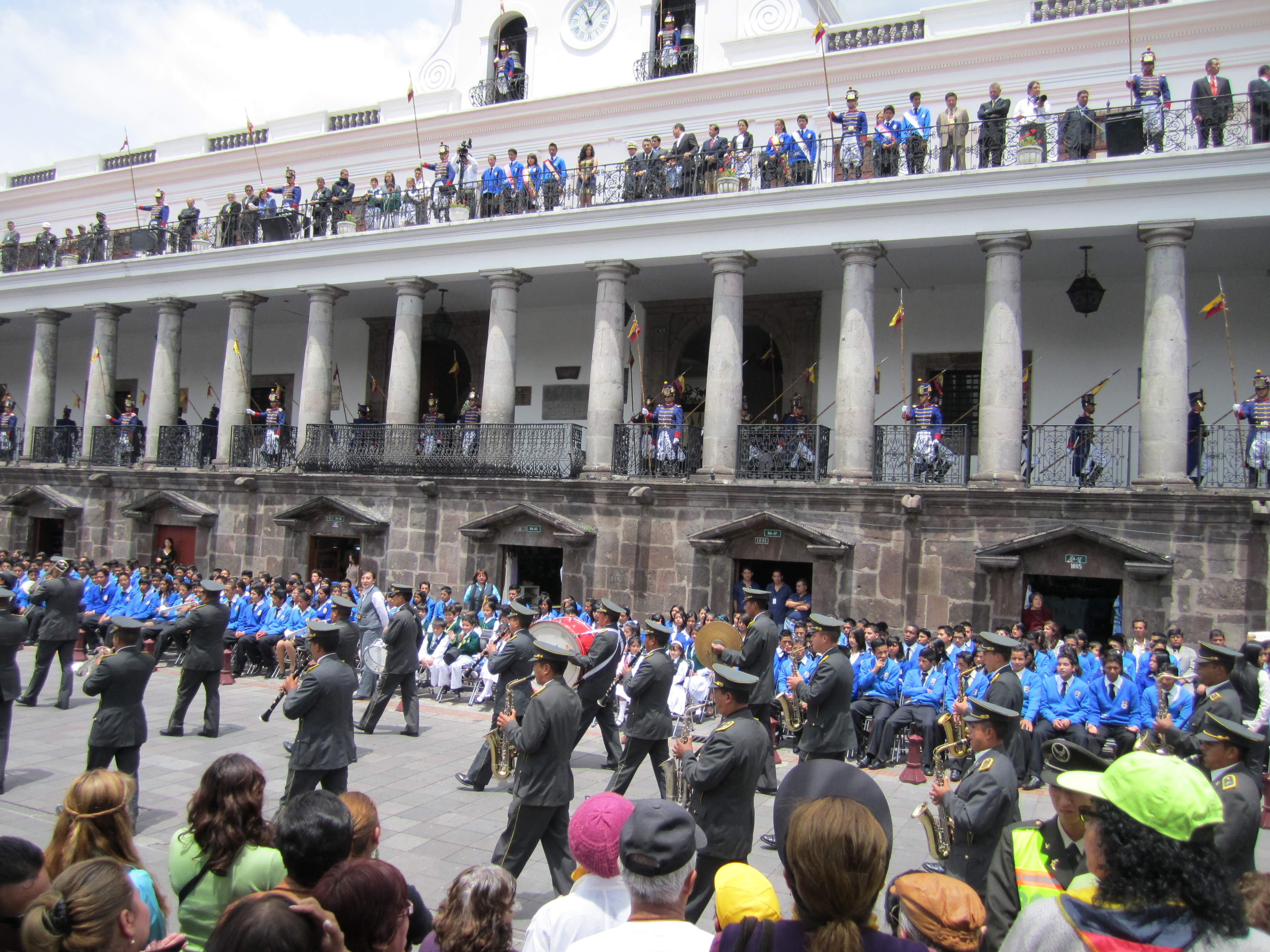
From the church, we made our way to the Plaza de la Independencia which is located in the heart of the old town. It turns out that luck was on our side because we arrived there at not only the right time, but also on the correct day of the week for the “Changing of the Guard.”  We joined the crowd and watched it all unfold.

We were more than surprised when the President and Vice President took time out of their busy days to join in the festivities and wave at the crowd.  Joe felt extra lucky as he was able to get the President to wave back at him. Joe is still waiting for him to accept his friend request on Facebook.

You got my vote, President Correa

The ceremony was quite the show. All the guards were dressed to the nines and kept in perfect step with the band.  They filed out of the two main door of the palace and took various positions around the palace and main square.

Changing of the Guards

Afterwards, we wondered around the old town and took in the great buildings and the culture.  We made our way back to our hostel, and we found another hill to climb.  Again, we fought for our breath as we climbed stairs, but in the end we were rewarded with a nice view.  Seems like there has been a lot of uphill walking in Ecuador, which is weird because Joe thought it would be all downhill after crossing the equator.

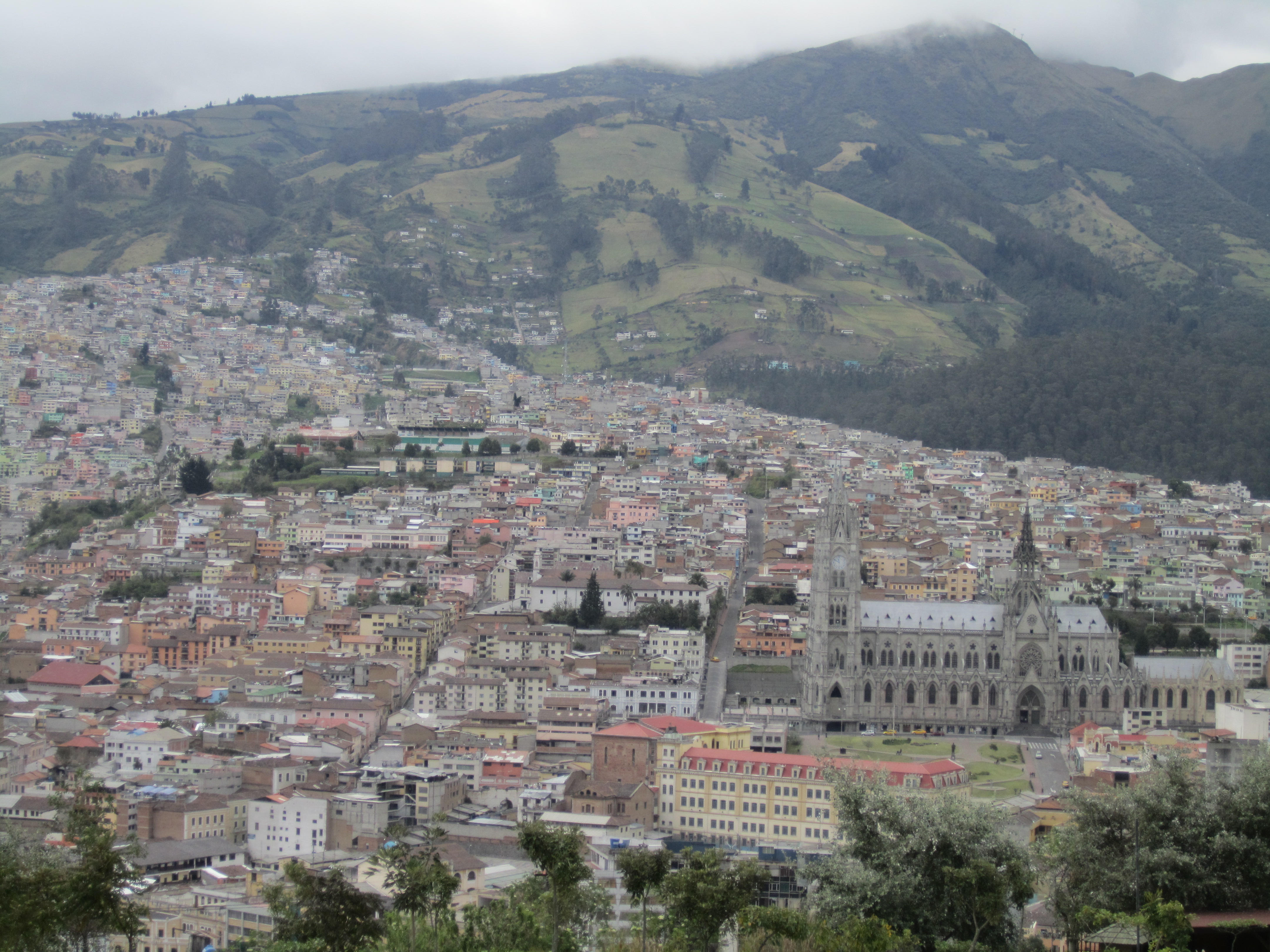
City overlook with the church that we climbed

After the hike we headed back to our hostel to call it a night.  Quito is a big city, and it was much nicer than we expected, but according to local sources, it is not the safest to wander around in at night.  It was a good place to visit, and many interesting things happened, but not being “city” people we were ready to head out and on to our next adventure… The Galapagos!
Posted in Ecuador | 12 Comments

Otavalo: Markets, Condors, and Mountains

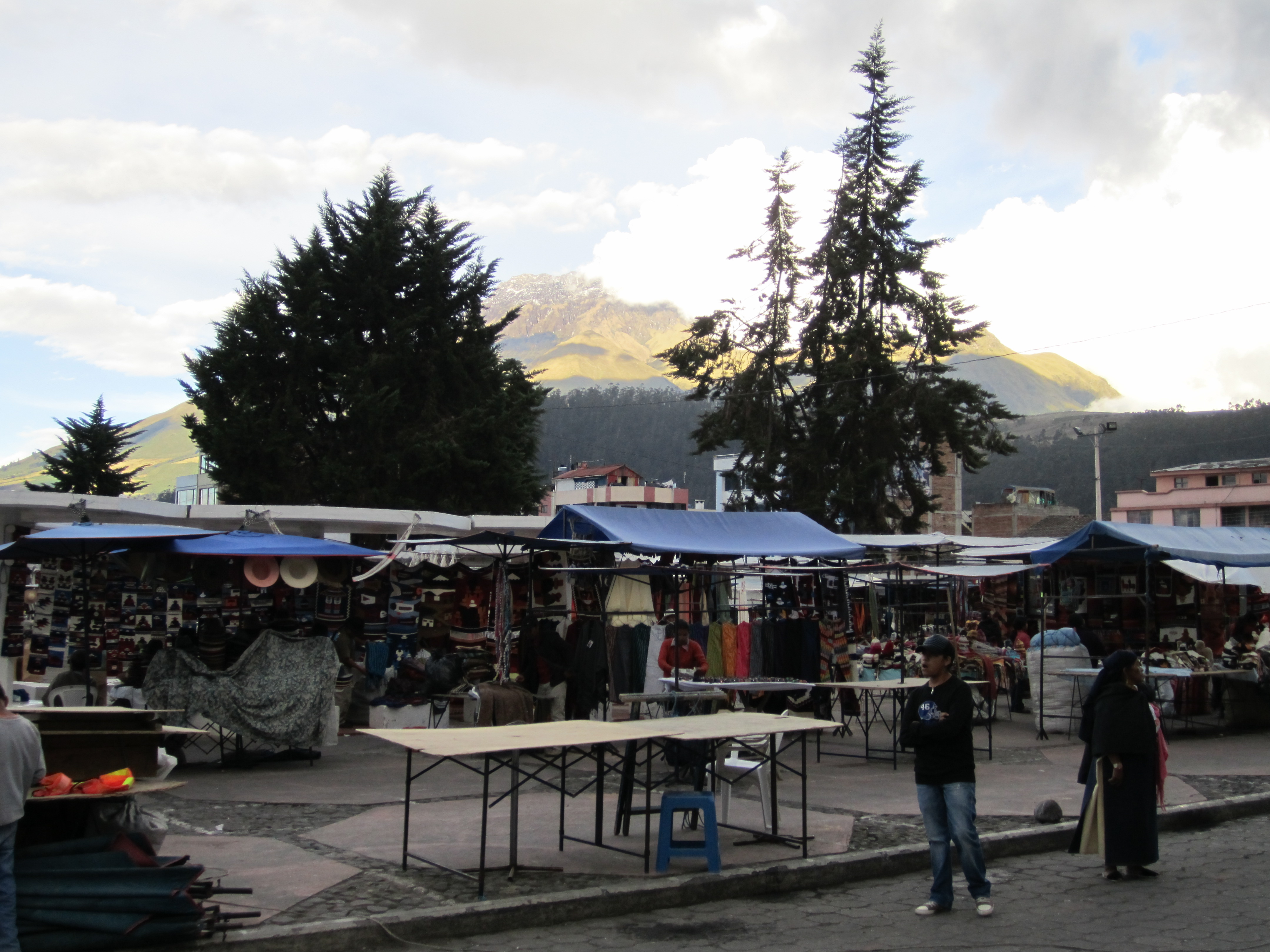
Otavalo definitely pulls in its fair share of tourists. It’s a main stop in Ecuador for its market, which supposedly has been running for hundreds of years. Everyday in Otavalo, vendors from the indigenous communities sell “handcrafted” goods in the Plaza del Ponchos. And yes, there are many ponchos for sale there.

The Plaza del Ponchos

For the most part, the goods start all looking the same as you wonder around. It makes you really question the handmade claims when you see identical replicas everywhere you turn. The vendors are all nice, welcoming, and ready to bargain.

We loved all the colors

So much for sale!

Fortunately (or not), we could not buy too many items due to the size of our backpacks. As much as we wanted a big warm alpaca blanket, we simply couldn’t lug it around with us for the next 7 or so months. We had to satisfy our shopping urge by each buying a hat and scarf to prepare for the upcoming cooler climates.

Bracelets: something small we could actually buy!

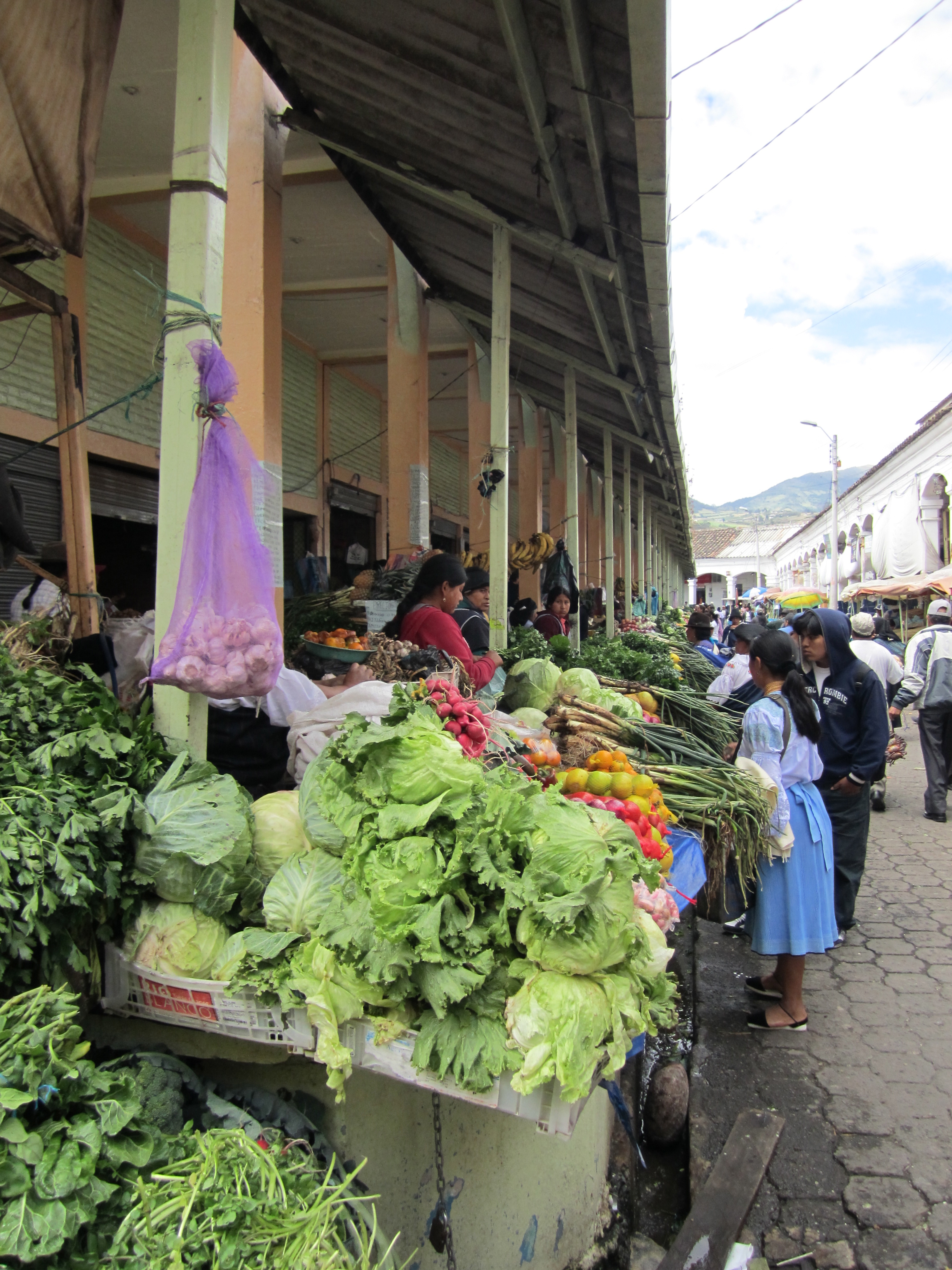
On Saturdays, this market takes over the town and indigenous people from the surrounding areas come in to town to buy or sell whatever they need for the week. Not only does the handicrafts section grow, but so does the fruit and vegetable market. A few streets become the “practical” market full of clothes, shoes, and household goods. Also on Saturday mornings, there is an animal market that can be a bit overwhelming.

Vegetable market

Oh yes, and tourists come on Saturdays in droves. We literally saw more tourists during that first Saturday morning than we did during our entire time in Colombia. It was a bit of a change. However, the market (other than the handicrafts section) still has a very authentic and local feel to it. We stuck to people watching and “window” shopping in these areas on Saturdays.

Market Madness

Taking in the scene at the market. I wish I had some ice cream!

Escaping the market, we headed to the hills of Otavalo to visit the Condor Park. At first, we imagined this to be a small park featuring a few condors in tiny cages. Luckily, we were wrong and instead found an amazing bird park, with all sorts of raptors, owls, condors, and a few other birds. All the birds at this well equipped park were donated, because they were found injured or in need of attention.

Eagle

"Who's there?" (This joke is brought to you by Joe.)

The cages were nice and large with a decent layout for the birds. We wandered around amazed at the different varieties, and we took more pictures than we probably needed to.

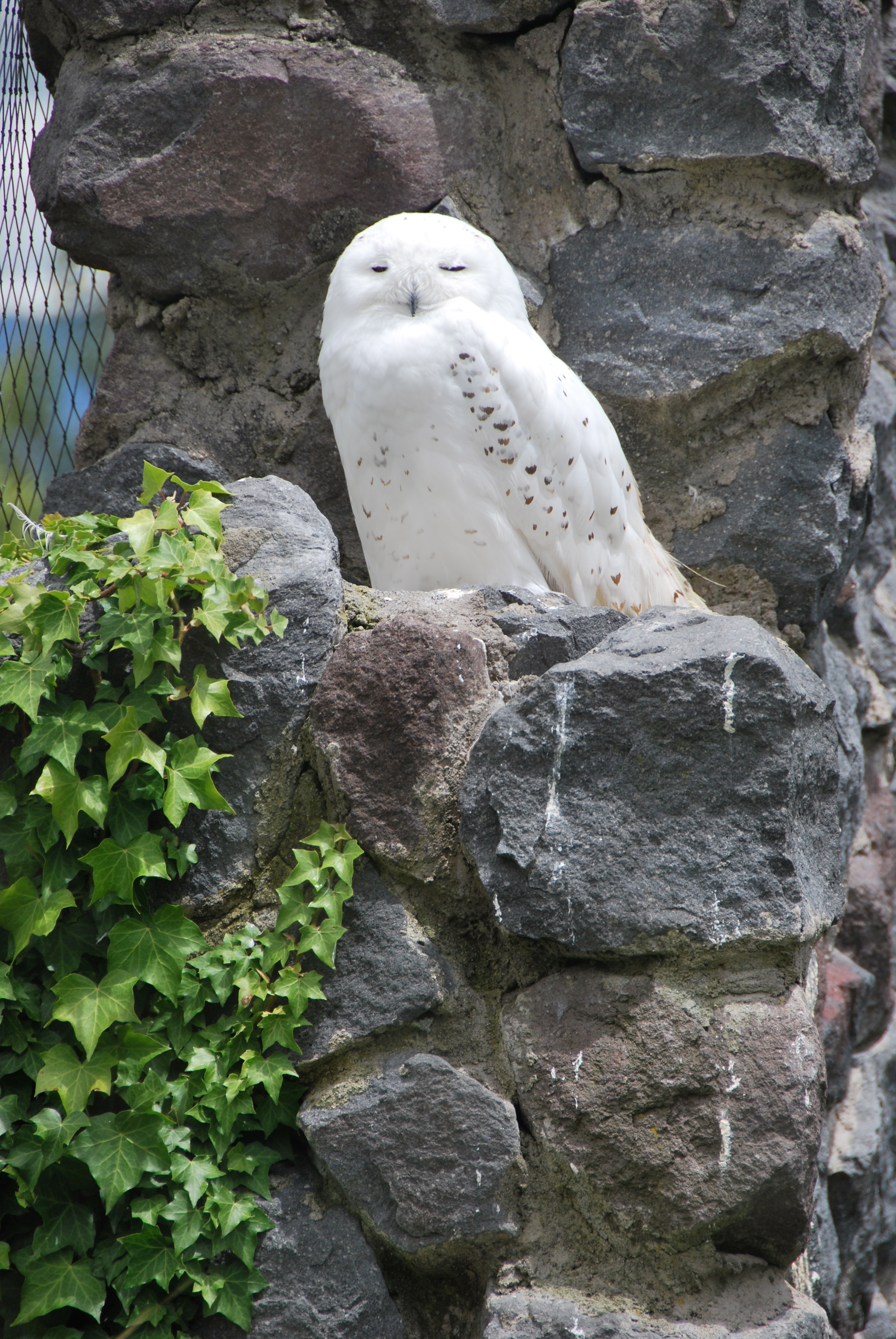
Hedwig escaped! (Kristen couldn't help the Harry Potter reference.)

The main attraction, and what the park is named for, is the two condors in their large enclosure.

Andes Condors

For the most part, they simply hopped around their cage, jockeying for the best position to view the tourists. At one point, one took a quick flight around, and then we were able to marvel in its sheer size. These things are HUGE. They look like they could easily carry a small child away.

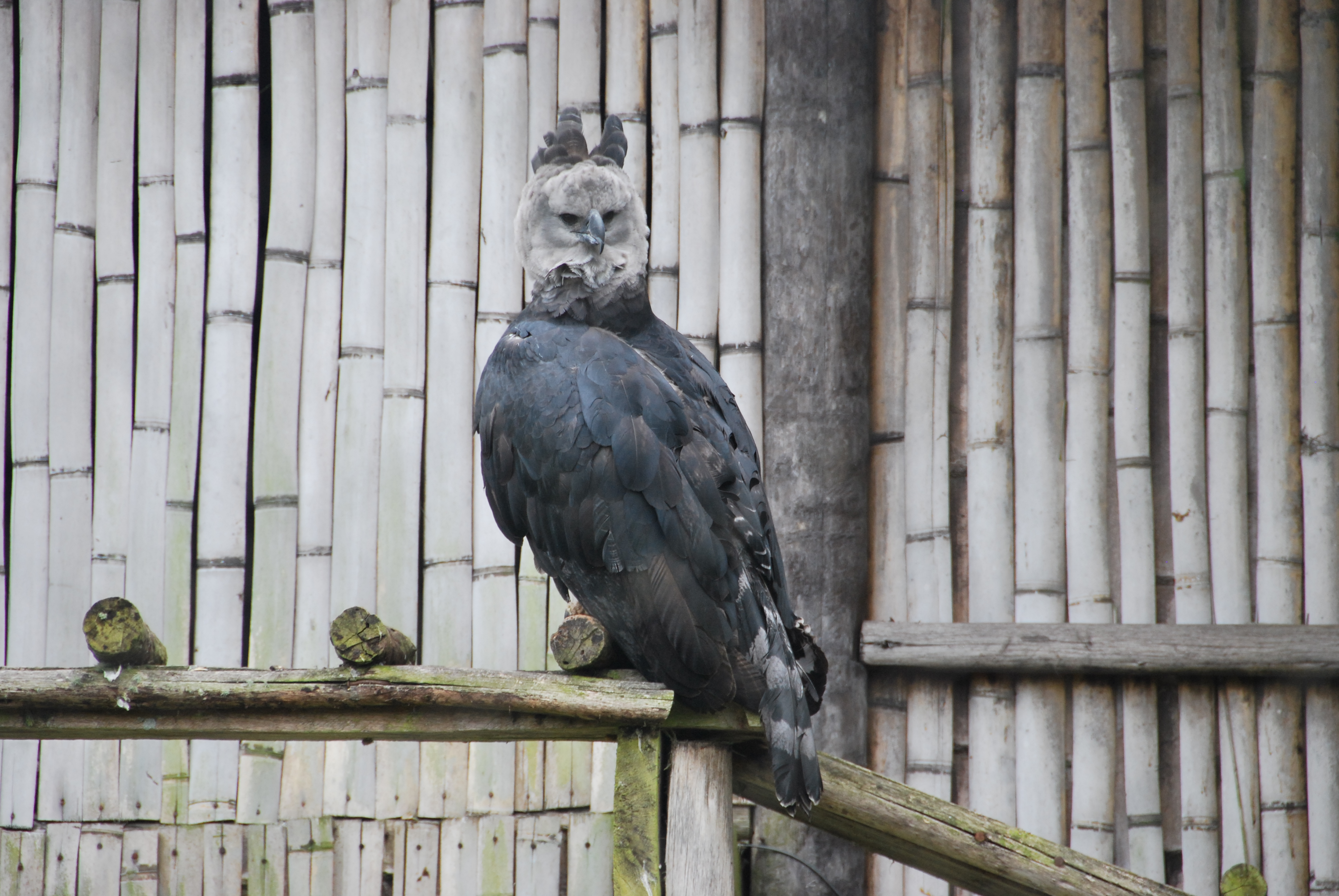
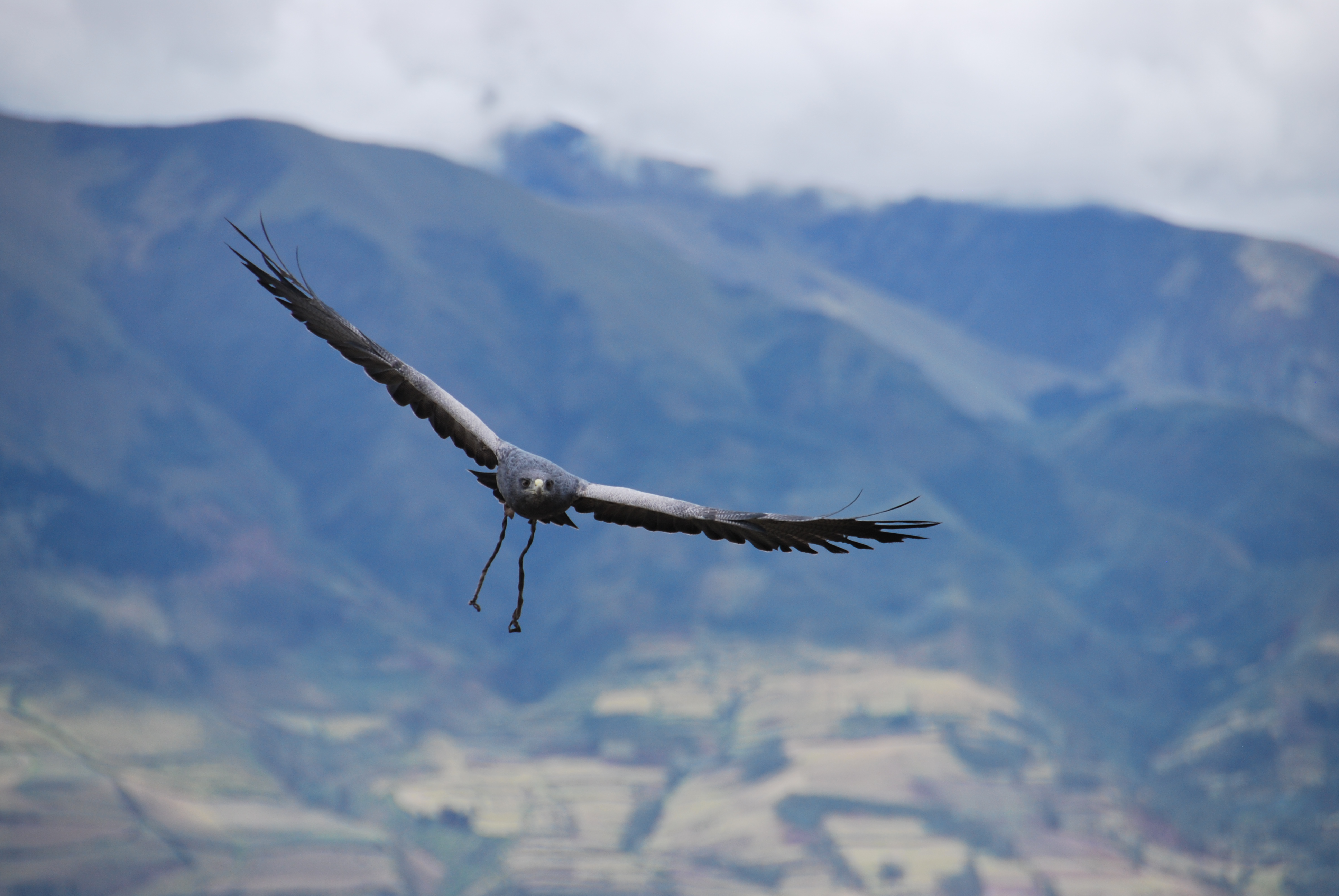
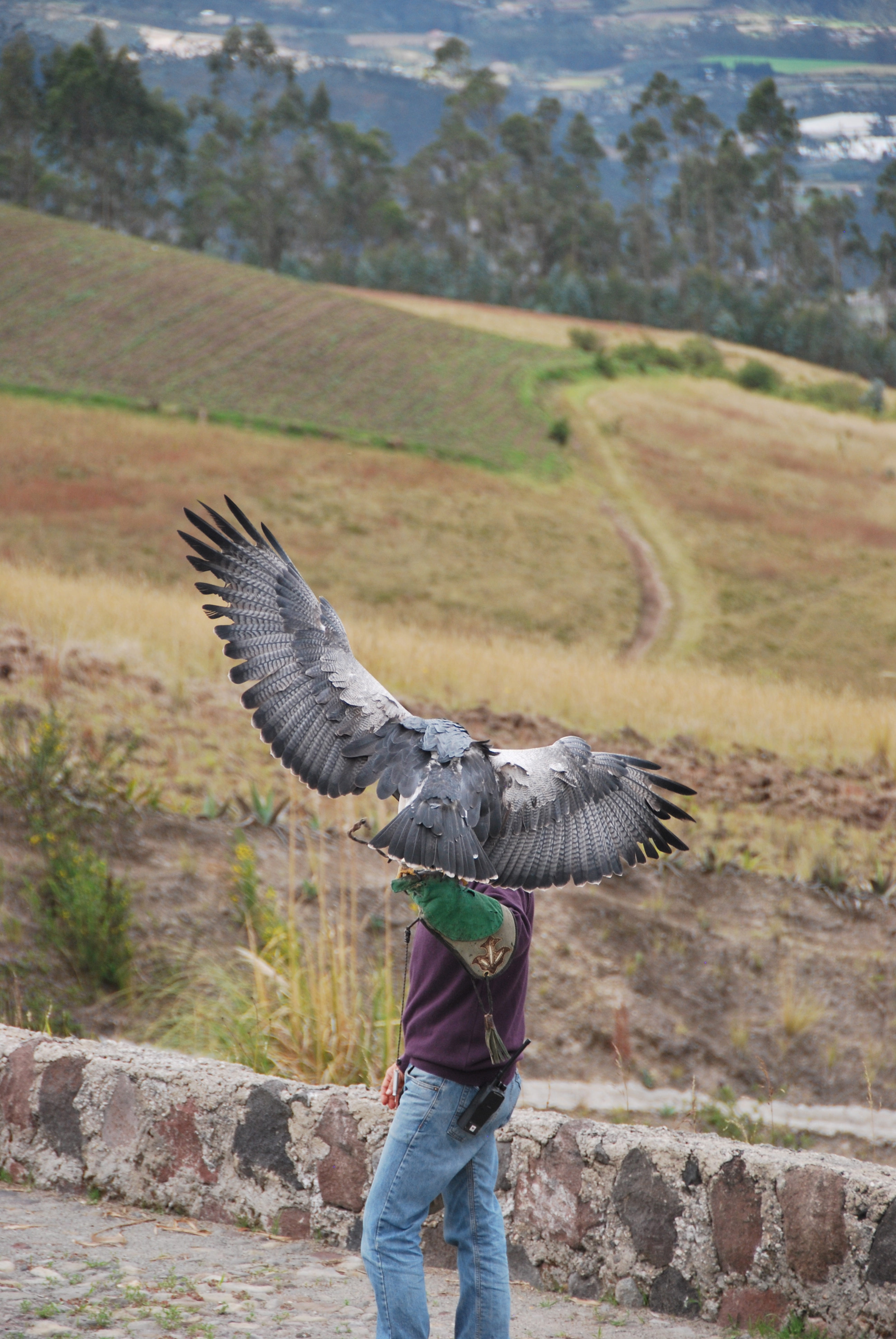
Two times a day, they have flight demonstrations at the park. They brought a variety of raptors out to fly around the arena and wow the crowd. The final bird was a large bluish gray eagle which would launch off the caretaker’s arm and soar in the wind for a few minutes before returning. It was interesting to watch this powerful creature be so graceful.

Eagle riding the breeze

Eagle and handler - check out the wing span!

After the demonstration, we left the park and explored other towns nearby.


On another day, we headed up to approximately 10,000 feet for a hike around a volcanic crater. This crater is now filled with water, and has formed a nice lake with two islands in the middle.  Supposedly, the islands look like guinea pigs (a.k.a. cuy), we couldn’t really see it.

Upon arriving, the rain clouds started settling in, and the ranger advised us to quickly start on our hike in order to make it to the upper overlook before the rain.

And to think this was the good weather!

About and hour and a half later, and 1,200 feet higher, we reached what we thought was the upper lookout. However, the rain and clouds had gotten so bad that we could not tell for sure.  You can hike a full loop around the crater, but not wanting to get any wetter than we already were, we made our way back down. It was a great hike, and a good chance to practice for later hikes at higher altitudes.

Nice islands... not nice rain

This is what we were hoping it would look like….  Cuicocha. We have learned on this trip that we are not always going to get the best weather, so you might as well enjoy what you have.  We had a great hike and the view was still satisfying. Although, now looking back, hiking in cold rain was probably not the best idea health wise.

Next up: a quick stop in Quito and a malaria scare.

Posted in Ecuador | 6 Comments

Getting schooled in Otavalo

Although we didn’t reach Ecuador until the evening, we knew we had arrived when women (and a few men) began boarding the bus in beautiful indigenous dress. As we tried not to stare at the amazing outfits (and readjusted to hearing prices in dollars), excitement grew at the thought of exploring a new and different county.

We arrived late on Friday evening into Otavalo.  After 16 hours on the road, we were longing for a nice shower and a soft bed. We found both at Hotel Chasqui, run by one of the nicest Ecuadorean men, Roberto.

He showed us to what we thought was the penthouse, and we happily accepted these lush accommodations. Our room was located on the top of the hostel, had its own terrace, great views, internet, bathroom, and a soft bed. We’re not sure how we scored the nicest room in the place, but we were stoked. Seeing how we were going to spend a week in Otavalo for Spanish classes, we were thankful to have such a comfortable place to stay. At $18 per night, it was a steal!

View from our terrace

Spanish classes were on the top of the agenda for our time in Otavalo, and Joe could not have been more excited to impress his teacher with his mad skillz. We met our teachers early on Monday morning and began our quest to improve our Spanish for the next week.

Kristen and her teacher, Tania (Kristen is probably in the 98th percentile for height in Ecuador)

We would typically have four hours of class in the morning, a two-hour lunch break, and then some type of activity in the afternoon. During these activities, we would learn about the local area and put our knowledge into practice via conversations.

In addition to the teachers, there was a friendly, smiling dog next door and he made break time more entertaining.

Our new amigo

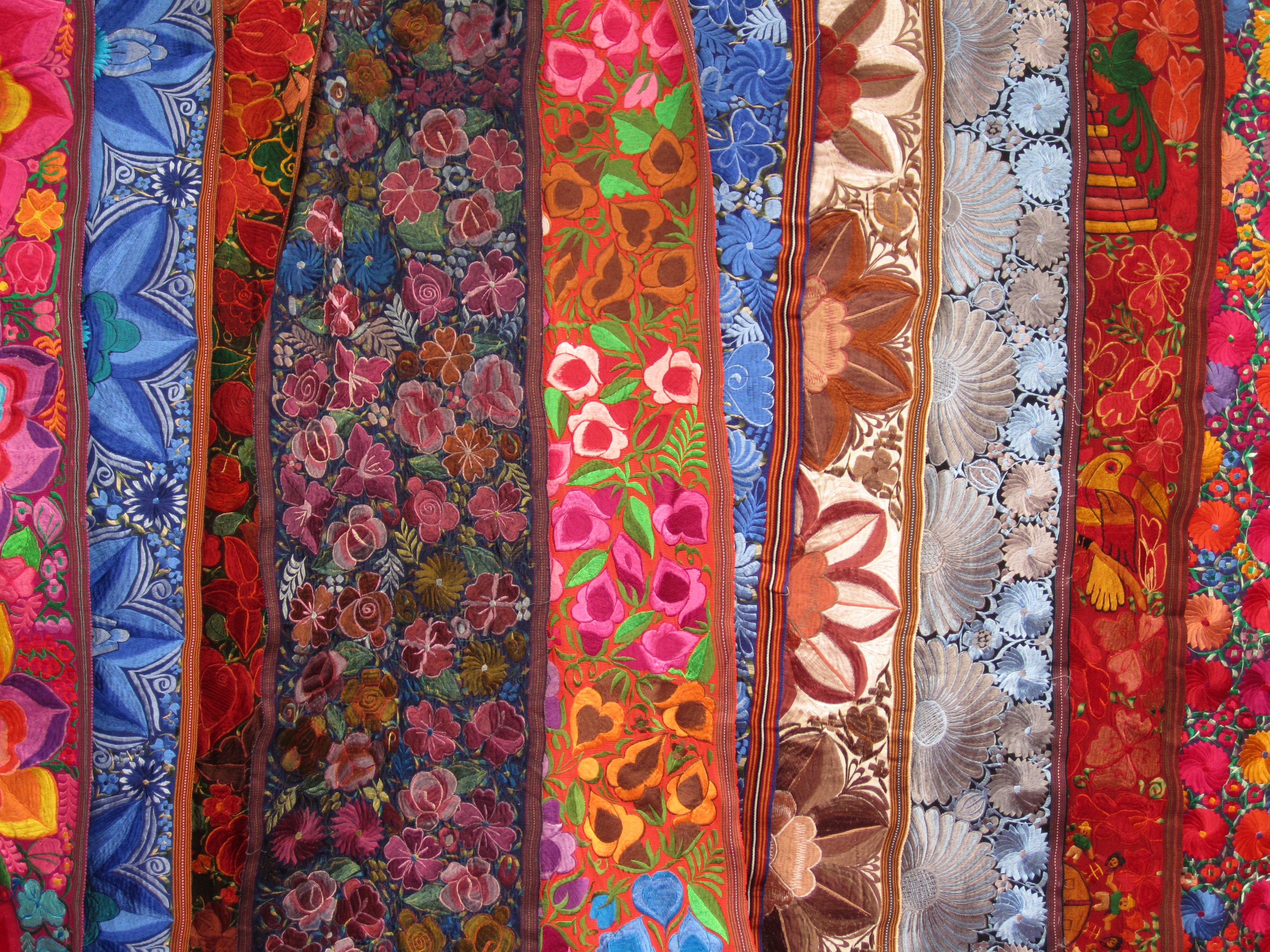
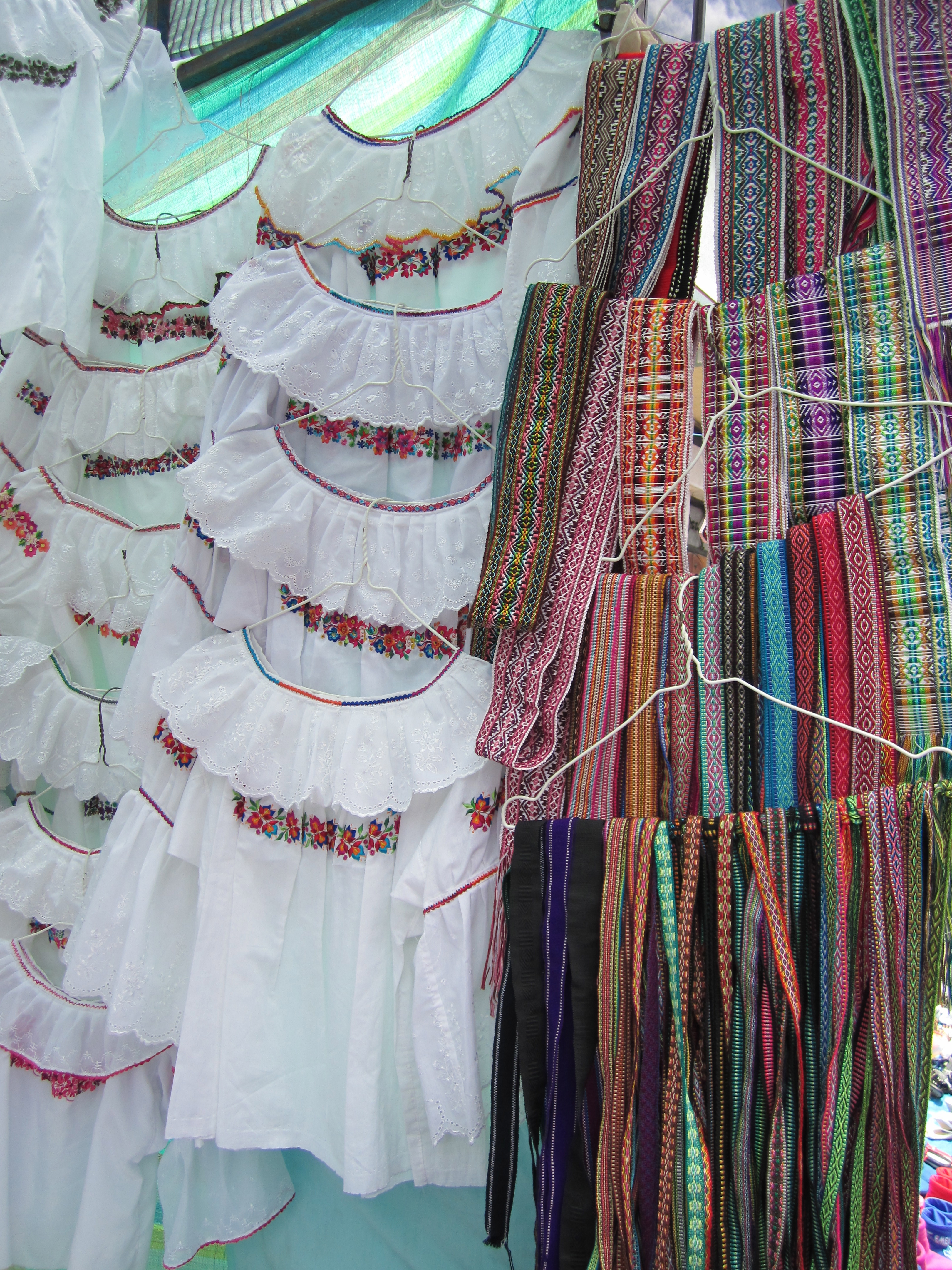
One afternoon, we headed to a museum which depicted and discussed the various local indigenous people in this area, including their clothing.  Otavalo is surrounded by many different indigenous communities and it was interesting to see them all in town wearing their traditional clothes. The women’s blouses were hand-embroidered and gorgeous.

Blouses and belts for sale

We wanted to take so many pictures of the women in their dresses, but we feel weird about taking pictures of people. The pictures that we did manage to get are from some pretty weird angles and far away, but they’ll at least give you the general idea.

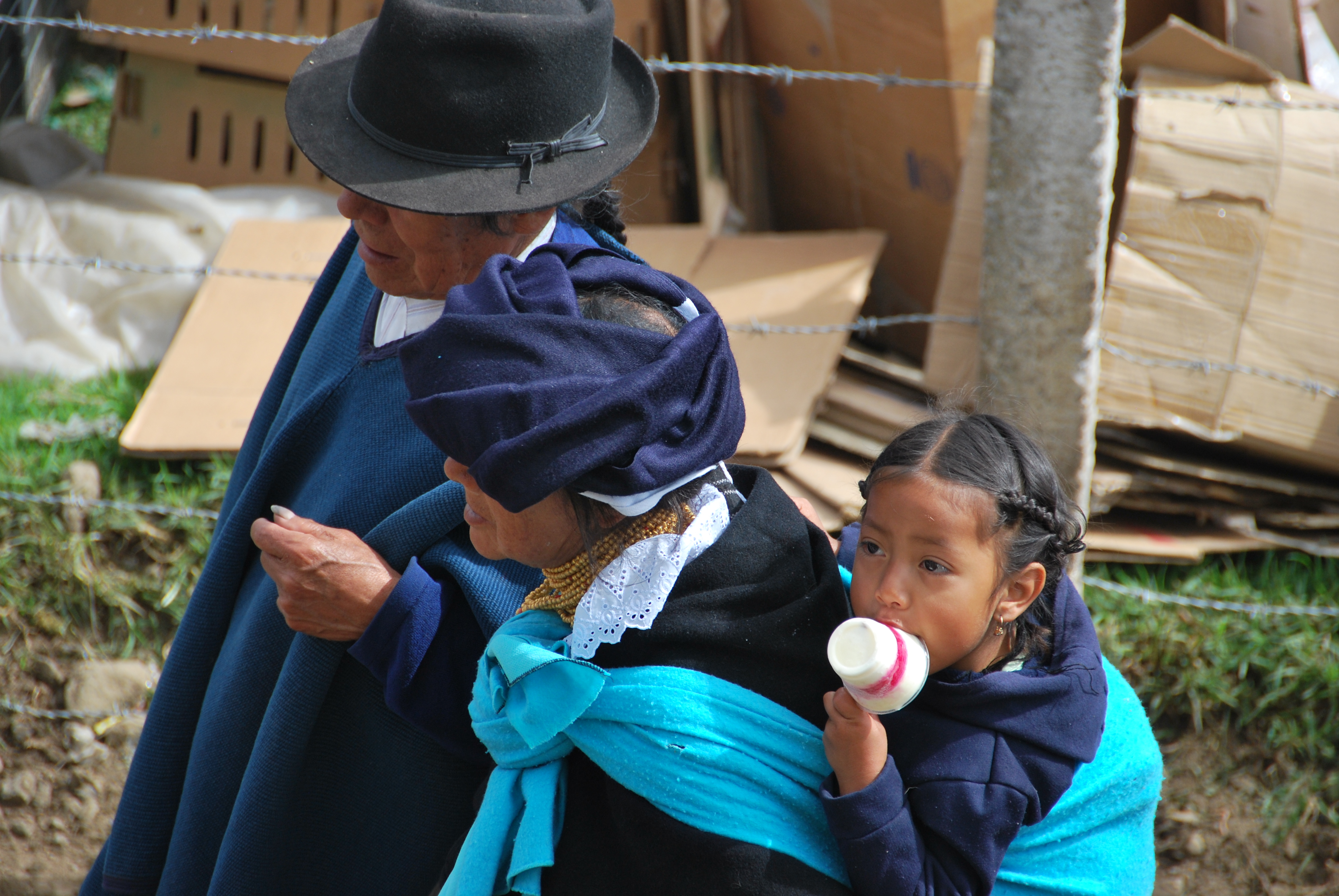
Typical beautiful dress and we love how they carry their babies!
Love that hat

One day, the entire school of struggling Spanish speakers headed out to enjoy an Ecuadorian speciality… cuy. If you don’t know what it is, look it up if you are brave. Being brave ourselves, we tried only a little bit before deciding that chicken is more our speed. While the meal was prepared, we played a game with our fellow students, and we all had a good time trying to impress each other with our vastly improved Spanish skills.

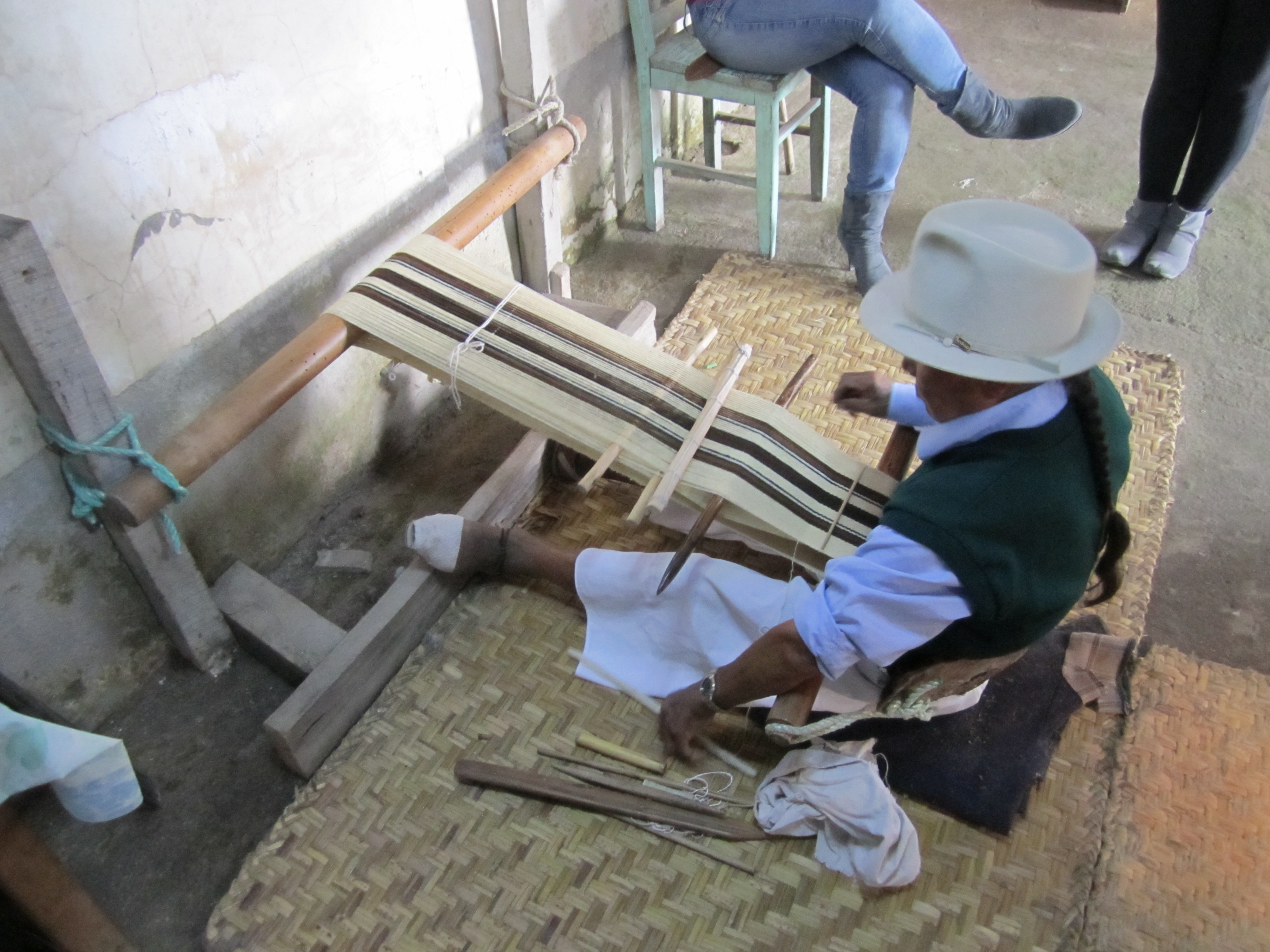
Putting the lunch behind us, we were shown to a local artisan’s house to learn and try our hand at making textiles. The place was run by a very nice couple who had been married for fifty years, and we were entertained by their adorable grandkids.

First step was prepping the wool.

Working with the wool

Next, the wool is spun into yarn. This machine is really old but still does the job.

Too easy to mess up, so we left this to the professional

Finally, it is woven in to the beautiful pattern or design. A lot of hard work! FYI… this man is 79.
We just stood back impressed.

On our final day with the class, we had a morning field trip with the rest of the students.

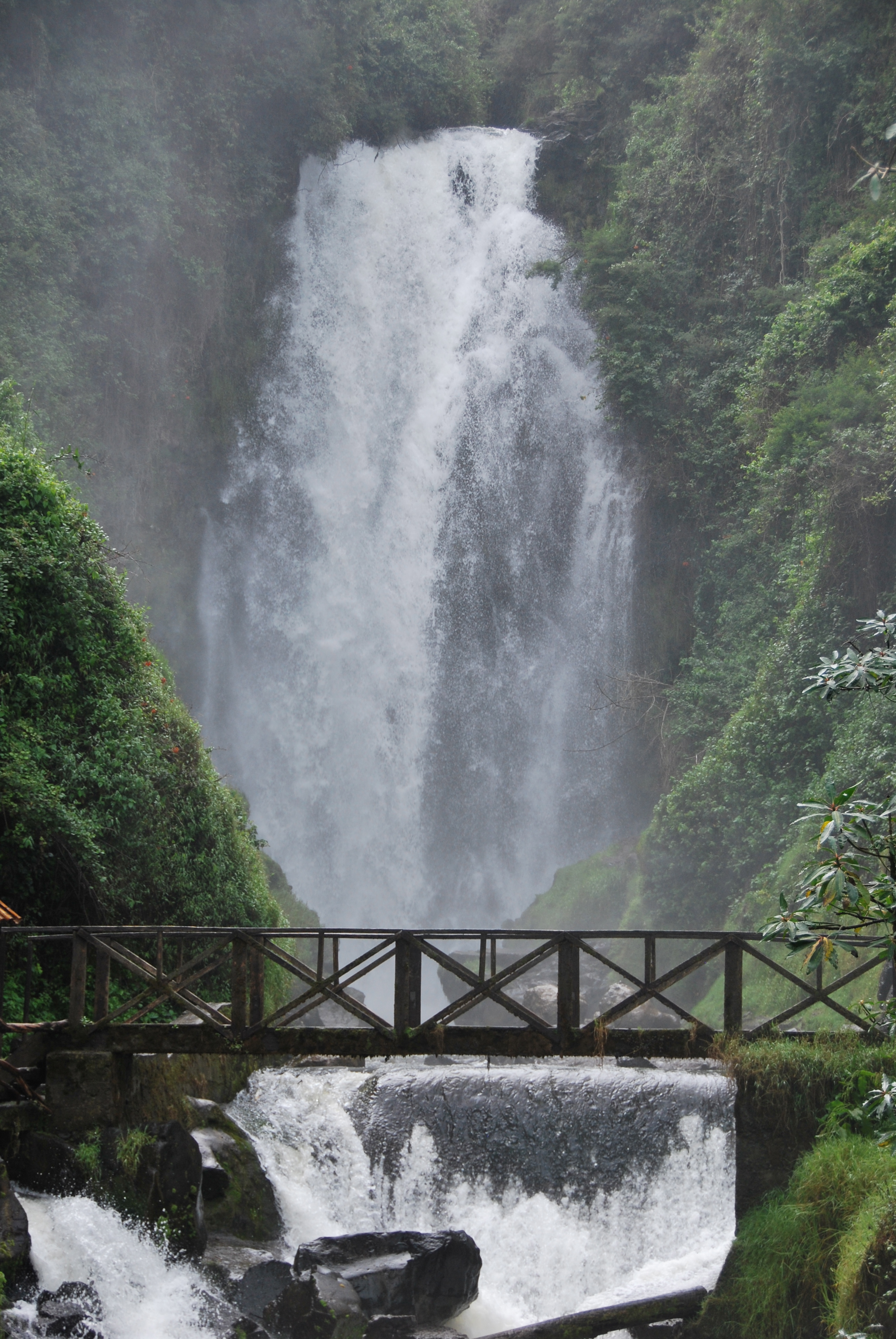
First, we boarded our instructors’ cars and headed to Peguche waterfall.

The Falls

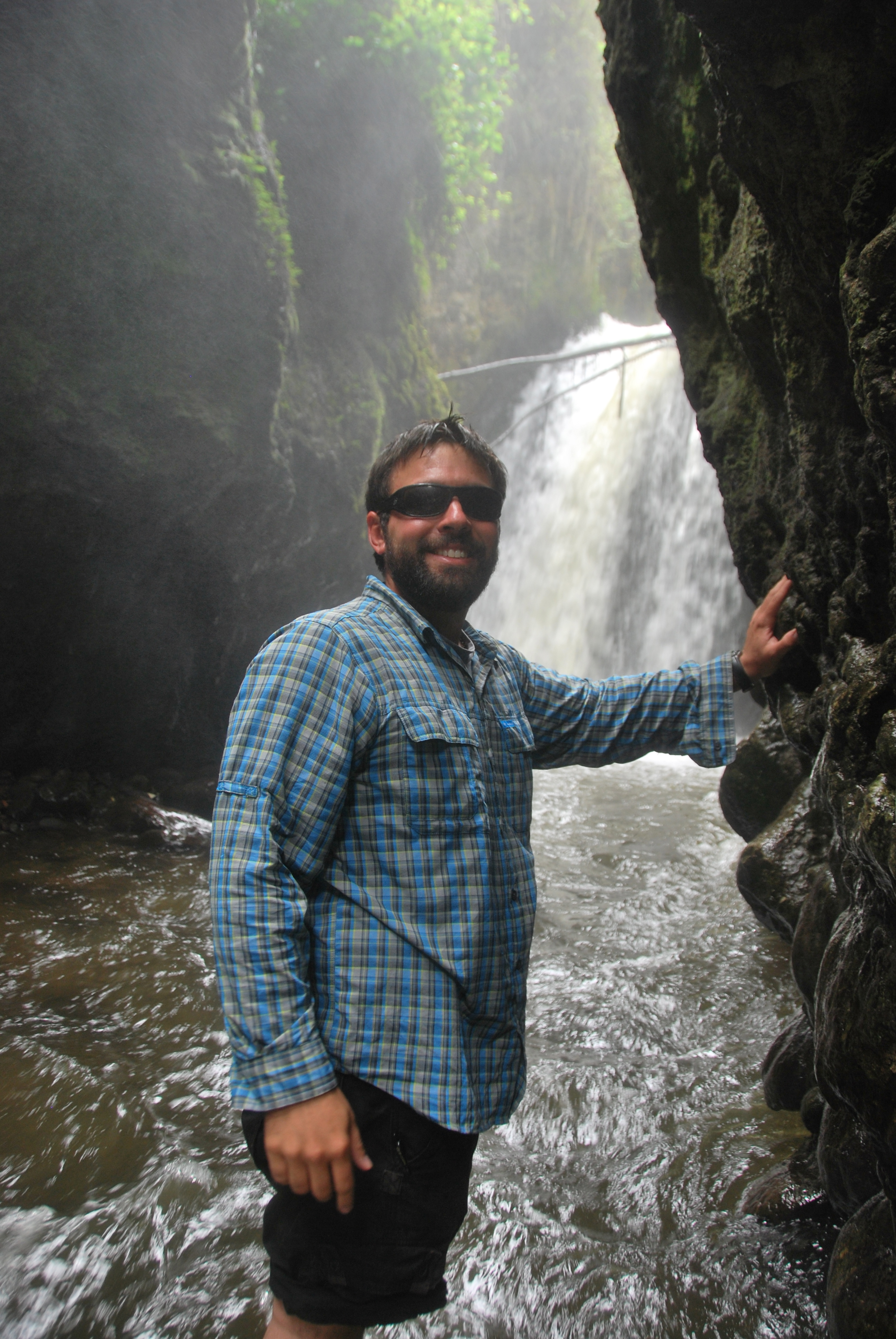
It was a nice walk to the waterfall and it turned out that there was a second hidden waterfall. After climbing to the top of the main attraction, we shimmied through a tiny tunnel, shed our socks and shoes, and forged the river to a the more secluded falls.

Hidden waterfall

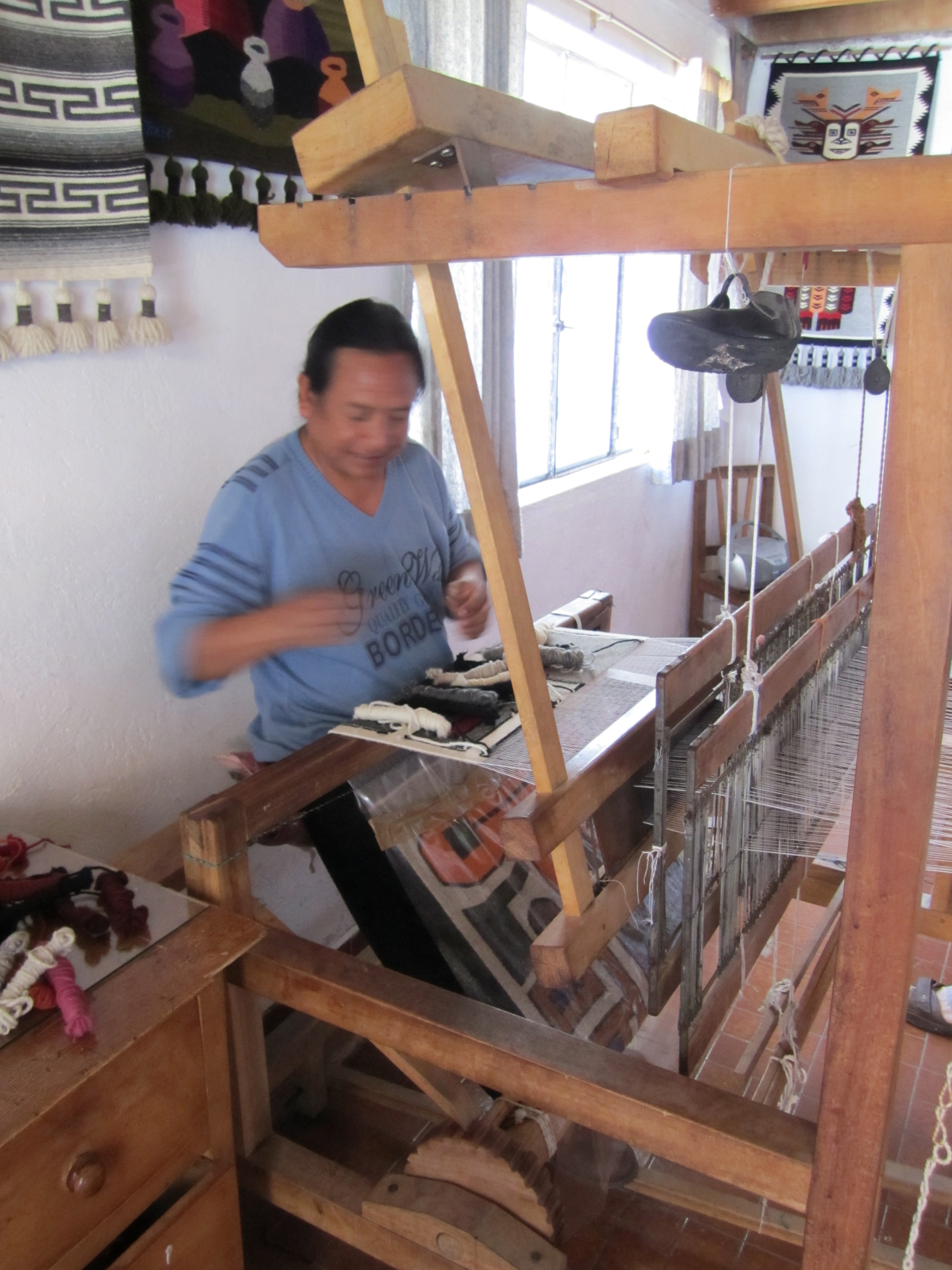
After getting misted by the waterfalls, we headed of to another artist’s workshop and we watched him work the loom and create some works of art. His process was a bit more modern than the one from the previous day.

We also learned how one small insect is use to create the different colors. With the help of salt and lemon juice, the colors changed before our very eyes. Interesting and a bit Mr. Wizard.

Working the Loom

The artist had created so many unique and amazing pieces of art that we were sad that we did not have room in our bags to bring any home.

Beautiful artwork

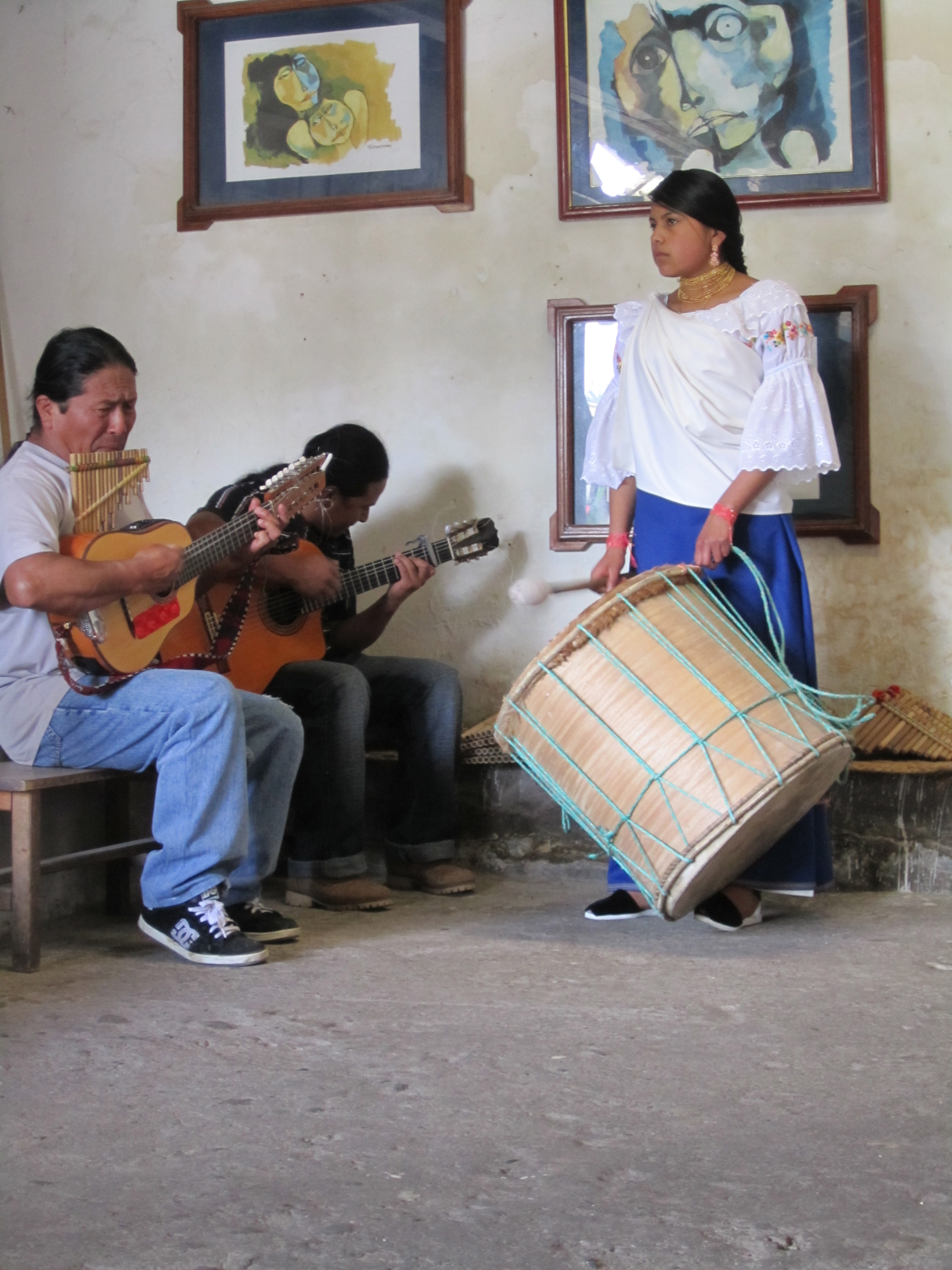
Our final stop for the day was at a house of musicians where they also made musical instruments, mainly the famous flutes. Skillfully, our guide in this musical adventure crafted his own flute in less than 5 minutes, and then demonstrated the use of it and other types of flutes.

To top it all off, he got together with a few buddies and they played some amazing music. We were especially amazed and a bit jealous seeing how we have no musical skills of our own.

Getting down! Can you guess who is having the most fun???

After our intensive week of classes, we both felt that our Spanish greatly improved and we learned a lot about this new area. Thanks again to our teachers! We hope to take classes again somewhere along the way, maybe in Bolivia.

More of Otavalo to come!

Posted in Ecuador | 6 Comments

Colombia: Final Thoughts

***FYI: I accidentally published an unfinished version of this. Stupid iPod app. Sorry for the repeat information.

A brief little run-down on our time in Colombia, the first stop on this crazy voyage.

Traveled for:  39 days

Cost per day of travel:
– About $40 person/day (under budget of $50 person/day- Yea!)
– We stayed mostly in hostels/small hotels. We always had our own room (we feel a bit old for the dorm room thing), and most of the time we even had our own bathroom.
-Now that we are in Ecuador, we realized how relatively expensive transportation was in Colombia, especially to the out-of-the-way places (Mompos, Tayrona).
– Street food is cheap! Also the “set meals” are inexpensive and pretty filling.

Places Visited:
Cartagena, Tayrona, Mompos, San Gil, Bogota, Guatape, Medellin, The Farm, Jardin, Salento, Buga, and Popayan

Favorite Stop:
This was an easy one. Joe & Kris agree… Jardin!

New Phrase Learned:
“a la orden”
This is used all the time! We’ve gathered that it means: “Can I help you?” “Welcome (to my shop/restaurant).” “You’re welcome.”

Moments of Genius:
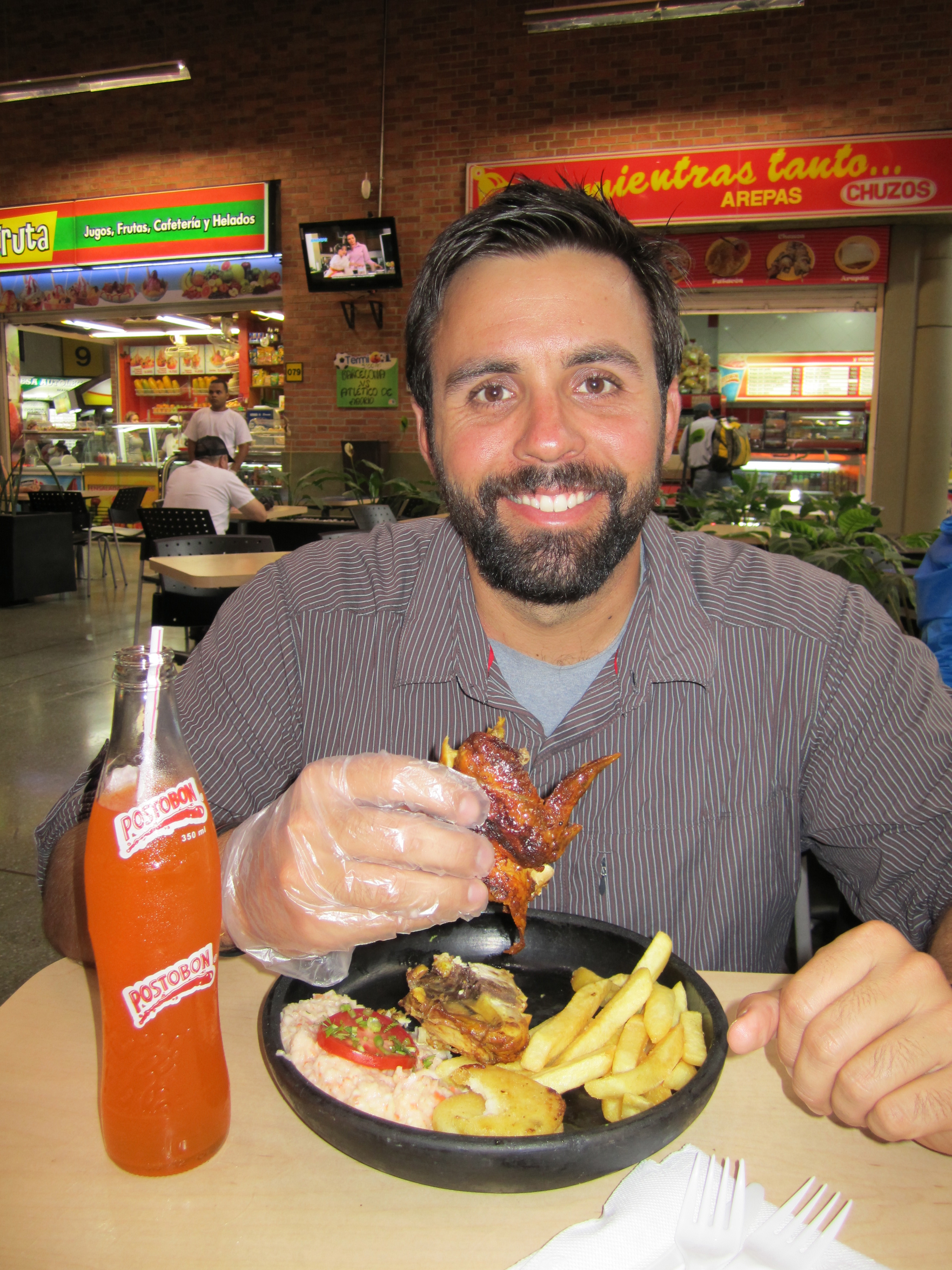
-When you order a roasted chicken, they give you a plastic glove to eat it with. Perfect for getting all the meat without getting the napkin welded to your fingers. I guess it’s good for the non-hand washers out there too.

Joe utilizing the glove

– The fruit juices. They were everywhere, cheap, and so delicious. We’re hoping this is a recurring theme throughout our travels.
– Amazing street food. We ate a lot of street food in Colombia and never got sick! For some reason, the burgers from the street carts were way better than most burgers are at home. We already miss them dearly, especially after trying burgers in Quito. NOT good.

Joe eating again! Kristen "helped" him a lot with this one.

Biggest Surprise:
Liking Medellin. We were pretty scared of this city before we got there, but we enjoyed running around here. Especially for a big and bustling city, people were super nice and friendly. We believe our great hostel and local guides (Thanks again, Tatiana and Dave!), made this city experience extra special.

Item we packed that we couldn’t live without:
– This prestigious award belongs to the Steripen! It already has paid for it self a few times over because we don’t have to keep buying bottles of water. Also, we have taken it with us on hikes, just in case we find ourselves without water. We don’t want to be featured on “I Shouldn’t Be Alive.”

Total time spent apart from Spouse:
10 minutes- a beer and chocolate run that Joe braved on his own.

Would we do anything differently:
– We would bring more water on the hike to Tayrona! An overheated Joe is not a good Joe.
– Studied and practiced more Spanish before arriving so we could have had better conversations.

Will we return:
Yes! This question should be “When will we return?”

If you have any questions about our time in Colombia, feel free to ask in the comment section and we’ll be happy to answer them.

Ecuador, here we come!

Posted in Colombia | 2 Comments

Colombia: The only risk is wanting to stay

As we continued to make our way South towards Ecuador, the city of Popayan seemed to be a logical stopping point before crossing the border.

Popayan is known as the “white city” because most of the buildings here are painted solid white. (Quite a contrast when compared with Guatape.) We arrived in town after driving through a furious storm with insane lightning. Our hostel, ParkLife, had a great location right in the main square.

Popayan's Main Square (our hostel is on the far left)

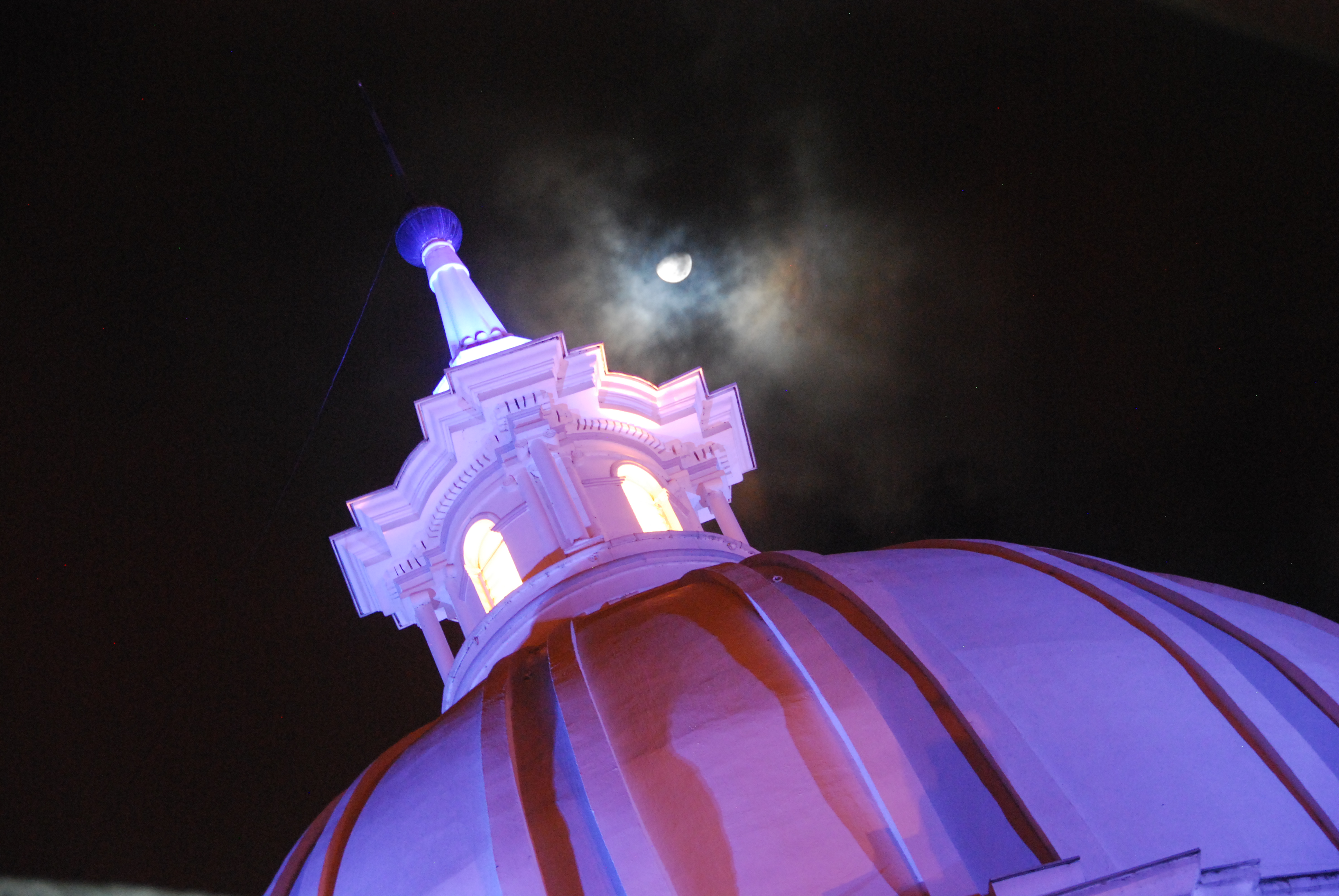
ParkLife‘s location was unbeatable. In addition to being in the square, it was literally right next to a huge church. In the kitchen, you could look up and see the dome, which was especially breath-taking at night.  Through the shared window, you could sometimes hear singing from mass in the morning.

View from the kitchen

We decided to spend only two nights in Popayan because we eventually needed to get out of Colombia and see the rest of South America. During our only full day in Popayan, we took a bus 45 minutes out of town to a natural hot springs area. We arrived in the morning, and for the first few hours, we had the whole place to ourselves.

The water was a warm and pleasant temperature in the few pools we tried. It was a nice sunny day, and in hindsight, we probably should have put a little more sunscreen on.

Enjoying one of the pools (and getting a little too much sun!)

They also had a section of “medicinal” tubs. It was basically a warm and muddy hole in the ground. It was a bit weird to sit in the squishy (and sometimes scalding) mud, so we only hung out there for a little bit. Hopefully we reaped some of the benefits, whatever they may be.

Being "healed"

The springs were set in a valley, and the views were gorgeous in every direction.

A peaceful setting

When we saw the concrete water slide, we knew we just had to give it a try. It was surprisingly speedy and smooth for being made out of concrete. We attempted to slow ourselves down with our hands so we wouldn’t get too out-of-control. Even though it was a bit scary, we each went down it a few times.

Joe slip, sliding away on the bottom half

Of course, we were put to shame by a 7-year-old girl who flew down the slide over and over without a care in the world.

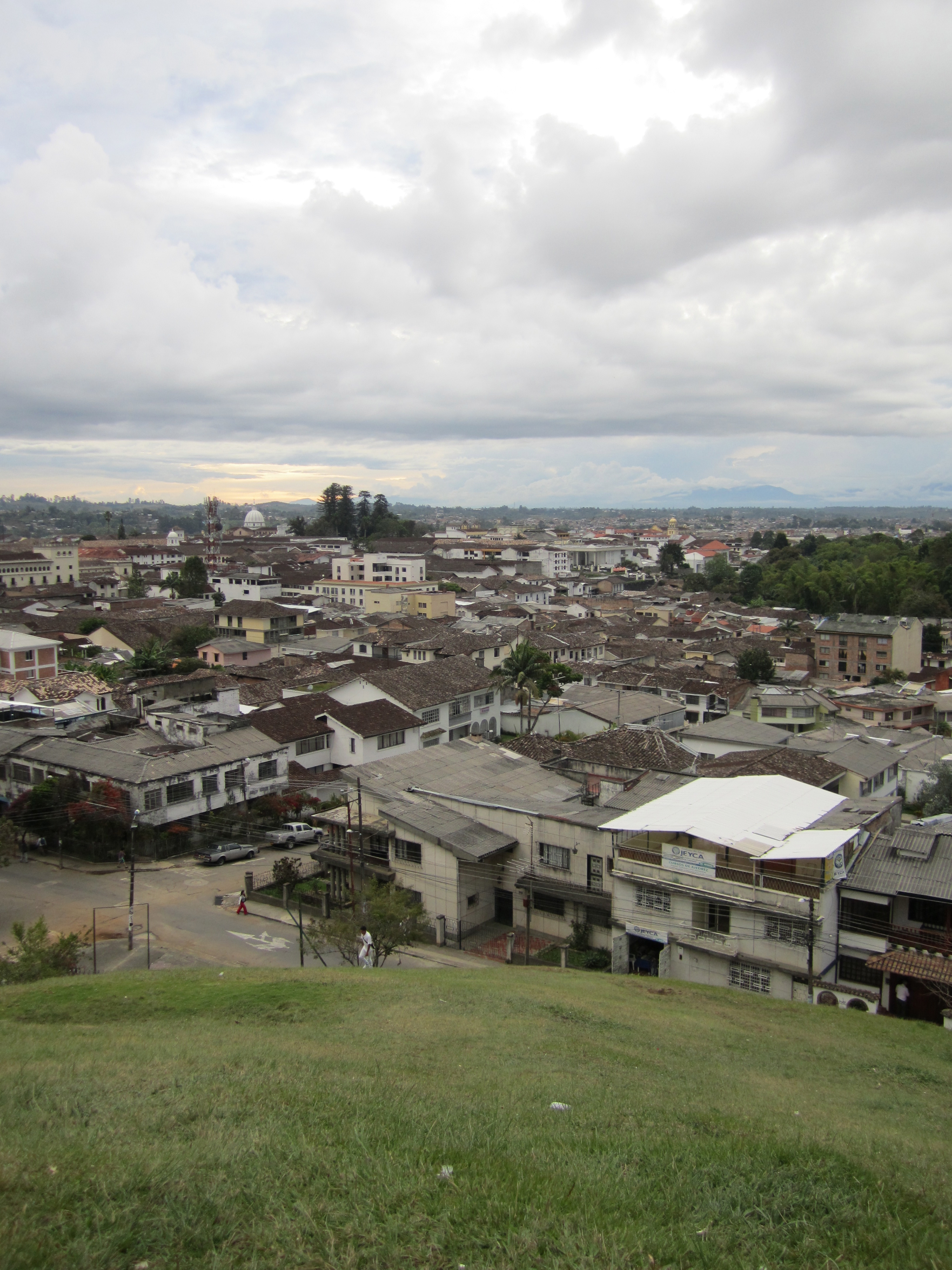
After returning from the springs, we headed up to the town’s lookout for some views of the city. The weather was not cooperating, so we only made it halfway up.  We joined the other onlookers, had a beer, and watched as much of the sunset as we could before the rain chased us away.

City View

We enjoyed our time at Popayan, but Ecuador was calling our names.

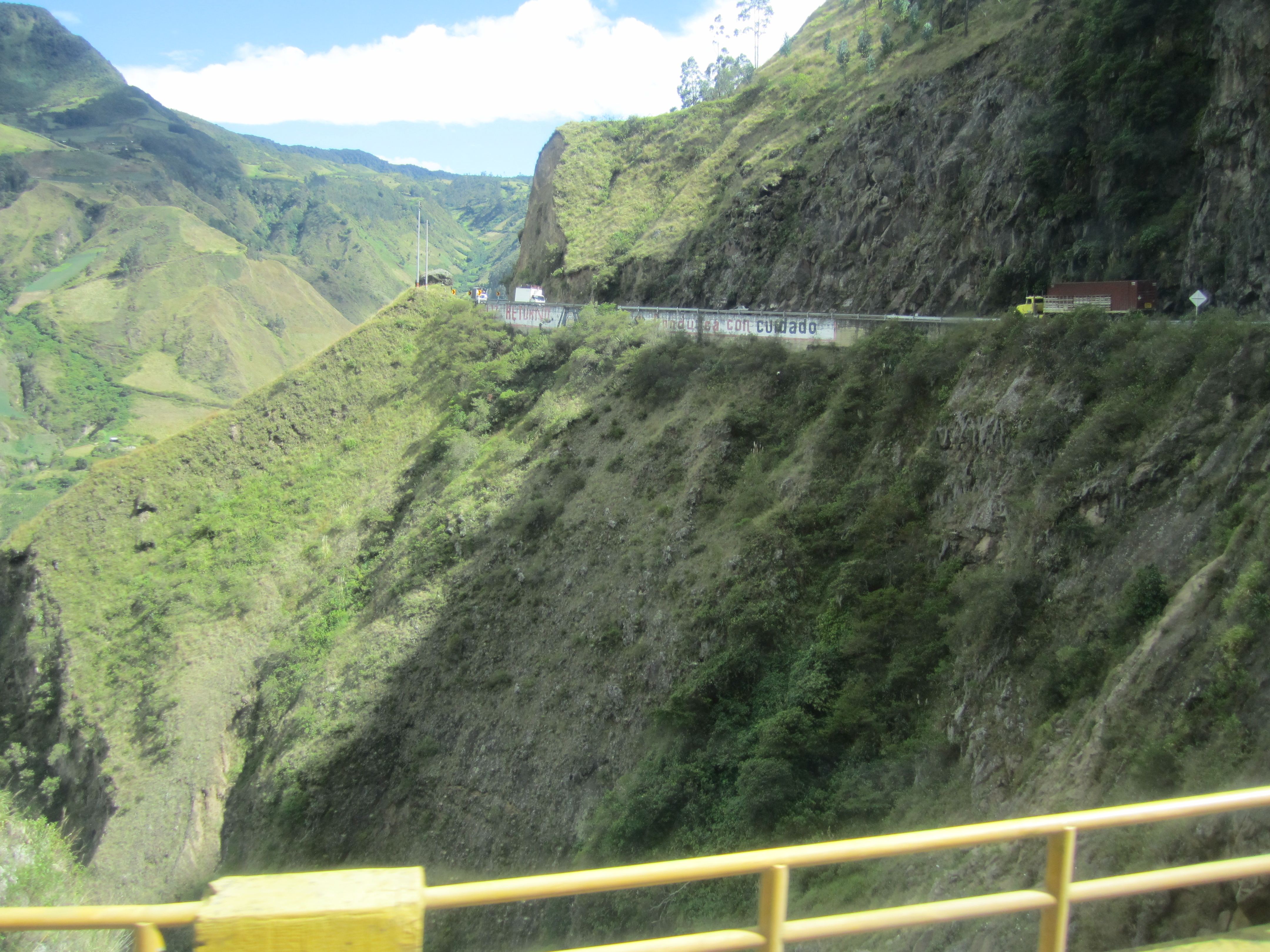
On the morning we left Popayan, we got an early start for the 16 hour trip to Otavalo, Ecuador.  The bus ride, although tiring, was very beautiful as we climbed mountain passes and enjoyed expansive views.  We said a few prayers as our bus flew around blind corners with a 1,000 foot drop off and only a small curb to protect us.

No, this is not a one way road... Yes we are passing.

Guess you can say we added one more adventure before leaving Colombia.

Not for the weak stomach

After the hairpin turns, we made it safety to the town of Ipiales, were we would leave Colombia and go to Tulcan, Ecuador.  The border crossing, although easy, took longer than expected to get all the required stamps. It was an intense day of traveling, but we arrived safe and sound in Otavalo in that evening.

Unfortunately, our time in Colombia had to wind down sometime. We originally thought Colombia would be a 3 week stop, but we managed to stay for almost 6 weeks, and we could have easily stayed longer.  It truly is a beautiful, amazing, and friendly country, with so much to offer.  It met and easily surpassed every expectation.

We now are in complete agreement with the country’s travel motto:

Colombia: The only risk is wanting to stay.

On to Otavalo and much-needed Spanish classes!

Posted in Colombia | 4 Comments

Beer and Pizza!!!!!!!

From Salento, we had a nice three-hour ride to Buga. Buga was founded by (guess who!) the Spaniards, and it is one of the oldest settled cities in Colombia.  Our original purpose for visiting this pueblo was to sample the beer and pizza created by one crafty German who has settled in Buga. However, it turned out that the city had much more to offer besides the above indulgences, but that didn’t stop us from enjoying both the beer and pizza numerous times over.

Stefan, the hostel owner and brewmaster, operates a small but efficient brewery in the back of the hostel. He happily offered us a tour, and we were impressed by his facility, especially given the difficulty in obtaining equipment and ingredients to produce such quality beer.

At the time of our visit, he was brewing three different types of beers: Mango, Rojo, and Especial (which was infused with ginger).  Of course, we tasted all three (a few different times), and found them all to be quite enjoyable.  The three beers were reminiscent of a hefeweisen style mixed and with local flavors to create something truly unique.

Now I know I already gave 3 Cordilleras the highly coveted award for best beer in Colombia, but now I feel the need to create a new category for “Best Artisanal Beer.” Not facing any other contenders in Colombia, Holy Water Ale Brewery easily swept this newly created category.

Enjoying beers on the balcony

The other big draw to this hostel, the pizza, tempted our noses at all hours, and not only because our room was ten feet away from the oven.  At Holy Water Ale Cafe, Stefan and his crew make homemade sourdough bread daily. We were wowed by the savory bread, which made for some amazing sandwiches and great dough for pizzas.  In both the sandwiches and pizzas, he blended different local foods to create meals that were great.  The mixture of delicious pizza and tasty beer made this an excellent stop. It was definitely the best pizza we ate in all of Colombia.

Wonderful pizzas- a bit torn apart as we almost forgot to take a picture before eating

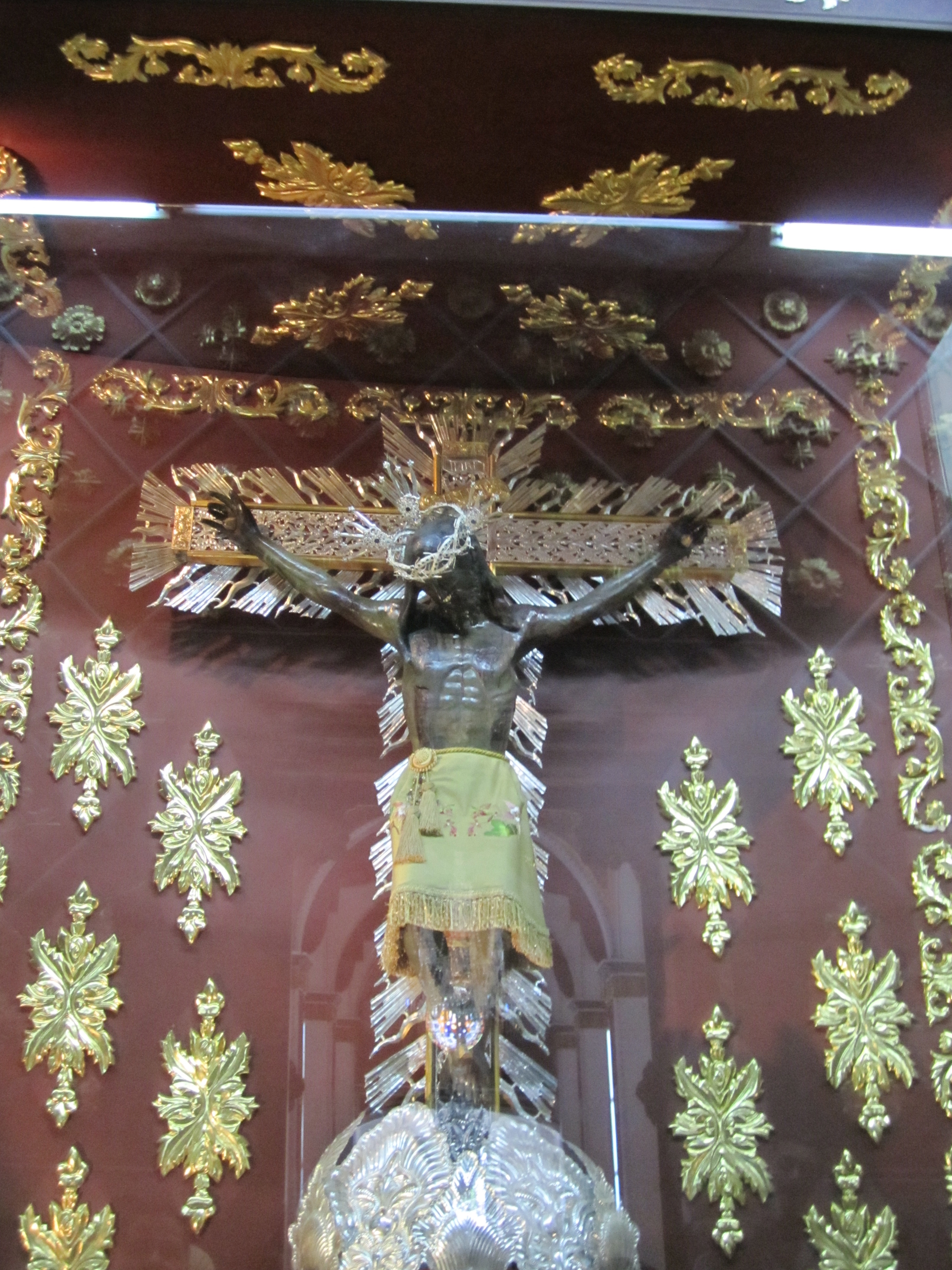
We enjoyed more than just the food and beer in Buga. While Buga is another colonial town, it is set apart from the others because it has a large Basilica which houses a Black Christ (El Senor de los Milagros).  This Basilica is visited by many people throughout the year and it is said that the prayers of the sick and needy are answered here.

Basilica of Señor de los Milagros

The Black Christ

Next to the Basilica they have a small museum which told the story of The Black Christ. It also housed many different religious relics and offerings for prayers which had been answered at the Basilica.

Plaques offering thanks for prayers answered

After visiting the Basilica and exploring this city, we headed into the hills for a overlook of Buga and the valley. We headed out of the town, past the Colombian military base, and turned on a random dirt road heading uphill (seems like we only ever walk uphill in Colombia).  After a half an hour of climbing, we reached the top where a headless Mary statue greeted us.  It seems like the statue was damaged at some point and is now just waiting for the opportunity to be repaired.  We enjoyed a nice cup of fresh squeezed orange juice while taking in the view.

City of Buga

Buga turned out to be a great surprise and not only for the beer and pizza.  The town had great character and the people again proved to be helpful, chatty, friendly, and curious about us.

We would especially like to thank the large Colombian man we met half-way up on the hike who let us know we were almost there, and encouraged us to keep going. Gracias!

Holy Water Ale Cafe/Buga Hostel (on the second story)

If you’re ever in the area and craving great beer and pizza, stop by!

Well-fed, we are off to Popayan, our last stop in Colombia.

Posted in Colombia, Joe's Chips and Beer | 5 Comments